



The UEFA Women’s Champions League has returned, and it’s more exciting than ever! This season, every match is available for streaming on Disney+ in Europe. Not only that, but we’ve expanded from the usual 16 teams to 18, with a single large group-stage table replacing the smaller groups of previous years.
This year’s roster includes the reigning champions Arsenal (ENG), alongside Barcelona (ESP), OL Lyonnes (FRA), Chelsea (ENG), Bayern Munich (GER), Wolfsburg (GER), Paris Saint-Germain (FRA), Real Madrid (ESP), Juventus (ITA), Roma (ITA), St. Polten (AUT), Twente (NED), Vålerenga (NOR), Paris FC (FRA), Manchester United (ENG), Atlético Madrid (ESP), OH Leuven (BEL), and Benfica (POR).
So, which team should you support? To help you figure that out, we’ve put together eight questions as we gear up for the opening fixtures on October 7.
Quick Links: Do you want a USWNT international on your team? | What about a cool team nickname? | Is transfer spending a priority? | Do you prefer attacking football? | Is a fun mascot essential? | What film would your team be? | Which band or artist represents your team?
All illustrations by Rafa Alvarez
Is winning the Champions League important to you?
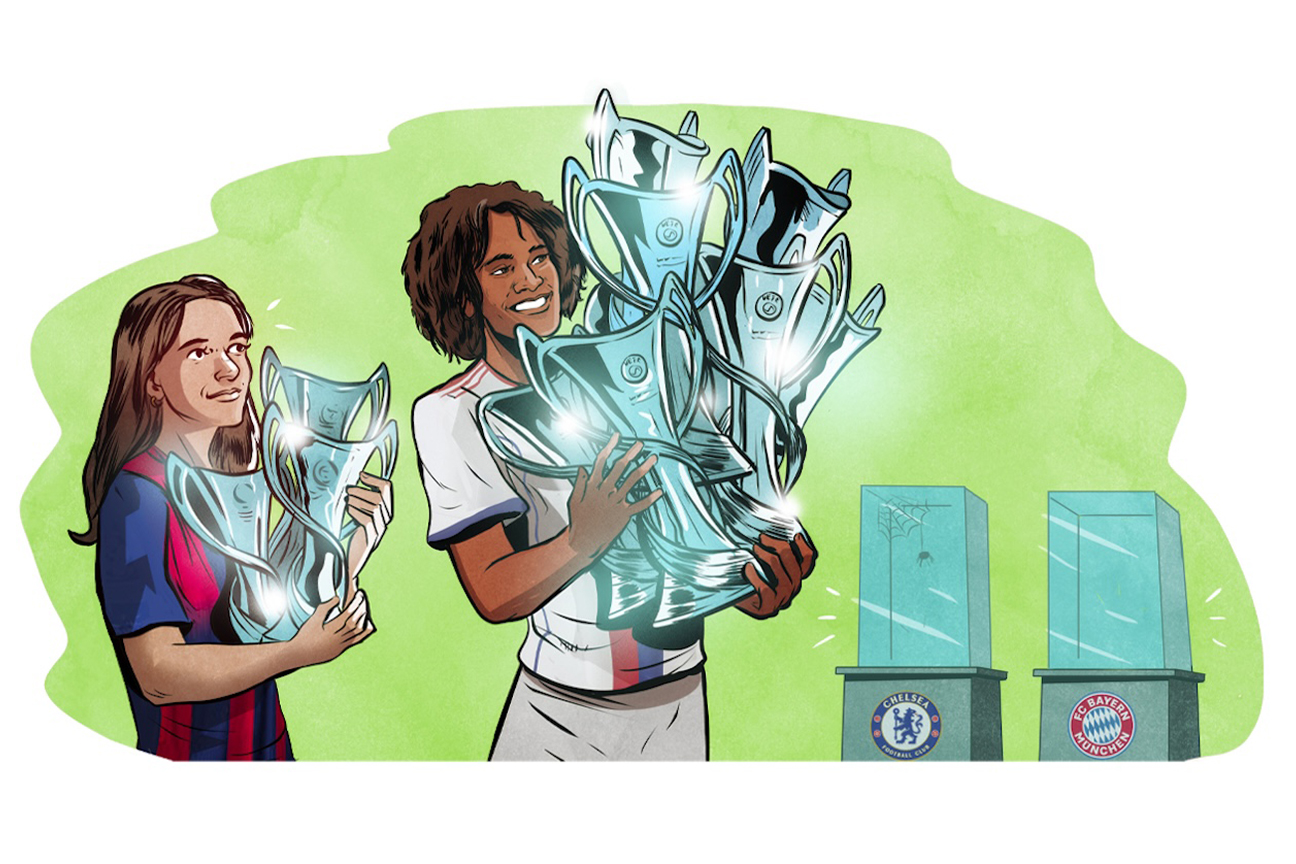
If hoisting European silverware is a must for you, then your options are limited this season. Among the 18 teams in the revamped league format, only four have previously claimed this prestigious title. Eintracht Frankfurt, known as FFC Frankfurt, has lifted the trophy four times but didn’t advance past the qualifying round this year.
YES
 8 – OL Lyonnes (previously Lyon, now rebranded under owner Michelle Kang) holds the record with the most titles. After succumbing to Barcelona in the 2024 final, they invested significantly this summer to revive their glory days.
 3 – Barcelona recently fell to Arsenal in the 2025 final but have made it to the finals five times within the last five years, winning three of those encounters (2021, 2023, 2024).
 2 – VfL Wolfsburg secured consecutive titles in 2013 and 2014 but has more recently faded from contention, finishing as runners-up in 2016, 2018, 2020, and 2023.
 2 – Arsenal clinched the championship last season, but their prior victory was in 2007, while Emma Hayes, the legendary Chelsea manager and current USWNT coach, served as their assistant.
Teams like Sweden’s Umeå (2), Germany’s Turbine Potsdam (2), and FCR Duisburg (1) experienced success in the early years—when the competition was known as the UEFA Women’s Cup (2001-2009)—but they no longer participate at the elite level.
NO
This leaves the remaining competitors, including major clubs like Chelsea, Paris Saint-Germain, Bayern Munich, Benfica, and Juventus, all with a total of ZERO European titles. Additionally, Manchester United and OH Leuven are making their group stage debuts.
Fun fact: OL Lyonnes has achieved a record of five consecutive UWCL victories from 2016 to 2020. They also hold the records for most matches played (152), most wins (118), and most goals scored (516).
Is having a USWNT international on your team important?
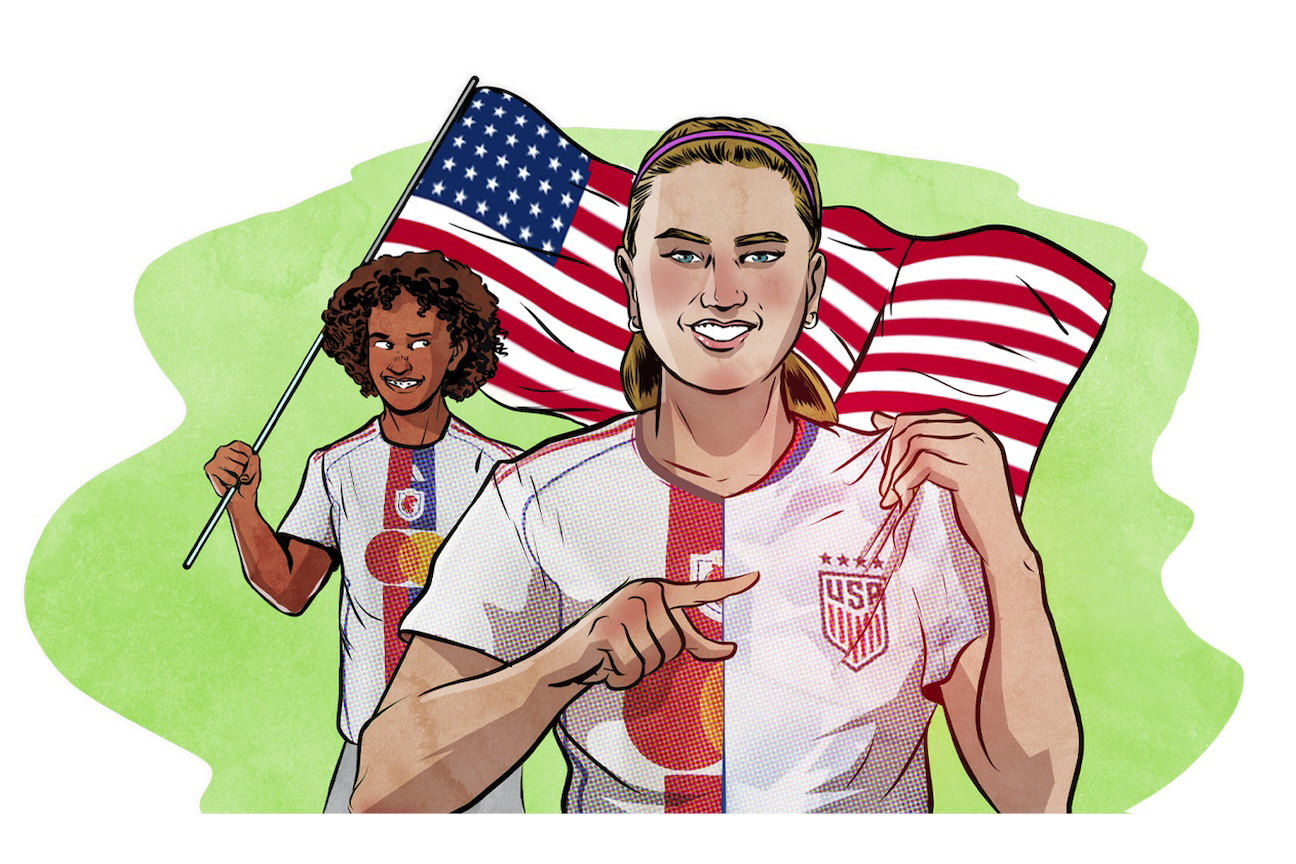

The US national women’s team is a dominant force globally, but only a handful of its players have recently moved to European clubs. Pioneers like Hope Solo and Aly Wagner were among the first to join Lyon (now OL Lyonnes) in 2005, followed by stars like Megan Rapinoe and Alex Morgan. Currently, only five teams feature a USWNT international player.
YES:

OL Lyonnes (Lindsey Heaps, Lily Yohannes, Korbin Shrader)
Arsenal (Emily Fox, Jenna Nighswonger)
Chelsea (Alyssa Thompson, Catarina Macario, Naomi Girma)
Paris Saint-Germain (Crystal Dunn, Eva Gaetino)
Manchester United (Phallon Tullis-Joyce).
NO:
All other players from the latest USWNT squads are currently playing in the NWSL.
Fun fact: Just seven USWNT players have captured UWCL titles: Ali Krieger and Gina Lewandowski (Frankfurt, 2008); Alex Morgan (Lyon, 2017); Lindsey Heaps and Catarina Macario (Lyon, 2022); Emily Fox and Jenna Nighswonger (Arsenal, 2025).
What kind of nickname do you prefer for your team?
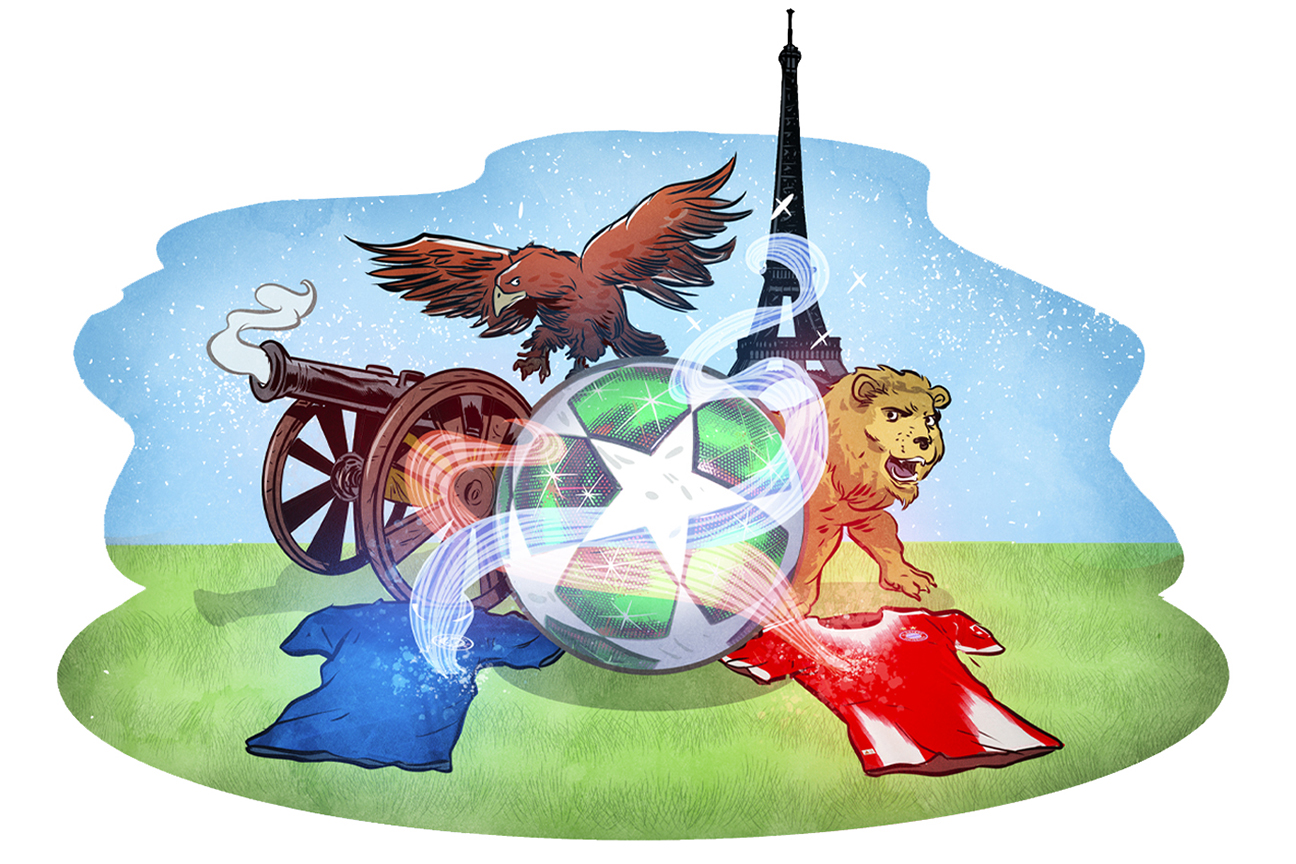
When it comes to soccer club nicknames, they generally originate from three main sources. While NWSL fans might cheer for the Thorns (Portland) or Pride (Orlando), European clubs typically don’t incorporate their nicknames into the official team name.
This leaves plenty of explanations needed, and most women’s teams share nicknames with their male counterparts. However, some teams offer unique character—though the debutants Oud-Heverlee Leuven have nothing more than a straightforward name. Yawn.
Animal-based:
Wolfsburg: Die Wölfinnen (The She-Wolves). They sound terrifying, while the men’s team goes by “The Wolves” as well as “The White and Greens.”
 St. Polten: The Wolfe (The Wolf). This comes from the club’s emblem, which features a wolf.
 Benfica: As Águias (The Eagles). A magnificent eagle graces their club crest, leading to this name.
Historical references:
Arsenal: The Gunners. Initially formed by workers at the Royal Arsenal in Woolwich, a munitions factory, the cannon on the crest tells the backstory.
OL Lyonnes: Les Fenottes (The Girls). The name comes from the local dialect of Lyon, with the men’s team called Les Gones (The Boys).
Paris Saint-Germain: Les Parisiennes (The Parisians). Geography makes it easy to decipher this one.
 Manchester United: The Red Devils. While it may seem like an animal reference, it actually originated from a local rugby team called Les Diables Rouges during a France tour in 1934. Manager Sir Matt Busby adopted the name after the Munich Air Disaster in 1958, and the devil first appeared on the badge in 1973.
 Twente: De Tukkers. This term refers to the local people of Enschede, where the club established in 1965.
 Vålerenga: Enga. The most straightforward option—just the last four letters of their name. They’ve also experimented with Bohemene (Bohemians) for their exciting style of play and De kongeblå (The Royal Blues) based on color.
Simple color references:
Barcelona: Blaugrana. They sport deep shades of blue and maroon stripes, thus the name.
Chelsea: The Blues. Again, the name is derived from their blue uniforms.
 Real Madrid: Las Blancas. As the feminine form of the term “The Whites,” it reflects their classic uniform.
 Atlético Madrid: Rojiblancas (The Red-Whites). But we prefer the nickname Los Colchoneras (The Mattressers), as their design resembles local mattress covers.
 Bayern Munich: Die Roten (The Reds). Unfortunately, the women’s team hasn’t adopted the flashy nickname FC Hollywood yet, but perhaps in the future.
 Juventus: Bianconere (Black and Whites). Their vertical stripes are a lasting tradition, leaving behind the men’s nickname “Old Lady.”
 Roma: Giallorossi (The Yellow and Reds). While their traditional colors are represented, we have a fondness for an alternative name: La Lupa (The She-Wolf), inspired by their crest.
 Paris FC: Les Bleus (The Blues). Not to be confused with the France national team.
Fun fact: The Women’s United Soccer Association (WUSA) became the first fully professional women’s football league in the world in 2001. Following the 2018 overhaul, England’s Women’s Super League became the only fully professional league in Europe, though others have since followed suit.
How does your club fare in the transfer market?
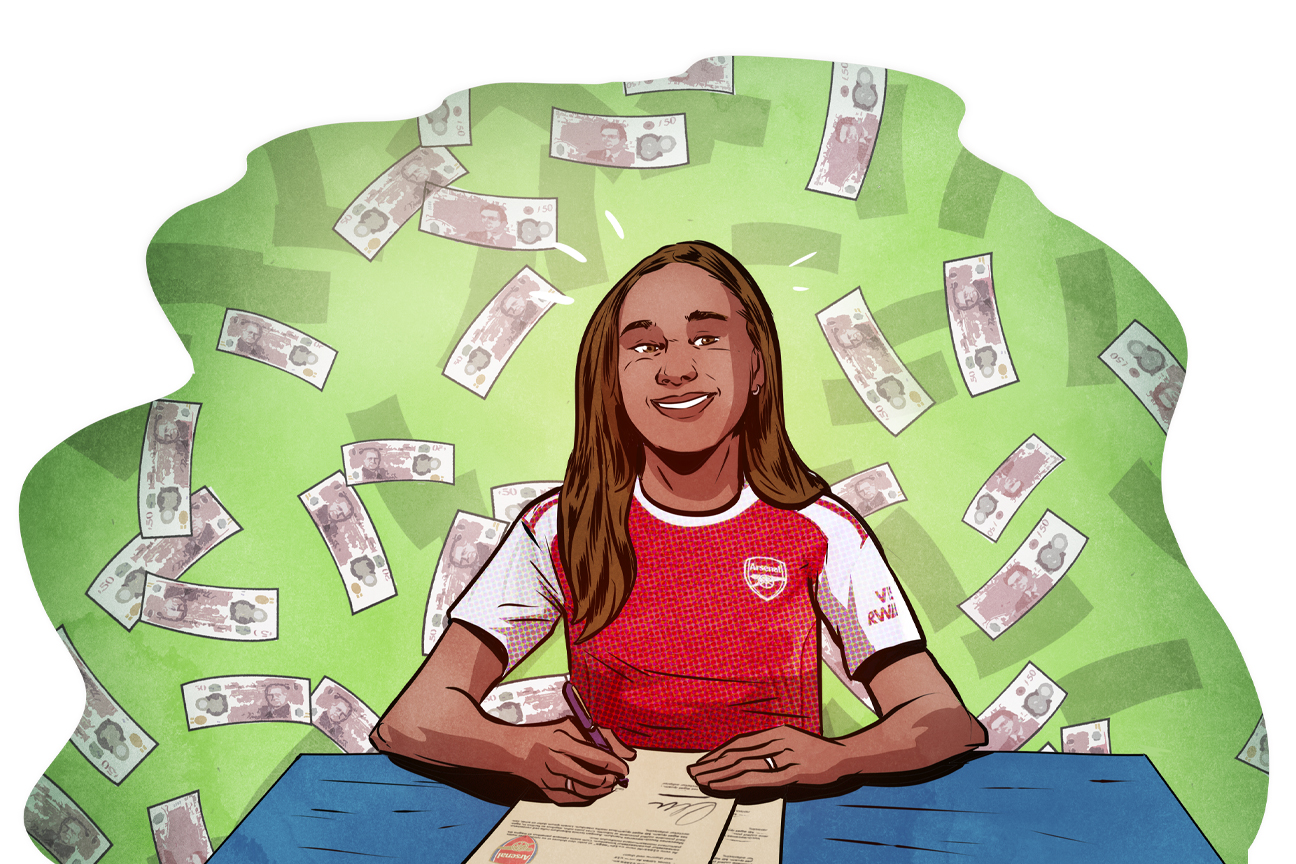
<pIf you think transfer fees in men's football are difficult to track, the women's game presents an even murkier situation; many transfers are marked "undisclosed" or involve free agents, so take the reported figures with caution.
While spending power hasn’t skyrocketed yet—even though the women’s transfer record has been shattered four times in 2025—it’s evident that some clubs possess greater financial flexibility to attract talent.
High spenders:
Chelsea: They are the ultimate spenders in both men’s and women’s football, initiating a trend with their $334,000 record signing of Wolfsburg midfielder Pernille Harder in 2020—the first world record since 2002. They then broke the record again in 2024 for striker Mayra Ramírez ($486,000), followed by midfielder Keira Walsh ($572,000), and later broke it yet again in January 2025 with USWNT defender Naomi Girma for $1.1 million. Their financial might is unprecedented.
Arsenal: The Gunners have routinely attempted to set transfer records and finally achieved it by signing Liverpool‘s forward Olivia Smith for a remarkable $1.3 million this summer. While players like Chloe Kelly and Taylor Hinds have arrived as free agents, Arsenal is willing to invest when the circumstances call for it.
OL Lyonnes: The French heavyweights have reconstructed their squad recently, bringing in talents like Tarciane ($830,000) and Lily Yohannes ($500,000). They also excel at securing free transfers, adding Jule Brand, Marie-Antoinette Katoto, Ingrid Engen, Ashley Lawrence, and Korbin Shrader this summer.
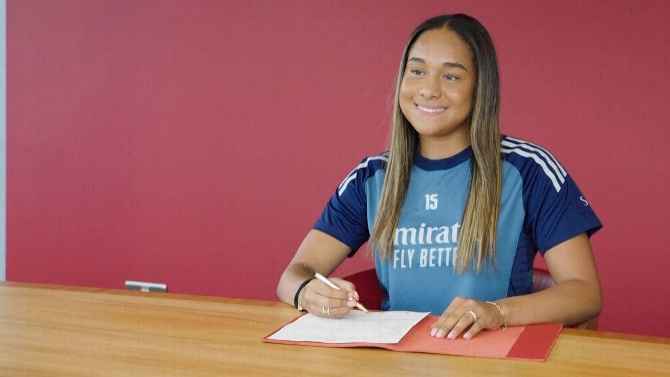
1:59
Smith: An ‘honour and privilege’ to play for Arsenal
Olivia Smith reflects on her career so far in the Women’s Super League after joining Arsenal.
Trade wisely:
Manchester United: Despite being among the top revenue earners as per the Deloitte Money League 2025, they face limitations on spending. Following PSG’s $1.9 million sale of Grace Geyoro to London City Lionesses, manager Marc Skinner acknowledged the constraints, stating: “Currently, we can’t reach those transfer fee heights. We need to find our way to adapt and evolve, discovering opportunities in the market to attract top talent to Manchester United.”
For instance, to sign a player like Man City midfielder Jess Park, they might need to allow Grace Clinton to go in exchange. Most of their transactions are free transfers, including Fridolina Rolfö and Elisabeth Terland.
Real Madrid: Like Manchester United, they are among the top revenue generators but aren’t yet positioned to invest heavily in one player. A significant portion of their acquisitions also come from free transfers, including Sara Däbritz, Sara Holmgaard, and Alba Redondo.
Invest in youth and aim for profit:
Paris Saint-Germain, Wolfsburg, Juventus, Roma, Benfica: These clubs invest in young talents, understanding that players who sign for significant fees must originate from somewhere. PSG frequently sees their best players leave for rivals like OL Lyonnes—typically via no-cost transfers, except for Geyoro and Sandy Baltimore. Wolfsburg has profited from letting players like Harder (Chelsea), Sofie Svava (Real Madrid), and many others leave in recent times. Juventus, Roma, and Benfica face challenges in financial growth and currently can’t compete with the elite.
Most teams in women’s football face similar restrictions, requiring them to explore alternative avenues.
Promote from within:
Barcelona: The Liga F giants can rival top clubs financially, but recent financial challenges have forced them to rely on youth sales, like Jana Fernández ($350,000 to London City this summer) and their academy stars. Fortunately, La Masia is renowned for excellent player development.
Bayern: Bayern has the ability to make big signings, as they demonstrated through their move for Oberdorf from Wolfsburg in 2024 ($484,000). However, with their top midfielder sidelined by a long-term injury, they are hesitant to take that kind of leap again. Nevertheless, they have made solid acquisitions like Vanessa Gilles from Angel City this past May.

Atletico, Paris FC, Twente, OH Leuven, St. Polten, Vålerenga: Due to limited financial resources, clubs lower on the hierarchy must frequently turn to youth development. Being in the top 18 in Europe doesn’t guarantee a budget for major signings, so these teams have to rely on their home-grown talents.
Fun fact: The women’s all-time transfer record has already been broken four times in 2025. In January, USWNT defender Girma broke the $1 million mark for the first time when she joined Chelsea from San Diego Wave for $1.1 million. In July, Arsenal paid $1.3 million for Liverpool forward Smith. On August 21, Mexico forward Lizbeth Ovalle moved from Tigres to NWSL side Orlando Pride for $1.5 million. And on September 5, PSG’s Geyoro transferred to London City Lionesses for $1.9 million.
Do you prefer your team to prioritize attacking football?

YES: Barcelona, Bayern Munich, Roma
It’s crucial for any team to have defensive prowess, but these squads lean heavily into offensive tactics. Barcelona is known for its dominance on the attacking side, boasting 202 chances created last season while leading in goals scored (44), total shots (252; 104 on target), assists (30), and possession (72.6%).
Bayern held the third-highest possession rate (61.4%) behind Barcelona and Arsenal and ranked just behind those two for pass completion in the attacking third (82.9%), indicating a trend of offensive engagement. Known for being one of the highest-scoring teams in Europe, Roma was recognized for their attacking style under Alessandro Spugna’s management before his departure this summer, suggesting that the attacking philosophy is likely to continue.

NO: Juventus, Atletico Madrid, OH Leuven, Twente, St. Polten, Vålerenga
Against elite competition in this tournament, many clubs find it hard to push forward. However, these teams can still be resourceful in different situations. Juventus managed just 3,125 touches from their eight UWCL matches last season—10 less than Galatasaray, who conceded the most goals (29)—and held an xG of only 6.69.
Paris Saint-Germain faced elimination in the second qualifying round after two defeats against Juve, which limits available statistics. They typically utilize a 3-5-2 formation and an aggressive pressing strategy. Meanwhile, Atlético Madrid focuses on defense, while the likes of OH Leuven, Twente, St. Polten, and Vålerenga have to adopt a defensive mindset in order to stay competitive.
BALANCED APPROACH: Arsenal, Chelsea, OL Lyonnes
The Gunners clinched the tournament title last year through proficient play at both ends. Despite competing in more matches than others due to qualifying, they achieved the highest number of attempted crosses (343), successful take-ons (265), touches (11,560), duels (1,156), ball recoveries (735), and fouls (99), exemplifying a balanced playing style.
Chelsea also emphasizes defensive strength, boasting a 51.3% tackle success rate (out of 207 attempts) and achieving a winning rate of 51.4% in duels last season.
OL Lyonnes showcases an equally balanced style among the top teams. Last season, they recorded the highest clean sheet tally (6) and allowed only seven goals over 10 matches—four of which came against Arsenal in the semifinal second leg.
GOING ON THE ATTACK WHEN POSSIBLE: Wolfsburg, Paris Saint-Germain, Real Madrid, Paris FC, Benfica, Manchester United
Wolfsburg netted the third-most goals (30) while creating the third-most chances (150), all the while marking the highest number of tackles recorded last season (210). PSG may have lost major players like Katoto and Geyoro, but their squad still includes dynamic talents like Merveille Kanjinga, Sakina Karchaoui, and Romée Leuchter, who should strive to capitalize on each opportunity.
Alongside them, Real Madrid, Benfica, Paris FC, and Manchester United often produce a multitude of chances domestically, but they’ll have to modify their strategies in Europe to stay competitive.
Fun fact: OL Lyonnes striker Ada Hegerberg is the tournament’s all-time leading scorer with 66 goals, including an astonishing 15 goals in the 2017-18 season. Barcelona’s Clàudia Pina was last season’s top scorer with 10.
What would you like your club’s mascot to be?
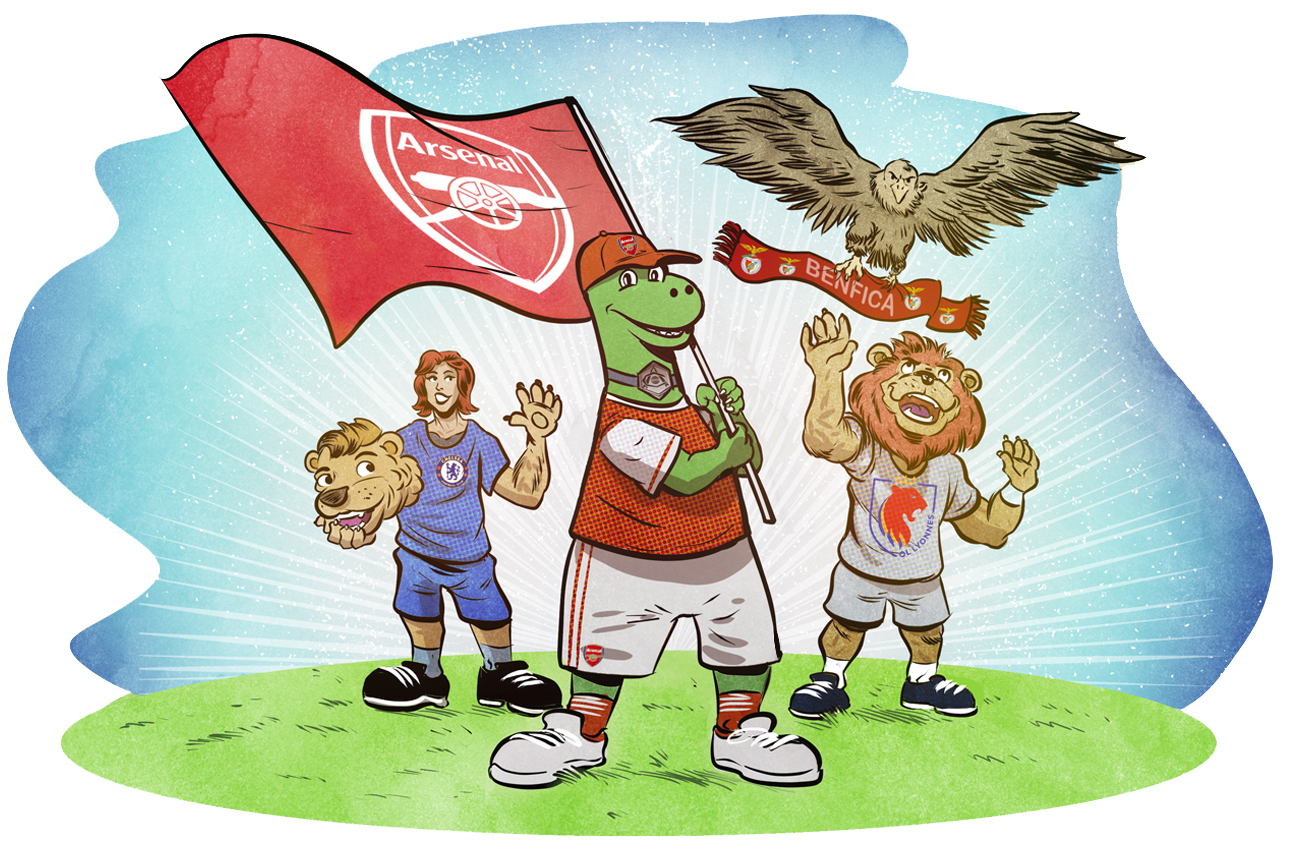
Mascots generally fall into three categories: anthropomorphic animals, real-life animals, or something entirely unusual. It’s unfortunate that mascots like West Brom’s “Boiler Man” or Partick Thistle’s “Kingsley” will never debut on the UWCL stage.
Something quirky:
Arsenal: Gunnersaurus Rex. This 7-foot green dinosaur is the mascot of a team known as “The Gunners,” devoid of any paleontological connection. What more could fans ask for?
Manchester United: Fred the Red. With a nickname like the “Red Devils,” this mascot easily fits the mold. The reasoning behind the name “Fred” is a mystery, unrelated to the Brazilian midfielder who was with the men’s squad from 2018-2023.
A human in animal costume:
Chelsea: Stamford The Lion and Bridget The Lioness. Think of a bipedal lion and lioness duo, resembling a celebrity couple but with longer hair. The names merge Stamford Bridge, the venue for the men’s team, as “Kings and Meadow” doesn’t quite resonate.
Barcelona: Cat. A gender-neutral large yellow wildcat debuted in 2024 during the club’s 125th anniversary celebration.
Bayern Munich: Berni. This brown bear has been a fixture on the sidelines since 2004, replacing the previous mascot Bazi, and underwent a makeover in August 2022 to appear notably slimmer—years ahead of the Ozempic trend.
OL Lyonnes: Lyou. A lion mascot for OL Lyonnes doesn’t get simpler than that.
Juventus: Jay Zebra. For a team in black and white, it was the obvious choice for a 2015 mascot, and surprisingly, it wasn’t a badger. Jay even got his own children’s television series, although it didn’t receive favorable reviews from The Guardian.
Wolfsburg: Wölfi. A wolf mascot for Wolfsburg—quite straightforward.
Paris Saint-Germain: Germain le Lynx. PSG selected a lynx, symbolizing strength and power, though some may find him a little unsettling.
Roma: Romolo and Romina. A paired male and female wolf character referencing Rome’s founding myth, albeit Romolo appears to be a little angry while Romina looks adorably doe-eyed.
Paris FC: Girafel. A large blue giraffe—presumably chosen for its height to symbolize the Eiffel Tower somehow.
Twente: Rossie. A white horse, referencing the Saxon horse on the Twente coat of arms.
St. Polten: Lupo. A black and white wolf who humorously resembles Poochie from “The Simpsons,” complete with a backward baseball cap.
OH Leuven: Lionel the Chipmunk—no one is sure what the logic behind a chipmunk mascot is, but there you have it.
An animal mascot:
Benfica: Águia Vitória. A bald eagle is a commanding presence, striking fear into opponents as it flies over the fans and lands on the club emblem weekly.
Interestingly, the Portuguese club also has a human in an eagle costume to amplify their mascot presence.
I prefer no mascot:
Real Madrid: Although there’s a traditional association with a bear, the club has opted against an official mascot.
Fun fact: Gunnersaurus has been a staple for Arsenal since 1993 when the club held a competition for kids to design their new mascot. The winning design came from an 11-year-old who was inspired by his obsession with “Jurassic Park.” ESPN spoke to him here.
If your club were a film, what would it be?

“The Avengers” – OL Lyonnes. The ultimate superteam, OL has assembled some of the finest players in the world to challenge for victory, but *spoiler* some might not make it to the field.
“Everything Everywhere All At Once” – Arsenal. Much like the film’s intertwining narratives, the UWCL winners faced numerous challenges last season, showcasing resilience and adaptability.
“The Matrix” – Barcelona. While not directly a passing matrix, their ball distribution yields almost poetic sequences, reflecting their finely-tuned style.
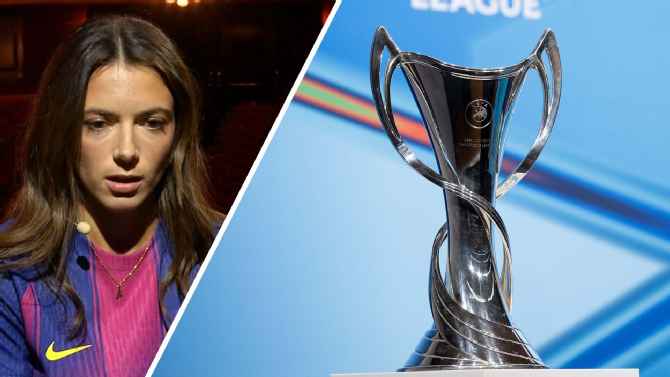
0:48
Bonmatí: New Women’s Champions League format improves competitiveness
Aitana Bonmatí discusses how the new league format boosts competitiveness in the Women’s Champions League.
“The Wolf of Wall Street” – Chelsea. They embody the qualities of big ambitions, dramatic successes, and no shortage of action, akin to a wild financial saga.
“John Wick” – Wolfsburg. Known for their gritty reputation, the She Wolves may not roar loudly, but they can spring into action mercilessly when necessary.
“Moulin Rouge” – Paris Saint-Germain. Set in Paris, this film captures the vibrancy and emotional fervor reminiscent of the French club’s spirited play.
“Gladiator” – Roma. A narrative about heart, perseverance, and battling against more powerful adversaries, all set in a historic backdrop.
“Spider-Man” – Manchester United. In their quest for identity, they, too, evolve, learning how to navigate a complex journey akin to Peter Parker’s adventures.
“300” – Everyone else. This season’s UWCL resembles the Battle of Thermopylae for smaller clubs, showcasing courage against intimidating odds. *spoiler* It likely won’t conclude favorably for them.
Fun fact: In the 2002 film “Bend It Like Beckham,” Jess (Parminder K. Nagra) has a shrine dedicated to David Beckham, while Jules (Keira Knightley) devoted hers to USWNT legend Mia Hamm. Hamm endorsed the film enthusiastically, while Beckham approved the use of his name after lengthy discussions regarding his participation. The end result: a film that grossed an impressive $76.6 million against a modest budget of $5.6 million.
If your club were a band or artist, who would it be?

Taylor Swift – OL Lyonnes. Just as Taylor adapts her sound while maintaining a dominant position, OL Lyonnes continually refine their approaches, aiming for the top while wrestling with past hurdles. Fans can expect outstanding performances post-breakup.
Beyoncé – Barcelona. It’s tough to resist the comparison with classical music, but Beyoncé’s prowess and commanding stage presence mirror Barcelona’s stunning tiki-taka style—both are true royalty in their respective fields.
Coldplay – Chelsea. Like this notable band, the Blues have established themselves as a global force, merging respect and commercial success into their unique sound.
Lainey Wilson – Arsenal. As trailblazers in women’s soccer in England, Arsenal combines grit and heartfelt storytelling—a reflection of Wilson’s country music essence.
AC/DC – Bayern Munich. Like one of the most iconic rock bands globally, Bayern commands loyalty, excitement, and fervent passion.
Metallica – Real Madrid. Known for their legacy, intensity, and high expectations, they evoke a similar profound presence and mystique.
The White Stripes – Wolfsburg. Their minimalist approach produces profound resonance, much like Wolfsburg’s efficient plays.
Lady Gaga – Paris Saint-Germain. Known for exuding flair, glamour, and theatricality, PSG often steals the spotlight with their captivating performances.
Fun fact: Barcelona’s sponsorship deal with Spotify has enabled several famous artists to feature on their men’s and women’s team jerseys since 2022, such as Drake, Rosalía, The Rolling Stones, Karol G, Coldplay, and Travis Scott.