



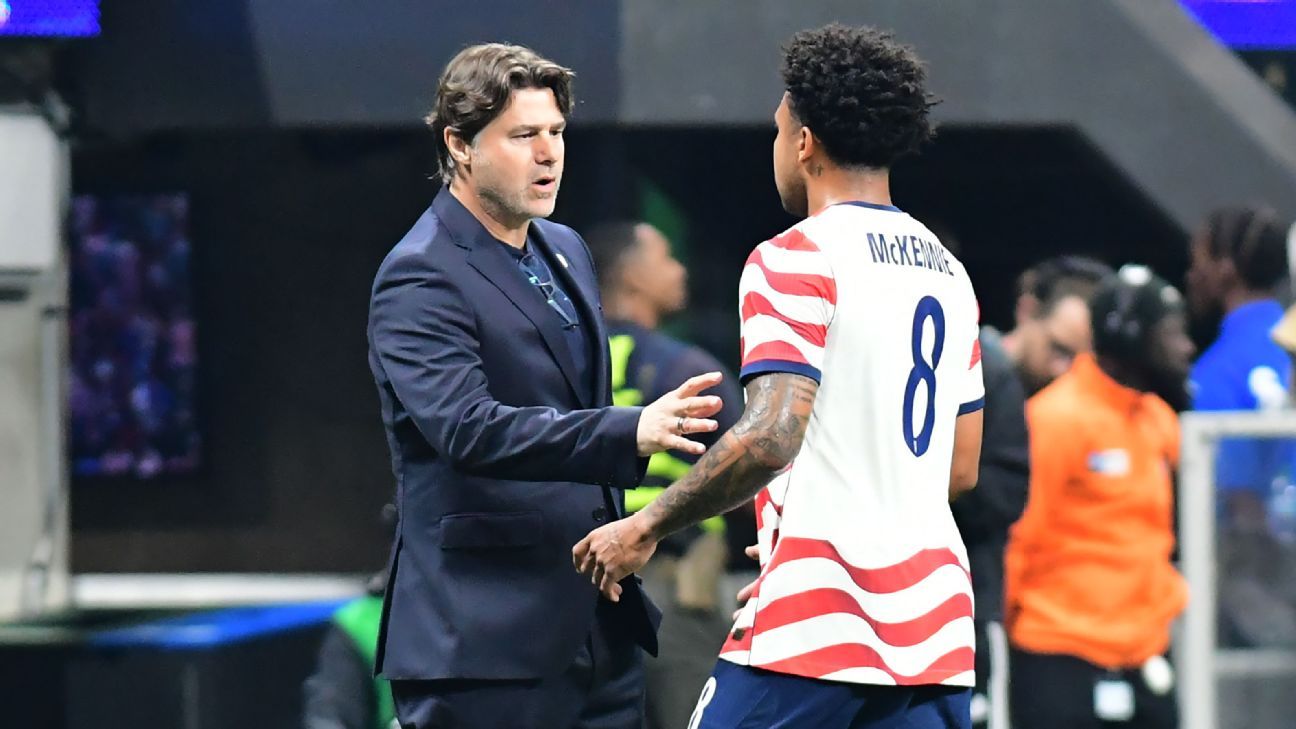
NEW YORK — With all the usual excitement surrounding World Cup roster announcements, U.S. men’s national team coach Mauricio Pochettino stuck to a familiar strategy. Out of the 26 players selected, 13 were part of the previous World Cup, featuring notable athletes like Christian Pulisic, Weston McKennie, and Tyler Adams. The rest of the lineup, which was officially revealed on Tuesday, came as little surprise.
Yet, Pochettino’s decisions did raise a few eyebrows that could have future implications.
A key point of contention was the exclusion of Olympique Lyon midfielder Tanner Tessmann. Lyon had sidelined Tessmann for nearly all of May due to what manager Paulo Fonseca labeled a “muscle strain,” raising hopes for his recovery. However, Pochettino deemed him unfit and omitted him from the squad.
Sources reveal this decision shocked Tessmann. This cautious approach is typical of Pochettino, who has a history of leaving players off rosters over even minor fitness concerns during his time with the U.S. team.
While the distinction between an international window in November and the World Cup is significant, Pochettino’s reluctance to gamble on player fitness remains evident.
What adds to the confusion is how Pochettino handled Tessmann’s absence. Instead of opting for another midfielder like Middlesbrough’s Aidan Morris, he chose to call up another outside back, Borussia Monchengladbach’s Joe Scally.
Morris is known for his gritty midfield play and has shown great ball management, boasting a 92% pass completion rate this season. While Morris has his shortcomings, such as occasionally over-committing to intercepts, he would have been a solid replacement for Tessmann. The decision to bring Scally appears unnecessary, given the depth of options.
Indeed, while Scally offers versatility—having played across various defensive positions—players like Timothy Weah and Sergiño Dest are more qualified for wingback roles, and the squad already includes five center backs without Scally.
This result leaves the U.S. World Cup roster lacking in midfield strength.
Adams is a guaranteed starter but has a history of injuries. McKennie could be slotted next to him, yet he may be better utilized in a more offensive position. The possibility exists for Cristian Roldan to pair with Adams, allowing McKennie to push further forward.
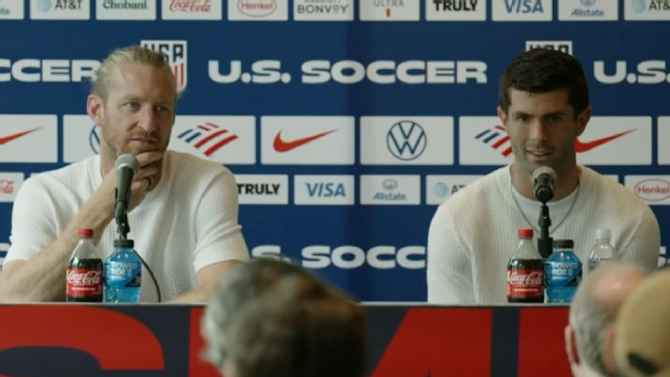
0:47
Pulisic ‘feeling great’ ahead of World Cup with the USMNT
Christian Pulisic discusses the USMNT’s goals for the 2026 FIFA World Cup.
Accumulations of yellow cards present another concern. A suspension or two among the midfielders could severely impact the U.S. defense. Having Morris would have helped mitigate this issue.
There’s a chance that Pochettino’s midfield decisions won’t come back to haunt the U.S. team. However, the World Cup has a knack for highlighting any weaknesses in a squad, especially for a team hopeful for a lengthy tournament run.
In the 2022 World Cup, favoring Jesús Ferreira over Ricardo Pepi proved unwise—an oversight exposed when Josh Sargent got injured, leaving Ferreira to start against the Netherlands without impactful performance.
This time, although Pochettino has selected just three forwards, this position appears well-stacked. Folarin Balogun, Haji Wright, and Pepi are currently in excellent form following strong club seasons.
While Wright had the fewest goals with 17 at Coventry City, it was significant in helping the team secure promotion to the Premier League. Balogun is the frontrunner to start, but capable backup options are available.
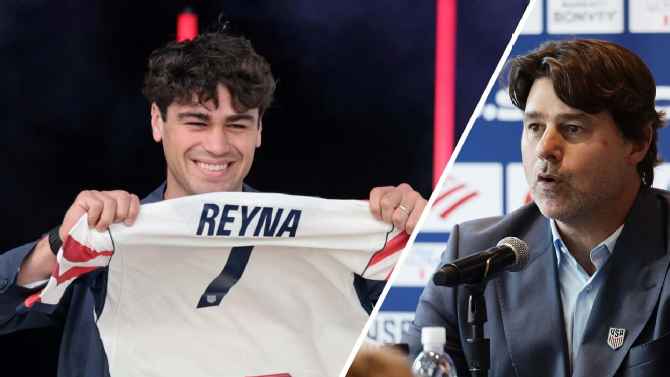
1:33
Pochettino backs ‘amazing’ Reyna for World Cup success
Mauricio Pochettino expresses his full confidence in Giovanni Reyna after naming him to the USMNT roster for the 2026 FIFA World Cup.
However, the effectiveness of forwards hinges on the quality of their support. The U.S. team in 2022 was marked by exceptional build-up play yet struggled to convert opportunities into clear chances. The onus will be on players like McKennie, Pulisic, Gio Reyna, Malik Tillman, Weah, and Alejandro Zendejas to generate creativity.
The critical question remains: Will they deliver?
Pulisic has struggled at AC Milan, managing just two contributions with no goals this year. Having a forward like Balogun alongside him should alleviate some pressure, and placing McKennie in a forward role could also be advantageous for Pulisic.
Zendejas is the unpredictable factor, contributing pace, creativity, and vibrancy to the U.S. attack. Combined with the offensive contributions from wingbacks Dest and Antonee Robinson, a multifaceted attack can emerge—one that puts Pulisic in a position to excel and be the driving force for the team.
Reyna poses another type of unpredictability. Will he be the player who struggled to find playing time during his club season, or will we see the dynamic performer who shined in the November window with a goal and an assist? His deployment will depend on the circumstances, but choosing Reyna carries inherent risks due to his inconsistent performances.
Injuries are always a variable. Eyes will be on the upcoming UEFA Conference League final, where defender Chris Richards faces questions about his ankle injury. If he plays, how effective can he be? If not, how does that affect his readiness for the U.S. team’s June 12 opener against Paraguay? He has resumed training with his club, but a “final decision” regarding his participation remains pending.
Amid ongoing uncertainty about the defensive lineup, one thing is evident: The U.S. desperately needs Richards on the pitch. The recent performances of other center backs have been inconsistent, and losing Richards for any part of the tournament would complicate the team’s pursuit of advancing in the World Cup.