



-

Jeff Kassouf
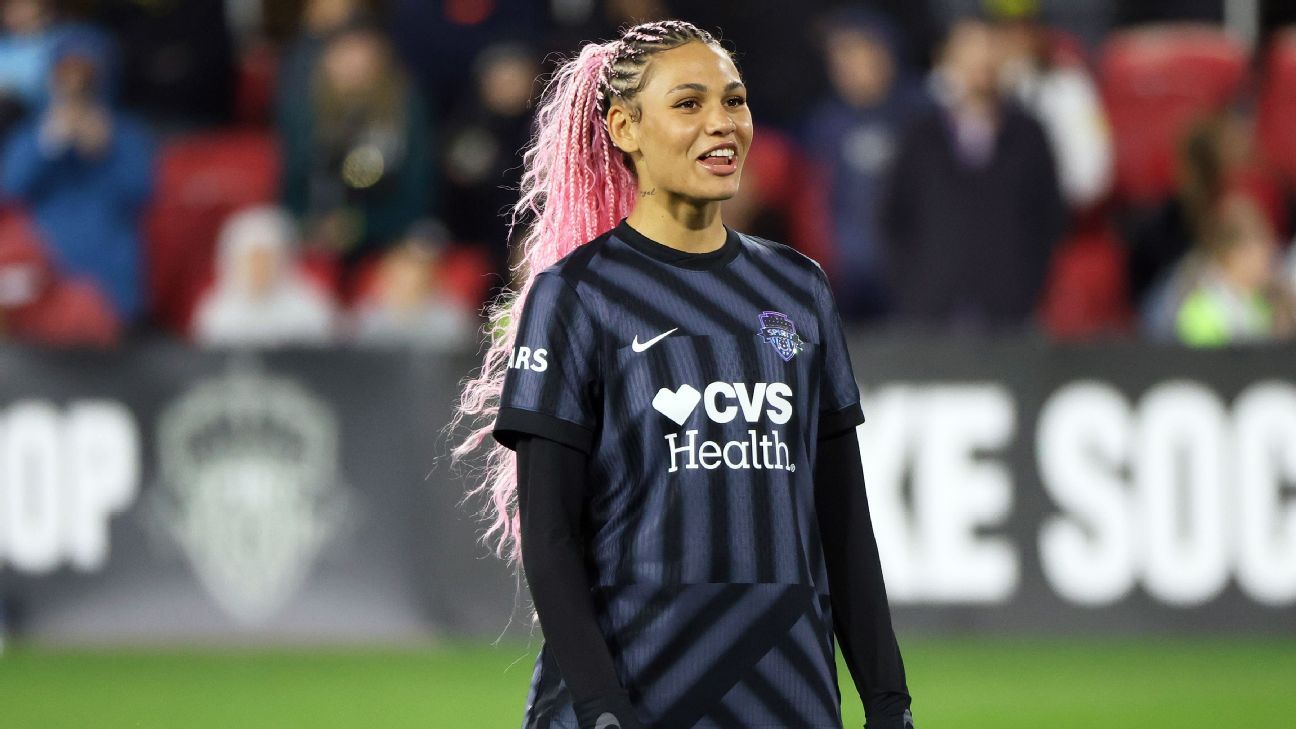
One of the most complex transfer sagas in NWSL history came to a close on Thursday when U.S. women’s national team forward Trinity Rodman and the Washington Spirit confirmed a new contract, allowing Rodman to return to the team.
Rodman and the Spirit finalized a three-year contract worth over $2 million annually, positioning her as the highest-paid player in NWSL history and globally.
This return is a significant victory for the Spirit and the NWSL, which was on the verge of losing one of its star players. Despite Rodman’s clear interest in remaining, the league struggled to navigate its salary cap principles while rushing to implement new rules that would benefit star players. This attempt at flexibility faced opposition from the NWSL Players Association, which has filed two grievances, leading to anticipated arbitration.
With Rodman’s future secure, this saga’s conclusion shines a light on the broader implications for her, Washington, and the NWSL moving forward. Let’s explore what this means.
Rodman Establishes Herself as the NWSL’s Face
The NWSL may wish to downplay the narrative, but the introduction of the High Impact Player (HIP) rule was clearly a reaction to the need to keep Rodman in the league. This new guideline allows teams to exceed the salary cap by up to $1 million for elite players, resembling MLS’s “Designated Player” rule implemented for David Beckham. This will undoubtedly be referred to as the “Rodman Rule.”
As the league scrambled to retain Rodman amidst its own challenges, it became increasingly evident that her desire to stay with the Spirit was sincere, making the league’s missteps all the more perplexing.
Rodman has established herself in Washington, D.C., becoming a leading figure for the NWSL and inspiring the next generation of USWNT stars while appealing to a broader audience. While several prominent players have stepped back or headed abroad, Rodman remains a key link to casual fans and is poised to be an MVP and Golden Boot candidate.
Rodman’s return not only solidifies her status as a star but also highlights her role in advocating for equitable pay within the league, pushing it to reconsider its salary framework. Playing in the NWSL fits her dynamic, fast-paced style, and she has the potential for a future transition abroad, which she openly stated is inevitable.
Her gameplay and impressive finishing skills align perfectly with the NWSL’s structure, making her not just a focal point for her team but a symbol of progression for women’s sports. Additionally, by securing this lucrative contract, Rodman is setting a new precedent for the league’s future.
This pivotal moment was achieved thanks to Rodman’s determination, and the support from her agent Mike Senkowski, Spirit owner Michele Kang, and soccer operations president Haley Carter. Their efforts have resulted in a notable shift in league dynamics, reminiscent of Olivia Moultrie’s legal fight in 2021 which paved the way for teenage players.
In the years to come, Rodman and Moultrie’s battles will serve as critical case studies in sports law and player rights advocacy.
Positive Outcome from a Flawed Fight for the NWSL
Rodman’s continued presence in the NWSL is beneficial for the league as a whole, enhancing its profile ahead of anticipated media rights negotiations. Despite the competition from other leagues, her stature as a star player will undoubtedly increase media interest.
The NWSL has long promoted itself as the world’s best league, but recent surveys indicate skepticism among executives about whether it backs this claim adequately. If Rodman had left after earlier departures of stars like Naomi Girma and Alyssa Thompson, it would have raised alarm bells across the league.
Rodman’s commitment and the introduction of the Rodman Rule signify a crucial turning point for the NWSL. This change may pave the way for multimillion-dollar salaries to become commonplace, a stark contrast to the league’s inception in 2013 when salaries hovered around $6,000.
0:54
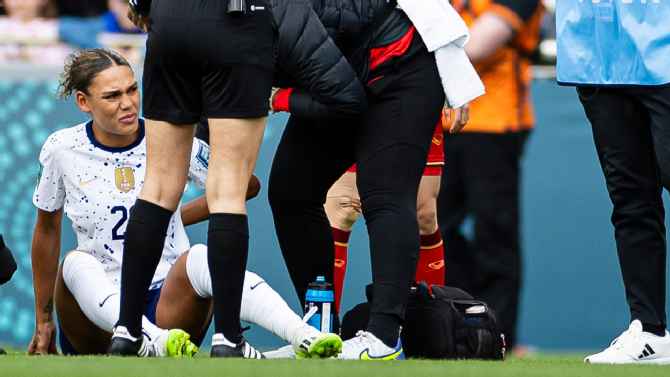
Has injury cost Trinity Rodman her top 10 Women’s Rank spot?
Futbol W’s Cristina Alexander and Ali Krieger, along with Natalia Astrain, discuss Trinity Rodman’s slide from 8th to 37th in ESPN FC Women’s Rank.
Observing MLS as a reference point—this new rule appears to mimic their previous adjustments—the NWSL is embarking on a pathway of enhanced roster mechanisms, while still maintaining a salary cap structure.
Insights from an anonymous GM survey suggest that raising the cap would be preferred over complete abolition. However, some insiders labeled the High Impact Player rule as merely a “Band-Aid,” asserting that additional increases will be crucial to staying competitive.
Clubs in England don’t face a salary cap and can offer shorter-term financial commitments while remaining competitive. Conversely, the NWSL’s response to rising player salaries, along with the constantly fluctuating market, calls for adaptability. The HIP rule can be adjusted as market conditions evolve.
The league has also faced recurring issues with delayed decision-making. The true hallmark of a world-class league is its ability to be proactive rather than respond reactively to pressures.
Rodman signed her previous deal four years ago and indicated nearly a year ago that she was considering a move to Europe as leverage in future negotiations. The NWSL believed she would value staying in the league, but financial concerns proved paramount.
Before the NWSL Championship, Berman expressed confidence in retaining Rodman, but from an external perspective, the league seemed to be on the defensive, awaiting decisions rather than actively pursuing agreements. The Spirit, Rodman, and the NWSLPA remained persistent.
An early December grievance filed by the NWSLPA highlighted the league’s struggles, as they vetoed an earlier agreement between Rodman and Washington for not adhering to the intended direction of the rules. The union has also taken action against the HIP rule, arguing instead that the salary cap should simply be raised without such stipulations.
The salary cap established in the CBA has been criticized as inadequate, with many executives forecasting it would need to rise when the CBA was initially agreed upon, with most general managers affirming this in a recent survey.
Future Planning for the Spirit
Washington has finished as runners-up in the last two NWSL Championships, both times contending without Rodman at full capacity during critical playoff stages. Imagining a fully healthy and newly motivated Rodman in the lineup certainly enhances Washington’s championship prospects.
The potential risks of the Spirit’s substantial investment are acknowledged, yet injuries are an inherent part of the game. Rodman has returned to a full training load, signaling readiness and strong form this season.
With Rodman back, the Spirit are positioned to contend for another title, bringing a renewed offensive threat to the team. Supporting players like Gift Monday and Rosemonde Kouassi, along with positive expectations for newcomers like Claudia Martínez, will further bolster the team’s championship ambitions.
The retaining of Rodman while also utilizing the HIP funds allows the Spirit to strengthen their roster and gives them some financial flexibility. Team management has indicated plans to leverage existing allocation funds to maintain talent across the board.
Regardless of the future of the HIP rule, league executives understand that all existing contracts, including Rodman’s, must be honored, ensuring that the financial landscape for NWSL players is set to improve.
On a broader scale, retaining Rodman represents a significant achievement for Carter and her recently appointed staff. It also showcases the progressive ambitions of Michele Kang, a notable voice on the NWSL executive committee. The Spirit’s success may signal a new era of influence and advancement within the league.