



The video assistant referee (VAR) has sparked controversy every week, whether in the Premier League, Champions League, or FA Cup. But how are these decisions made, and are they accurate?
This season, we will analyze significant incidents to clarify the decision-making process concerning both VAR protocols and the Laws of the Game.
 Andy Davies (@andydaviesref) is a former Select Group referee, with over 12 seasons on the elite list, officiating in the Premier League and Championship. His extensive experience at the elite level includes working with VAR, providing unique insights into the processes, rationale, and protocols involved during Premier League matchdays.
Referee: István Kovács
VAR: Christian Dingert
Time: 44 minutes
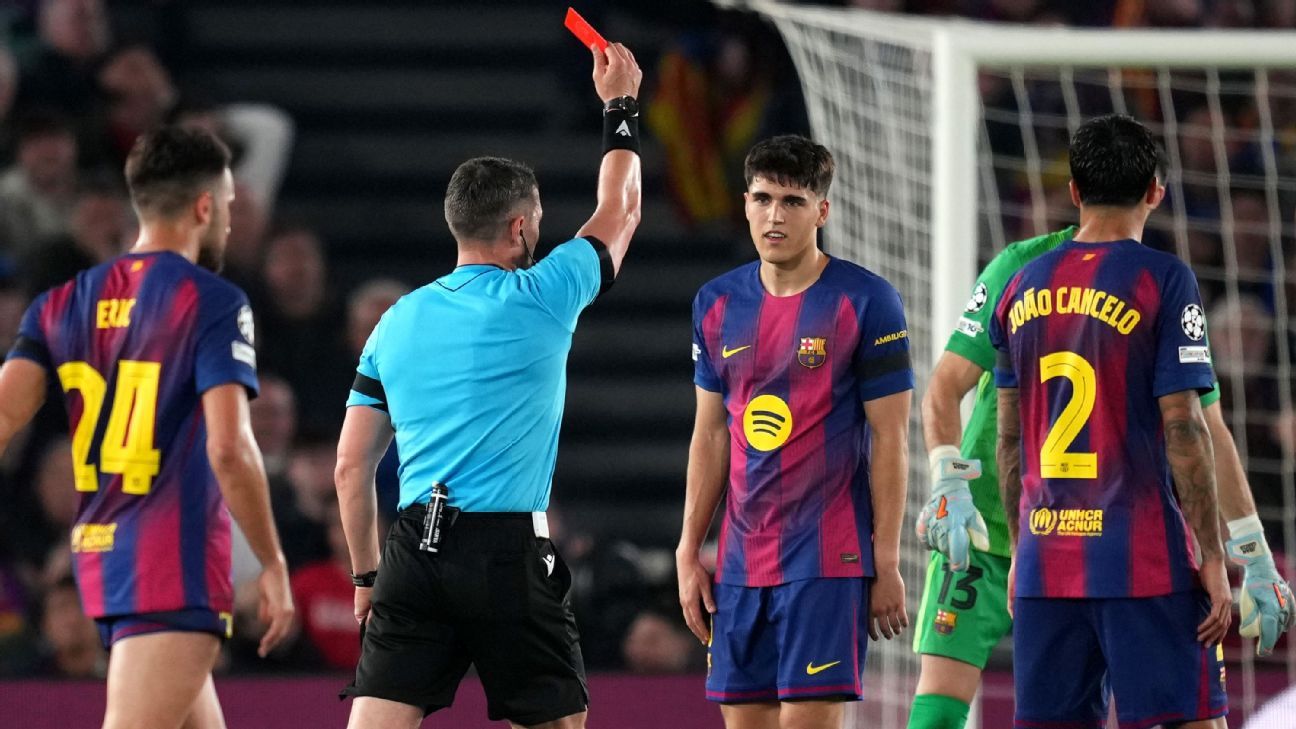
Incident: VAR overturns a red card for Barcelona’s Cubarsí.
In the 43rd minute, Barcelona and Atlético were tied at 0-0, both teams having 11 players on the field. By the 44th minute, Barcelona was reduced to 10 men. Just one minute later, Atlético took the lead, scoring 1-0.
The match turned when Pau Cubarsí was sent off, setting the stage for Julián Álvarez to score a stunning goal from the resulting free kick. Atlético would secure a 2-0 victory with an additional goal from Alexander Sørloth, leading to an electric second leg of this Champions League quarterfinal at the Metropolitano Stadium on Tuesday.
What happened: Atlético midfielder Giuliano Simeone appeared to be through on goal when Cubarsí tripped him up. The on-field referee awarded a free kick but only showed a yellow card to the Barcelona defender.
VAR decision: VAR recommended an on-field review for a potential red card for denying an obvious goal-scoring opportunity.
VAR review: VAR carefully analyzed the incident, considering the referee’s rationale for issuing a yellow card instead of a red. The referee believed that, at the time of the foul, the ball was behind the attacker, implying the attacker did not have full control and, therefore, the situation did not warrant a red card. After reviewing several angles, VAR concluded that the original decision was incorrect. The review indicated that without the foul, the ball would have progressed into the penalty area, giving the Atlético player a legitimate scoring opportunity. The referee ultimately agreed with VAR and issued a red card to Cubarsí.
Verdict: I believe this was the correct outcome and a positive VAR intervention. I was surprised by the initial yellow card because the situation clearly indicated a red card offense. However, the fact that the ball was in the air at the time of the foul added complexity and uncertainty to the referee’s decision-making, likely making him more comfortable issuing a yellow card in those circumstances.
Incident: Potential penalty for handball.
Time: 54 minutes
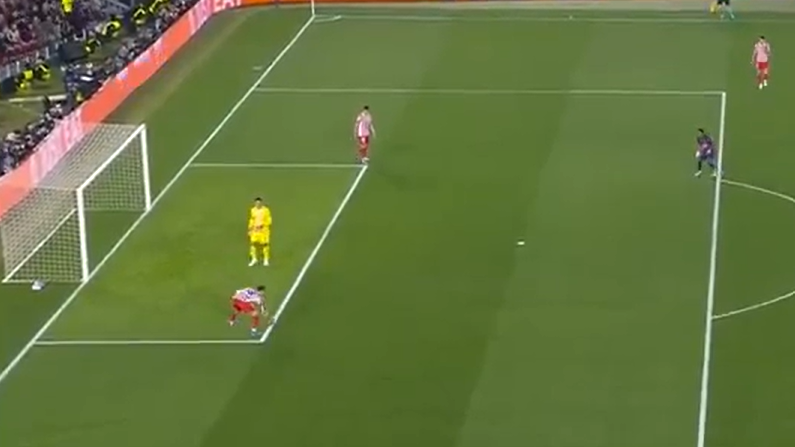
What happened: A controversial moment that frustrated Hansi Flick occurred when Barcelona believed they should have received a penalty after Atlético goalkeeper Juan Musso seemingly took a goal kick, only for his teammate Marc Pubill to stop the ball with his hand and then retake the kick.
Verdict: This was an unusual scenario, and I sympathize with the referee. I’ve faced similar dilemmas, caught between strictly enforcing the law and exercising sound judgment. In any case, the referee finds themselves in a difficult position regardless of how they choose to address the incident.
According to Law 16: The Goal Kick, the ball comes into play once it is kicked and clearly moves. Many argued that since Musso played the ball first, the game was active when Pubill handled it. Alternatively, one could interpret that Musso was simply passing the ball to Pubill to restart play.
Ultimately, the referee’s judgment prevails, and he opted for the least controversial decision based on the facts available. I am comfortable with his choice.
A penalty in this situation, where the action had no effect on the opposition’s chance to engage with the ball or provided any advantage to Atlético from this method of restart, is undesirable. While many were dissatisfied with the choice made, the repercussions would have been greater had it been ruled a penalty.
UEFA has been unclear with similar situations in recent seasons, empowering referees to use their discretion, assess the moment, and follow their instincts.
In fact, there have been two comparable incidents in the Champions League in recent years that were handled differently. Last season, Aston Villa’s Tyrone Mings was penalized for handling the ball after a short goal kick by goalkeeper Emiliano Martínez. The previous year, Arsenal defender Gabriel went unpunished for handling a short pass from goalkeeper David Raya in the first leg of the quarterfinal against Bayern Munich.
Kovács made his decision, and to clarify, this situation was not eligible for VAR intervention. The referee was confident about what he saw and made a judgment in real-time; therefore, it wouldn’t be categorized as an error needing VAR review.
Furthermore, Pubill could not have received a second yellow card for the incident. A handball is only punishable with a yellow card if the defender deliberately stops a goal-bound shot or prevents an attacker from having a clear opportunity in the penalty area, neither of which occurred in this case.