



The video assistant referee (VAR) has sparked debate every week, whether in the Premier League, Champions League, or FA Cup. But how are decisions made, and how accurate are they?
This season, we’re diving into significant incidents to analyze and clarify the decision-making process in relation to VAR protocols and the Laws of the Game.
 Andy Davies (@andydaviesref), a former Select Group referee with over 12 seasons of experience at the elite level, has officiated in both the Premier League and Championship. With substantial involvement in the VAR process, he provides invaluable insights into the protocols and rationale employed on a Premier League matchday.
Referee: Michael Oliver
VAR: Paul Howard
Time: 17 minutes
Incident: Possible penalty for Man City
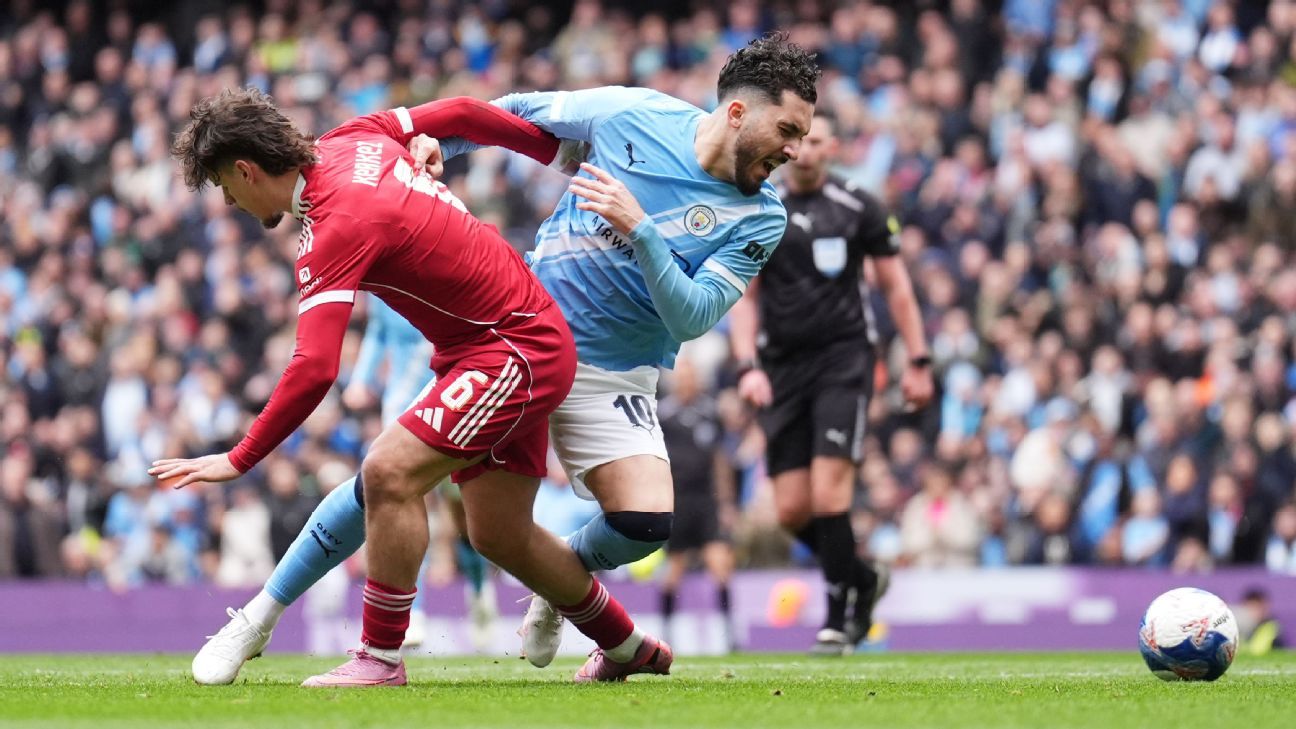
Incident Overview: Man City’s Rayan Cherki attempted to get around Liverpool defender Milos Kerkez, who challenged for the ball. Cherki fell to the ground while his teammates called for a penalty. Pep Guardiola, watching from the stands due to a touchline ban, appeared frustrated as he looked at a replay on TV.
VAR Decision: Referee Michael Oliver ruled that no penalty was warranted, and VAR confirmed this decision, concluding that Kerkez’s challenge was not a foul.
Evaluation: Our review begins with the on-field referee’s decision and reasoning. Oliver communicated that the initial contact was made by Kerkez on the ball, and the subsequent contact resulted from both players’ natural movements without any foul. VAR agreed with Oliver’s real-time interpretation as consistent with the video replays, validating the decision.
This was the correct decision. Although City players expressed their frustration, a clear foul was necessary for the referee to review the incident with the pitchside monitor. According to Oliver, the second contact that led to Cherki falling was a product of both players’ natural movements. There is also a perception that Cherki may have exaggerated the contact to try and induce a foul, and evidence exists for this interpretation.
Referees can misinterpret such scenarios; however, Oliver was well-positioned and accurately assessed the incident.
Time: 38 minutes
Incident: Penalty awarded to Man City
Incident Overview: Liverpool’s Virgil van Dijk was involved in a challenge against Nico O’Reilly in the penalty area, which left the City player on the ground. Referee Oliver promptly awarded a penalty.
VAR Decision: VAR Paul Howard conducted a swift review and confirmed the on-field decision was correct.
Evaluation: It’s unclear why Van Dijk was so displeased with the decision, as it was clearly the right call. The Liverpool captain was late with his tackle and made no contact with the ball, constituting a clear foul and penalty.
Time: 38 minutes
Incident: Penalty awarded to Liverpool
Incident Overview: Man City defender Matheus Nunes made a late challenge on Liverpool forward Hugo Ekitike in the City penalty area, prompting Oliver to award a penalty to Liverpool from his advantageous position.
VAR Decision: The penalty awarded on the field was checked and confirmed by VAR.
Evaluation: This review for VAR was straightforward. The on-field decision was obvious, with Nunes committing an unnecessary foul. While a complete check using three camera angles is standard protocol, the clarity of the incident left little doubt about the accuracy of the decision.
Michael Oliver made a solid on-field decision regarding this challenge, which was both late and unneeded, especially since Ekitike was heading toward the goal line with minimal threat of danger.
From the VAR’s perspective, incidents don’t get much clearer than this. It was a successful match for Oliver and VAR Paul Howard, especially following a week filled with negative commentary about VAR — with three out of four fans in England expressing disapproval in a recent survey.
The officiating team at the Etihad Stadium likely feels satisfied with their performance.