




Each week, the video assistant referee (VAR) stirs up controversy in the Premier League. But how are these decisions made, and are they accurate?
This season, we will analyze key incidents to clarify the decision-making process, focusing on both VAR protocols and the laws of the game.
All screenshots courtesy of NBC
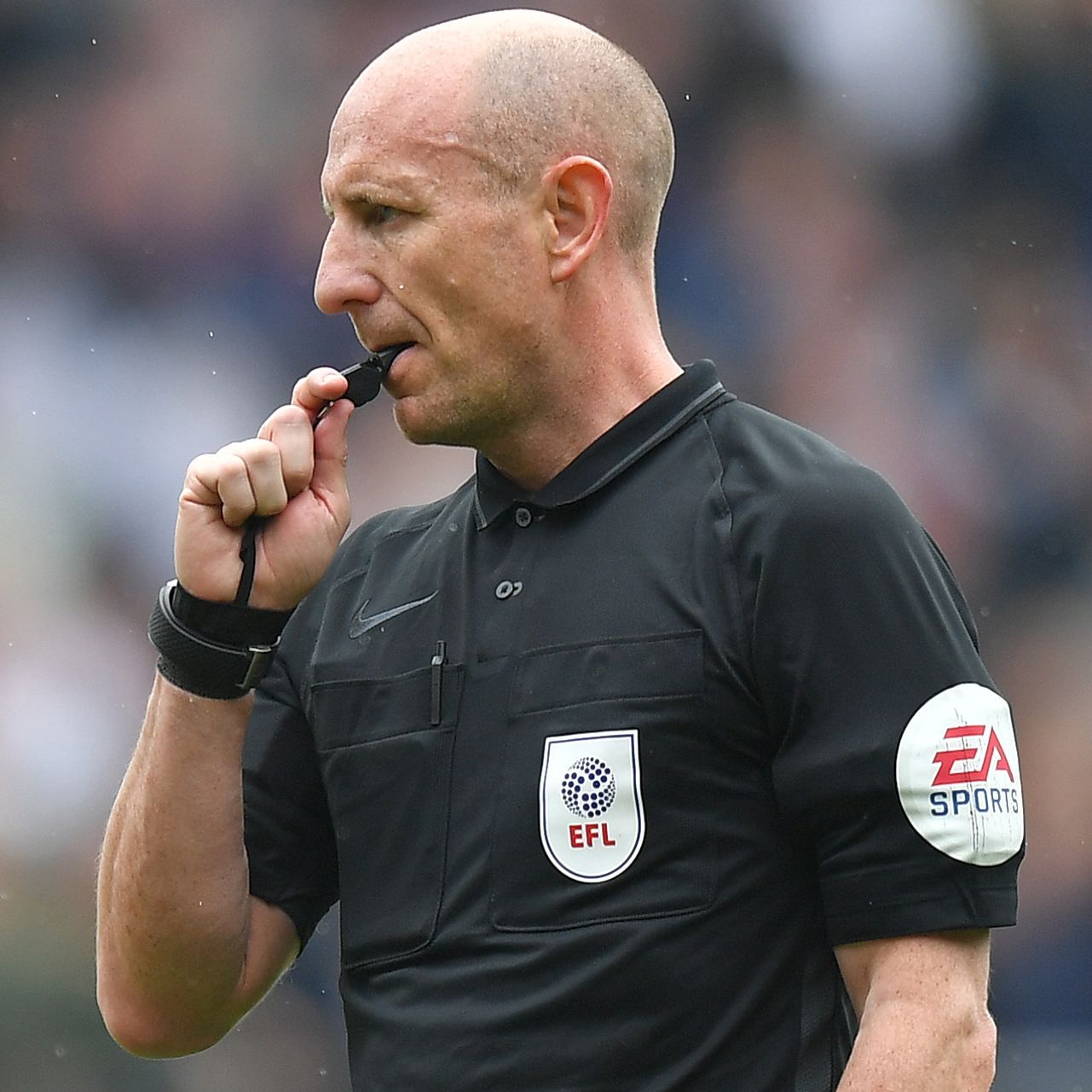 Andy Davies (@andydaviesref), a former Select Group referee, brings over 12 years of experience officiating in the Premier League and Championship. With a wealth of knowledge from the elite level, he has also worked within the VAR framework in the Premier League, providing valuable insight into the protocols and reasoning that unfold on matchdays.
Referee: Chris Kavanagh
VAR: Michael Oliver
Incident: Virgil van Dijk‘s headed goal ruled out for offside
Time: 38 minutes
What occurred: In the 38th minute, Liverpool’s captain, Van Dijk, scored with a header off a corner taken by Mohamed Salah, but teammate Andrew Robertson was ruled offside, affecting the visibility of City’s goalkeeper Gianluigi Donnarumma. Consequently, assistant referee Stuart Burt disallowed the goal.
Virgil Van Dijk’s potential equalizer is DISALLOWED. Andrew Robertson was deemed to have interfered with the goalkeeper from an offside position. pic.twitter.com/yUkYaiCWY6
— NBC Sports Soccer (@NBCSportsSoccer) November 9, 2025
VAR decision: VAR Oliver upheld the referee’s ruling of offside and confirmed no goal for Liverpool, as Robertson was in an offside position and was seen to be impacting Donnarumma’s ability to save the ball.
VAR review: The on-field determination by Kavanagh focused on Robertson’s offside position impacting an opponent’s view, which served as a foundation for the VAR review. While Robertson was offside, this alone isn’t an offense. Oliver had to ascertain whether Robertson’s position or actions significantly hindered Donnarumma’s ability to make the save. The determination of ‘impact’ is subjective, implying that a clear error in judgment would need to be established for an on-field review (OFR) to be suggested.
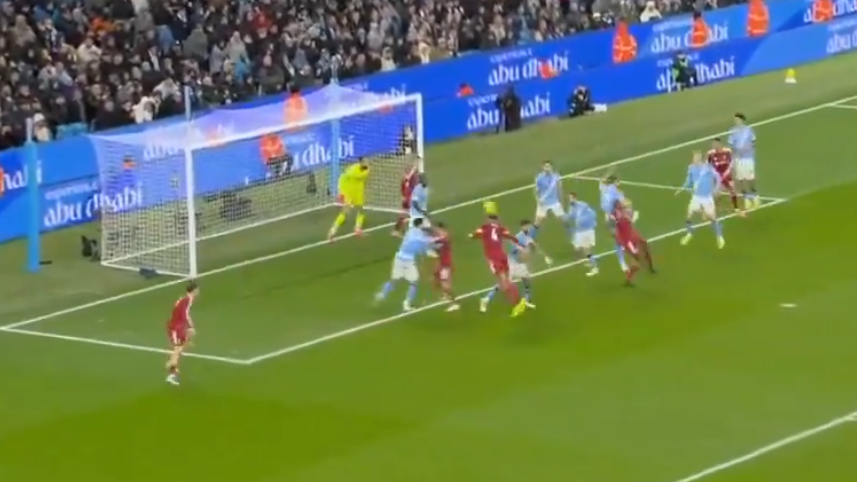
Conclusion: This situation is inherently subjective and will likely prompt discussion. One could argue for either decision based on various factors: how close the attacker was to the ball, any distracting movements by the attacker, and the effect of his presence on Donnarumma. In real time, I sensed an offside; Robertson’s actions seemed to obstruct the goalkeeper, making it a challenging decision for the on-field officials. Considering all factors, disallowing Van Dijk’s goal was a defensible choice by the referees. Nonetheless, the reaction suggests that this decision did not align with public expectations, highlighting the subjective nature of the ruling that the VAR was unlikely to overturn.
Incident: Potential penalty; Giorgi Mamardashvili on Jérémy Doku
Time: 9 minutes
What transpired: In the ninth minute, Doku seemed to be fouled by Mamardashvili as Liverpool’s goalkeeper charged out to contest the ball. Mamardashvili mistimed his challenge, sliding on the wet pitch and colliding with Doku’s left boot, causing the forward to lose his balance and fall. Kavanagh chose not to award a penalty at that moment and let play continue.
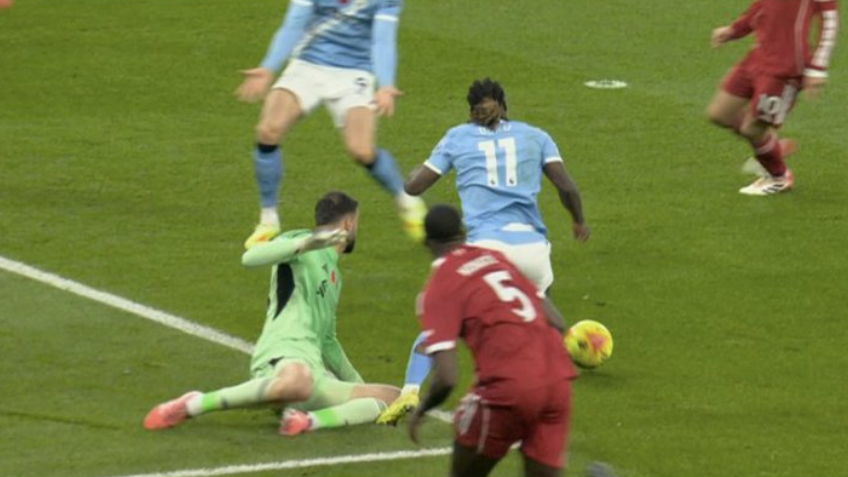
VAR decision: After reviewing the play, Oliver suggested an OFR for a possible penalty for Manchester City. Following multiple replays, Kavanagh concurred with Oliver and awarded a penalty for the foul committed by Liverpool’s goalkeeper against Doku.
VAR review: The VAR review was expedited, with Oliver quickly determining that a foul had occurred. Although there was minimal contact in terms of force, it did affect Doku’s balance and potential shot opportunity. Oliver was right to recommend an on-field review, strongly backed by the video evidence.
Conclusion: Oliver’s intervention represented an effective use of VAR, and Kavanagh’s decision to award a penalty was correct. Given the subtlety of the contact—primarily the knee of the Liverpool goalkeeper grazing Doku’s foot—it would have been challenging for Kavanagh to identify the foul in real time. Nevertheless, contact was present.