



Each week, the video assistant referee (VAR) generates debate in the Premier League, but what are the decision-making processes behind it, and are they accurate?
This season, we will analyze significant incidents to clarify the VAR protocol and the application of the Laws of the Game.
Andy Davies (@andydaviesref) is a former Select Group referee with over 12 seasons in elite officiating, covering both the Premier League and Championship. With rich experience in high-level matches, he has engaged with VAR operations in the Premier League, offering invaluable insights into the decisions, reasoning, and protocols employed on matchdays.


Referee: Darren England
VAR: Mathew Donohue
Time: 63 minutes
Incident: Handball by Jaydee Canvot, penalty awarded and scored by Chelsea
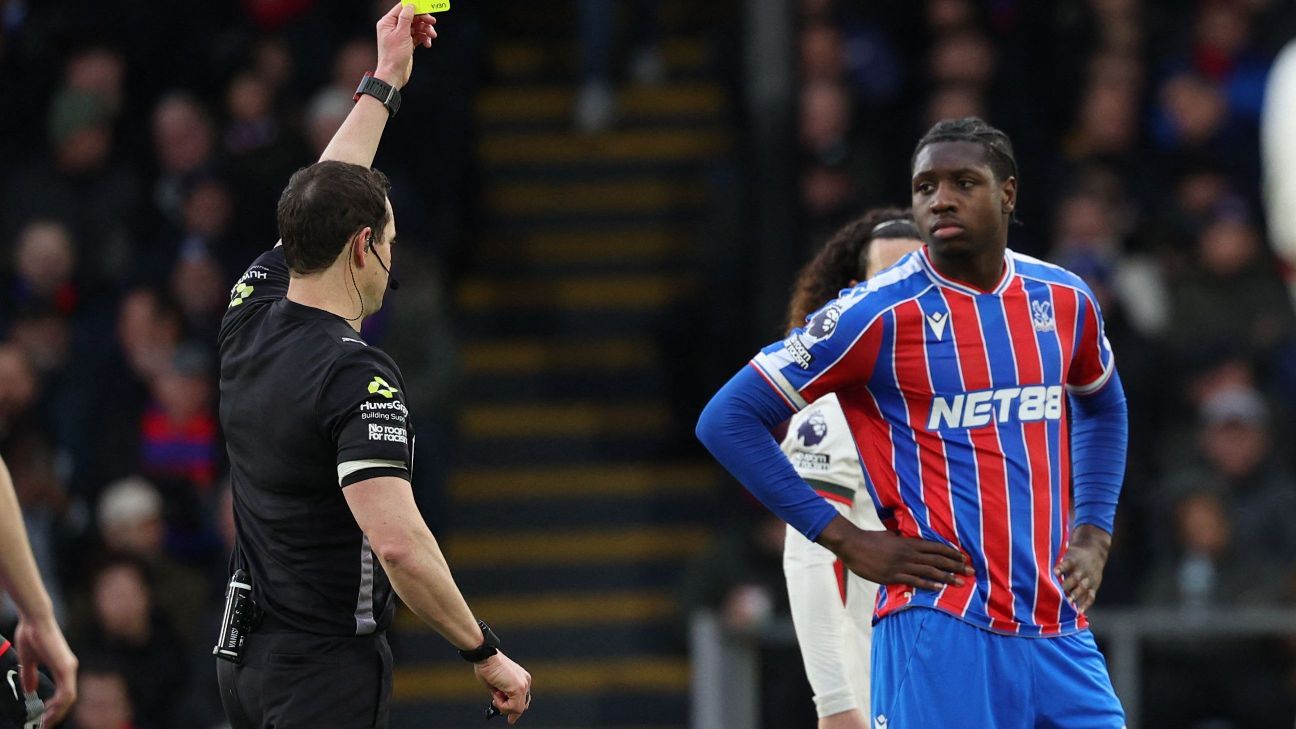
What happened: Chelsea forward João Pedro had a clear opportunity blocked by Palace’s Jaydee Canvot. The ball would have gone in had Canvot not used his arm to stop it, though his arm was positioned close to his body.
VAR decision: Initially, no penalty was awarded, but VAR official Mathew Donohue instructed referee Darren England to review the incident. After the review, England stated that while the handball was deemed “accidental,” a penalty was still warranted. Canvot received a yellow card rather than a red.
Verdict / Insight: Crystal Palace supporters at Selhurst Park initially exhaled in relief when the referee characterized the handball as accidental, only to become confused when a penalty was still given. Nevertheless, both referee England and VAR official Donohue correctly assessed the situation.
This VAR intervention was accurately executed according to the updated handball regulations introduced last season.
In the past, any handball preventing a clear goal-scoring opportunity — whether intentional or accidental — resulted in a penalty and a red card. However, the revised rule allows the offending player to receive a yellow instead, while still awarding the penalty. This intervention exemplifies solid VAR support and was accurately upheld by the on-field official.


Referee: Farai Hallam
VAR: Darren England
Time: 37 minutes
Incident: Potential handball by Wolves defender Yerson Mosquera
What happened: Man City forward Omar Marmoush maneuvered around the Wolves defender, and the ball appeared to hit Mosquera’s outstretched arm. Referee Hallam allowed play to continue.
VAR decision: Following an extended review, VAR Darren England determined that Mosquera’s left arm was positioned unnaturally and suggested an on-field review for a possible handball penalty. On his Premier League debut, Hallam reviewed the monitor but retained his decision that no handball had occurred.
Verdict / Insight: It’s atypical for a referee to visit the monitor and reaffirm their original decision; Hallam’s choice to do so on his debut showcases his confidence and conviction. He is the first referee this season to maintain his initial decision after using the monitor, but this outcome invites discussion on its correctness.
In my view, VAR’s intervention was justified. The footage indicates Mosquera’s arm was in an unnatural position at the moment of contact with the ball.
The defender’s arm began in a natural position, but upon Marmoush’s flick, Mosquera’s arm shifted outward and became significantly outstretched.
This incident aligned with the criteria for a handball offense as per the laws, which state:
• A player is considered to have made their body unnaturally larger when their hand/arm position is not a result of, or justifiable by, their body movement in that situation. By adopting such a position, the player risks being penalized for interference if their hand or arm contacts the ball.
While there is a noteworthy dialogue surrounding Hallam’s bold decision to uphold his initial ruling, the primary concern remains that the refereeing team arrived at the correct conclusion: it was indeed a handball offense warranting a penalty award based on current guidelines.