




-

Emily Keogh
Chelsea has struggled to display convincing form of late but continues to secure results, including a narrow 1-0 win against Leicester, two back-to-back 1-1 draws against Manchester United and Twente, and another understated 1-0 victory over Tottenham Hotspur on Sunday.
Despite remaining unbeaten in the Women’s Super League (WSL) under manager Sonia Bompastor and showing dominance in London derbies (with 33 wins in their last 39 matches), Chelsea‘s recent displays have been marked by a lack of fluency, sharpness, and cohesion in the attacking third.
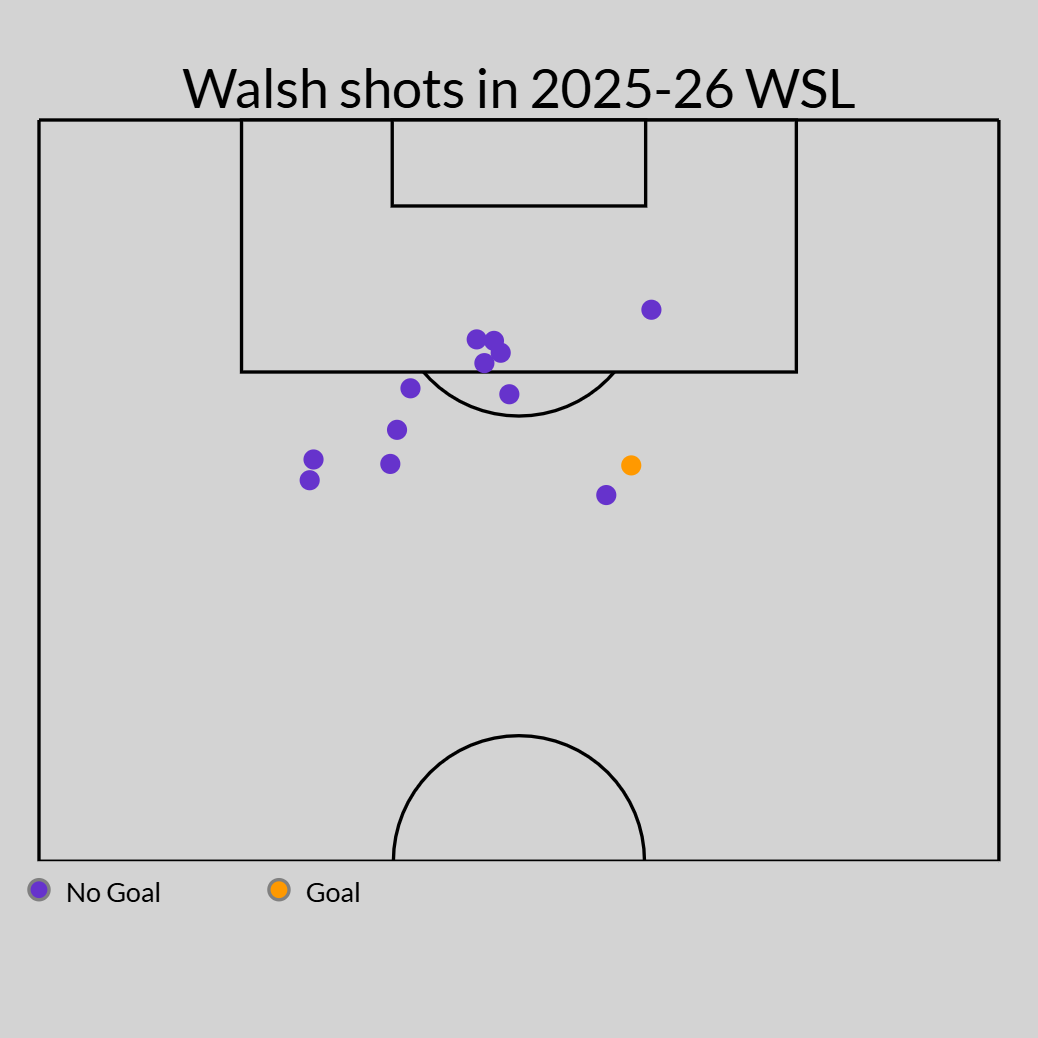
Against Spurs, Chelsea needed a staggering 23 shots to break the deadlock, courtesy of a brilliant strike from midfielder Keira Walsh, who sent a low shot into the net from 25 yards out. However, just four of their 27 attempts found the target, illustrating a recurring issue of high output with low conversion rates.
Too often, Chelsea wasted clear opportunities, and with each miss, frustration mounted, further feeding a cycle of discontent as the match progressed. They also struggled with set pieces, winning a total of 16 corners against Spurs (13 in the first half) but failing to create a significant threat from any of them.
Statistically, Chelsea generally controls the game. On Sunday, they maintained 66% possession and achieved a season-high of 67 touches in Tottenham’s box, along with 152 successful passes into the final third. Yet their conversion rate does not reflect the control they intend to have.
Frustrations in their attack have been exacerbated by consistent squad rotations, as the starting lineup has changed for each match. They lack a central attacking figure, with striker Sam Kerr back in the squad but yet to start a game after a 22-month layoff due to a torn ACL, while Mayra Ramírez continues to recover from injury and is out until the new year. Consequently, despite Aggie Beever-Jones contributing four goals in six appearances, Chelsea often appears blunt in central areas.
Nonetheless, Chelsea is demonstrating the qualities of champions by finding ways to secure victories. Last season, ten of their 19 wins were by a single goal, contributing to a record points tally in the WSL. So does it matter if they lack clinical finishing as long as they continue to win? Eventually, opponents will seize opportunities, but for now, Chelsea is grinding through.
As for Spurs, although they left the match empty-handed, there were evident tactical and structural enhancements under new manager Martin Ho, especially in their defensive organization.
With four wins in six matches—one fewer than they secured all of last season—the club is on the rise. After finishing 11th in the previous campaign, they are building their success on a more resilient defense. Last season, Spurs boasted the second-worst defensive record (44 goals conceded), but now, six matches in, they sit fourth in the table with a neutral goal difference, firmly within the top half.
Against Chelsea, Spurs displayed solidity, with 30 tackles and 44 clearances, underscoring their commitment to a compact structure and effective interventions. Chelsea created four significant chances overall, but Spurs’ discipline and organization constrained their quality, preventing these opportunities from being converted into goals.
Dutch goalkeeper Lize Kop played a crucial role, delivering several critical saves that kept the scoreline respectable. Her performance, coupled with a strong collective defensive effort, indicates a team progressing in the right direction.
However, Tottenham’s improvements have, for the most part, been centered in their defensive phase. They found it challenging to make an impact offensively, managing only two shots on target and creating just one significant chance, which resulted in a minimal presence in Chelsea’s final third. Chelsea, though not at their best, were seldom challenged, and Spurs’ attacks lacked the sharpness needed to put pressure on goalkeeper Hannah Hampton.
While their passing accuracy has shown improvement, much of it has been sideways or backward—an indication of caution in their build-up play. This constrained their ability to generate momentum or sustain pressure. There were moments of intent during pressing sequences, but without significant progression or direct attacking moves, most attempts fizzled out.
Ultimately, the disparity between the two teams lies more in execution than structure. Chelsea has honed the ability to grind out results and capitalize on critical moments, even when performing below par. In contrast, Spurs are in the process of learning how to translate their organization into tangible outcomes.
Limiting Chelsea’s chances is an impressive feat for a side still acclimating to Ho’s tactics, but had their attacking play matched their defensive resolve, they might have left with a point or more. Elevating their mentality, decisiveness, and offensive production—qualities that define title contenders—is the next chapter in Spurs’ evolution.