



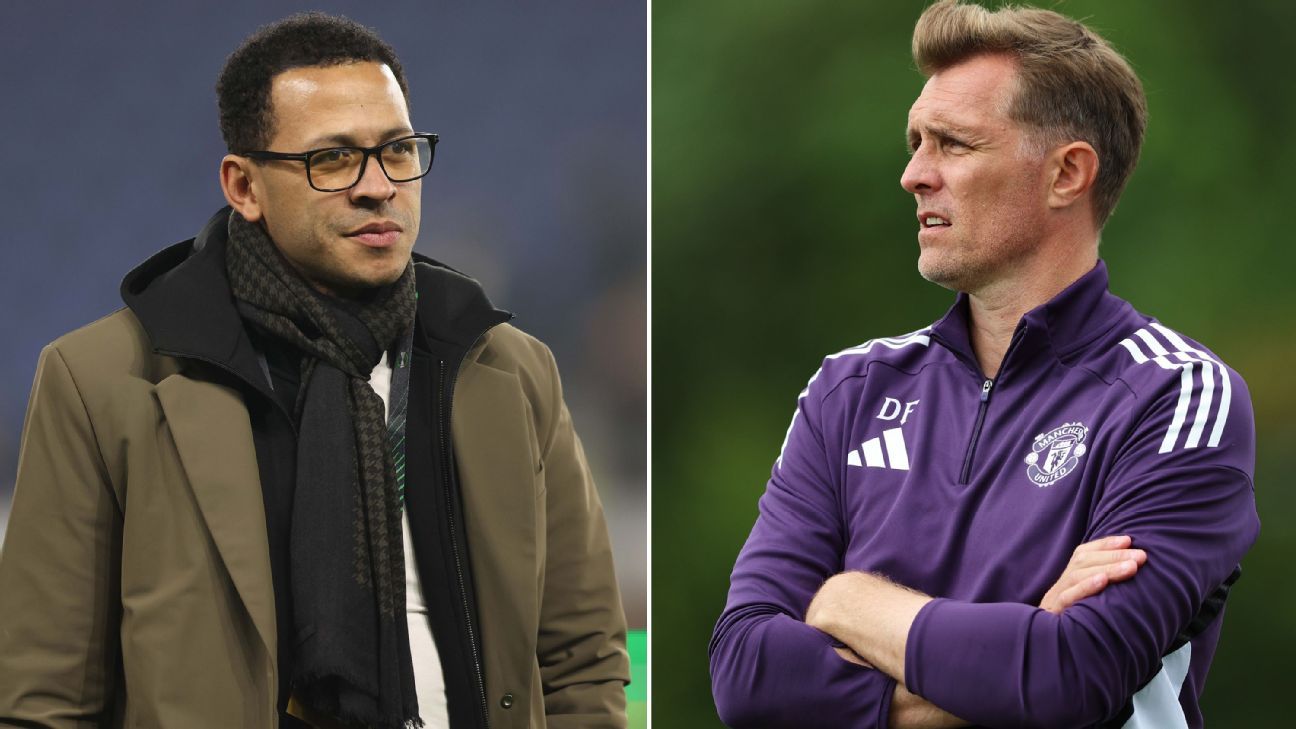
This week will be unforgettable for Liam Rosenior and Darren Fletcher. At 41 years old, both are set to embark on their managerial journeys in the Premier League with two of the country’s most prestigious clubs.
They have much in common: a lifelong connection to football, a shared Premier League playing history, and a nascent managerial experience, not to mention their similar points standings—Rosenior’s Chelsea ranks fifth with 31 points, while Fletcher’s Manchester United lags just behind on goal difference.
This week marks just one significant point of divergence in their careers.
– Ogden: Top candidates to succeed Amorim at Man United
– Dawson: Reasons behind Amorim’s dismissal: tactics, player conflicts, and transfers
– Chelsea announces Liam Rosenior’s 5½-year contract
Fletcher, having cultivated a close friendship with Wayne Rooney during their playing days under Sir Alex Ferguson, had planned to be Rooney’s assistant once he began his coaching career. However, when Rooney became the caretaker manager at Derby County in 2020, Fletcher was already engaged in a role as United’s technical director. Consequently, Rooney turned to Rosenior, who was working at the Championship club, to join his staff.
From this perspective, it’s striking that the two will each lead their teams this week—United against Burnley in the Premier League on Wednesday, and Chelsea against Charlton Athletic in the FA Cup on Saturday, with the match available to stream live on ESPN+.
So, how did they arrive at this point, what are their personalities like, and what can we expect from them as managers?
DARREN FLETCHER
Those familiar with Fletcher often describe him as loyal, tenacious, and persevering.
The Scotland midfielder faced significant challenges during his playing career, particularly his long struggle with ulcerative colitis, a chronic inflammatory bowel condition that sidelined him for a year from 2012 to 2013. The illness weakened him physically, causing drastic weight loss and requiring hospitalization. However, after surgery, he successfully returned to elite football, providing him with a unique perspective for connecting with players.
During his battle with the disease, only Ferguson was aware of his condition, which he kept private until Fletcher felt ready to share. “I struggled to concoct excuses for my absences from training, for my apparent illness, and my frequent bathroom trips,” Fletcher recounted later.
Fletcher’s character was acknowledged by Ferguson’s assistant Mike Phelan, who noted Fletcher’s unwavering loyalty. As a player, he was often seen as a versatile box-to-box midfielder, despite being unjustly labeled an “anti-footballer” by Arsene Wenger, who insisted he was merely on the pitch to foul. In reality, he was a pragmatic player who understood his role and executed it effectively (Wenger later retracted that statement).
“Fletcher was nurtured in a highly professional environment from the academy through to the United first team,” Phelan explained. “That’s just who he is.” This is relevant, especially in light of discussions about whether he might select his twin sons, Tyler and Jack, both of whom have appeared for the first team this season.
“He will select a team he believes will secure victory,” Phelan added. “That is his primary focus.”
What can we expect from Fletcher as a manager?
Assuming the role of caretaker manager can be challenging. Phelan noted that one of the essential tasks during this time is improving team morale—a role well-suited for Fletcher.
His 13-year tenure as a player at the club included a journey from youth team to winning five Premier League titles and a Champions League trophy. He returned to the club in 2020, initially serving as a U16 coach and subsequently a first-team coach, before spending three years as technical director, eventually taking charge of the U18s in July 2025.
“This experience matters,” Phelan emphasized. “He knows how to relate to the players.”
Fletcher’s approachable personality also stood out. “I witnessed that first-hand,” remarked Jon McLeish, son of former Premier League and Scotland manager Alex McLeish, who also battled the same health condition and collaborated with Fletcher on charity initiatives.
“Every single United player, along with their partners, showed up for our major charity event. Ferguson attended, as well as David Moyes and many others. That speaks volumes about how he is regarded.”
Throughout his playing and coaching career, Fletcher has found his niche and thrived within it.
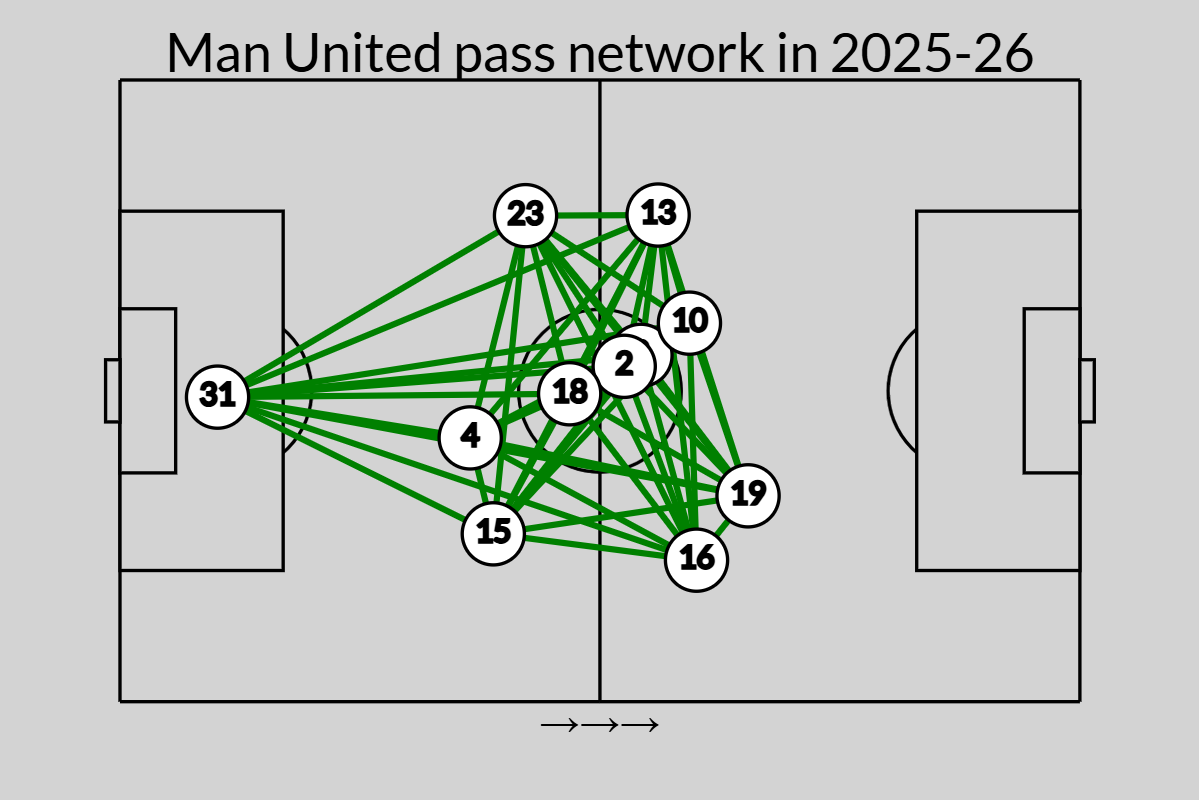
Tactically, his approach differs from the 3-4-2-1 utilized by Ruben Amorim. While managing the U18s, he preferred a 4-2-3-1 formation, emphasizing rapid counterattacks via the wingers. How much of this strategy he will implement with the first team remains to be seen, but he has consistently returned to key tactical principles.
“Fast attacking play truly embodies the United identity,” he noted in a post-match interview about his U18 squad. “I’ve been showing them clips of Rooney, [Cristiano] Ronaldo, and Park Ji-sung scoring counterattack goals. I aim to instill some of that Manchester United spirit.”
2:18
Will Chelsea give Liam Rosenior the time to succeed?
James Olley ponders whether Chelsea and their supporters are patient enough to allow the inexperienced Liam Rosenior the opportunity to thrive as their manager.
LIAM ROSENIOR
Rosenior had a professional playing career as a fullback, representing teams including Bristol City, Fulham, Torquay United, Reading, Ipswich Town, Hull City, and Brighton & Hove Albion from 2002 to 2018. He has often referred to coaching as his “true calling.”
The son of former West Ham player and non-league coach Leroy Rosenior, some of his fondest childhood memories were around the dinner table discussing tactics with his father and brother. As a teenager, he would prepare scouting reports for his dad, which reinforced his belief that he was destined to be a manager rather than just a player.
“I have dedicated 26 years to becoming the best coach I can be, learning to understand people as thoroughly as possible,” he shared with the Athletic in 2022 when he began his coaching tenure as Rooney’s assistant at Derby.
“During my playing days at Hull and Brighton, I would frustrate the stewards by watching matches from the tunnel, honing my skills in making quick decisions from the sideline. It’s easy to analyze games from a distant view, but experiencing the game live from the pitch provides invaluable insight into play dynamics and tactical adjustments.”
Phelan, who had the opportunity to work with Rosenior at Hull in 2015, corroborated this, characterizing him as endlessly curious and deeply invested in the coaching aspect of football.
Even in his final years as a player, he pursued his coaching badges and took on U21 training sessions during his days off, a choice that likely accelerated his rise in coaching.
By 2021, just two years after retiring, he had already advanced to first-team coach at Derby and later became Rooney’s assistant manager.
“Liam was instrumental for me,” Rooney mentioned on his BBC podcast. “His coaching capabilities are remarkable. While I focused on management and player relations, his attention to detail in day-to-day coaching is exceptional. I learned a great deal from him.”
Rooney portrayed Rosenior as methodical and articulate, traits that he showcased in his exit from Strasbourg. He made the unusual decision to conduct a farewell press conference just hours before his official introduction at Chelsea.
He explained that this was done out of respect for the Ligue 1 club.
“On Saturday, I was uncertain about my path. However, the subsequent developments allowed me to engage with one of the world’s leading clubs. Today, it appears I am poised to become their next manager—a chance I can’t decline at this point in my life.”
What is Rosenior’s tactical approach?
A key reason Chelsea appointed Rosenior despite his limited experience is his understanding of the club’s broader system, gained during his 18-month tenure at feeder club Strasbourg. His management of a youthful squad will be crucial.
Former manager Enzo Maresca exclusively selected players under 30 during his 92 matches, though the only over-30 in the squad was winger Raheem Sterling, whom he had sidelined this season. While Rosenior did not adhere to this strict guideline at Strasbourg, his debut saw an entirely U23 starting XI, a first in the league’s history.
In terms of tactical approach, Rosenior embodies a modern coaching ethos. He is flexible with defensive formations, switching between a back three and a back four as needed. His primary objective is to dominate possession, favoring quick passing and structured builds from the back to create quality opportunities. This season, under his management, Strasbourg ranked third in Ligue 1 for touches and passes attempted and second in shots-on-target percentage.
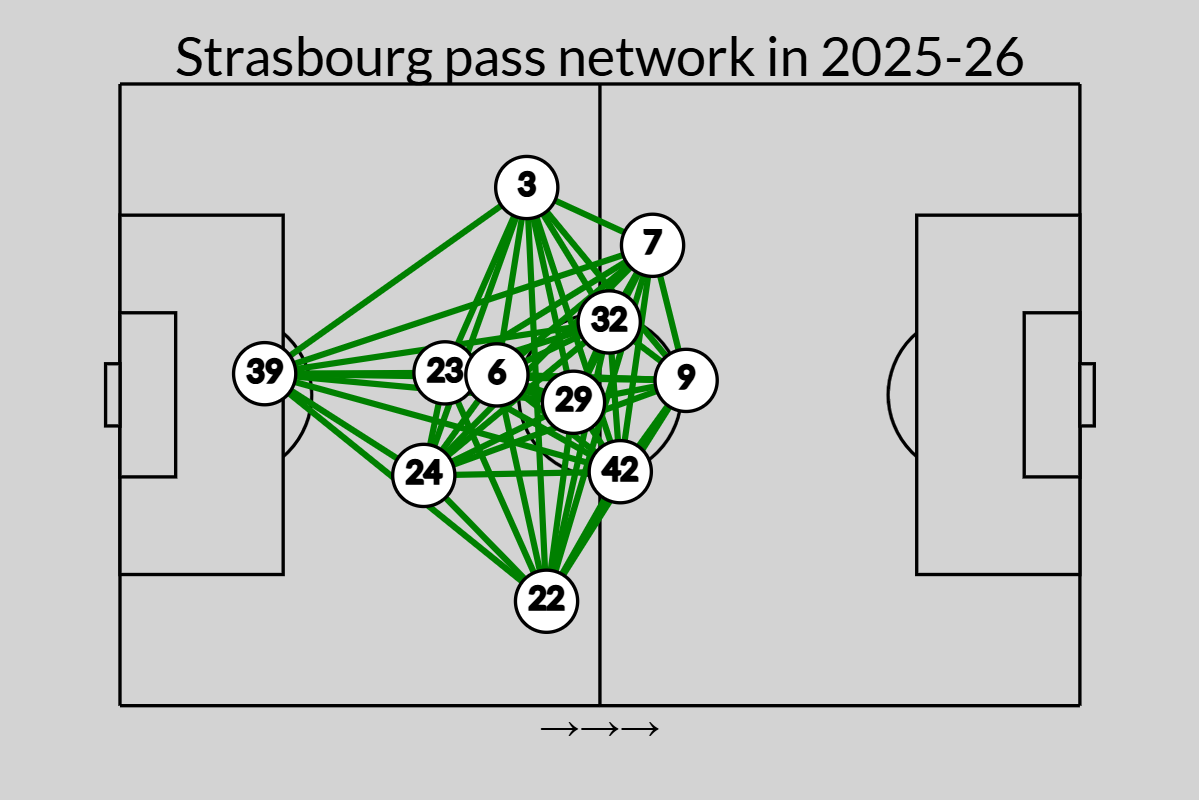
Defensively, he adopts a proactive approach, emphasizing quick pressing to regain possession as swiftly as possible, often aiming to recover the ball in the final third.
This strategy proved effective during his inaugural season, leading Strasbourg to a seventh-place finish in Ligue 1 and securing qualification for the UEFA Conference League. Even with recent loans of Ben Chilwell and Kendry Páez (from Chelsea), Valentín Barco (Brighton), and Joaquín Panichelli (from Alaves), they maintained their seventh position at the time of Rosenior’s departure.
Is he ready for the challenges that lie ahead at Chelsea?
“Outside of PSG, if Chelsea comes calling, any coach would be hard-pressed to turn down the opportunity,” Rosenior told reporters at his final press conference with Strasbourg. “I wouldn’t have accepted the Chelsea position if I didn’t feel prepared. There are some opportunities in football that are simply too significant to pass up. I hope the supporters of Strasbourg can understand and take pride in this moment.”