



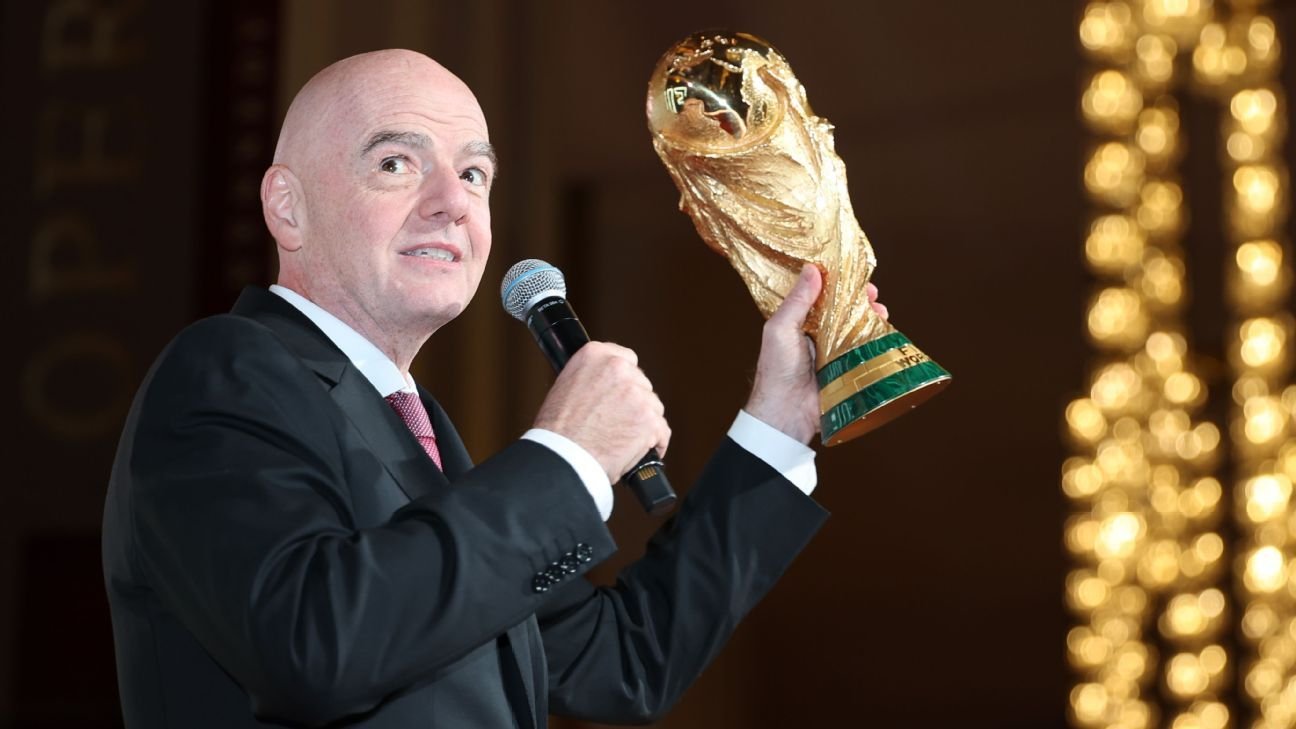
The future of Gianni Infantino as FIFA president remains uncertain. He may face a vote of no confidence, lose the upcoming elections in March, or even decide to withdraw his candidacy. My ESPN colleague Mark Ogden provides a thorough analysis of the possible scenarios here.
A week ago, the general consensus suggested he would remain in power, given his adept understanding of the political landscape. Infantino is accountable to FIFA’s 211 member associations, many of which could struggle to survive without FIFA’s financial support. Over his decade-long tenure, he has significantly increased funding for member nations and enhanced investments in soccer projects globally.
For many of his constituents—the heads of football associations worldwide—the continuous influx of FIFA funds is more important than governance issues, autocratic leadership, or controversies like the suspension of USMNT striker Folarin Balogun following a red card during the 2026 World Cup. Infantino’s decisions, including declaring a FIFA Peace Prize out of nowhere or awarding the 2034 World Cup to Saudi Arabia without a proper bidding process, largely go unchallenged as constituents prioritize financial gains over criticisms from Western media.
Infantino maintains fiscal stability, consistently increases funding every four years, and recently delivered the most lucrative sporting event in history. So why would anyone want to disrupt that?
However, recent reports revealed that Infantino intends to create a commercial subsidiary of FIFA and sell a 20% stake to private investors. This sparked significant backlash from Asia, Concacaf, and UEFA, leading to resignations from FIFA officials like COO Kevin Lamour and senior adviser Carlos Cordeiro. Although they may have been on their way out, they seized the moment to express their frustrations before departing.
In a strong response, UEFA even threatened to withdraw its 55 member nations from FIFA competitions, a move that would drastically reduce their economic value, forcing Infantino to abandon the project just days later.
UEFA’s statement clearly articulated the ethical concerns of Infantino’s proposal, stating: “The moment external investors acquire ownership interests in FIFA competitions, football changes forever. Commercial returns become a constant obligation, and investor expectations create ongoing pressure.”
This highlights a key issue: it’s inappropriate to prioritize corporate interests over public service, as seen in other contexts like the military. Even countries fully reliant on FIFA to support their national teams should recognize the importance of governance not dictated solely by profit motives.
Moreover, Infantino’s proposal should have been immediately dismissed for practical reasons.
One critical reason companies seek to sell equity is to access cash and investment for growth, which FIFA is not in desperate need of—it reportedly had around $2.7 billion in cash reserves before the financial boom from the 2026 World Cup. With a solid business plan and excellent credit, FIFA could finance its endeavors without yielding ownership stakes.
Secondly, companies may consider selling equity to attract strategic investors who can provide expertise in scaling their operations. However, FIFA’s recent financial success raises the question: does it really need external investors to identify new opportunities? Infantino’s team could easily find suitable partners with their existing resources.
Two additional problematic aspects emerge. First, the tight September 19 deadline for FIFA members to approve the deal raises questions: why the rush? If it’s a solid business arrangement, it should benefit both parties regardless of timing. If potential investors are only interested under specific conditions, their commitment may be less genuine than suggested.
The second issue is the lack of a proper tender process. The reported valuation of FIFA at $20 billion for the Thrive Capital deal could likely attract higher bids if other investors were allowed to compete openly. Rushing a deal without thorough discussions is generally poor practice.
Even the most self-interested member associations should recognize that selling out without considering alternative bids is unwise. Even those eager to cash in now ought to understand the value of negotiating for the best offer rather than settling for a deal brokered in secrecy.
1:47
Ogden: Infantino’s role as FIFA president is becoming untenable
This juxtaposition of Infantino’s actions leads to confusion. Even if the idea of selling equity had merit, it would still be a misguided attempt to maximize profits.
Furthermore, if one plans to unveil a controversial proposal that requires considerable political maneuvering to push through, why initiate it right before the elections, particularly when candidacies remain open? Why not wait, bask in the financial success of the 2026 World Cup, secure re-election, and then implement the proposal with a stronger mandate?
Infantino has previously taken risks on contentious proposals—from the SoftBank partnership to the biennial World Cup—that, while unsuccessful, had transformative potential. This recent plan, however, feels clumsy and out of touch, both in business strategy and political timing. My two decades of observing Infantino, from his time at UEFA to his current position, had me convinced of his astuteness, but now I find that hard to believe.