



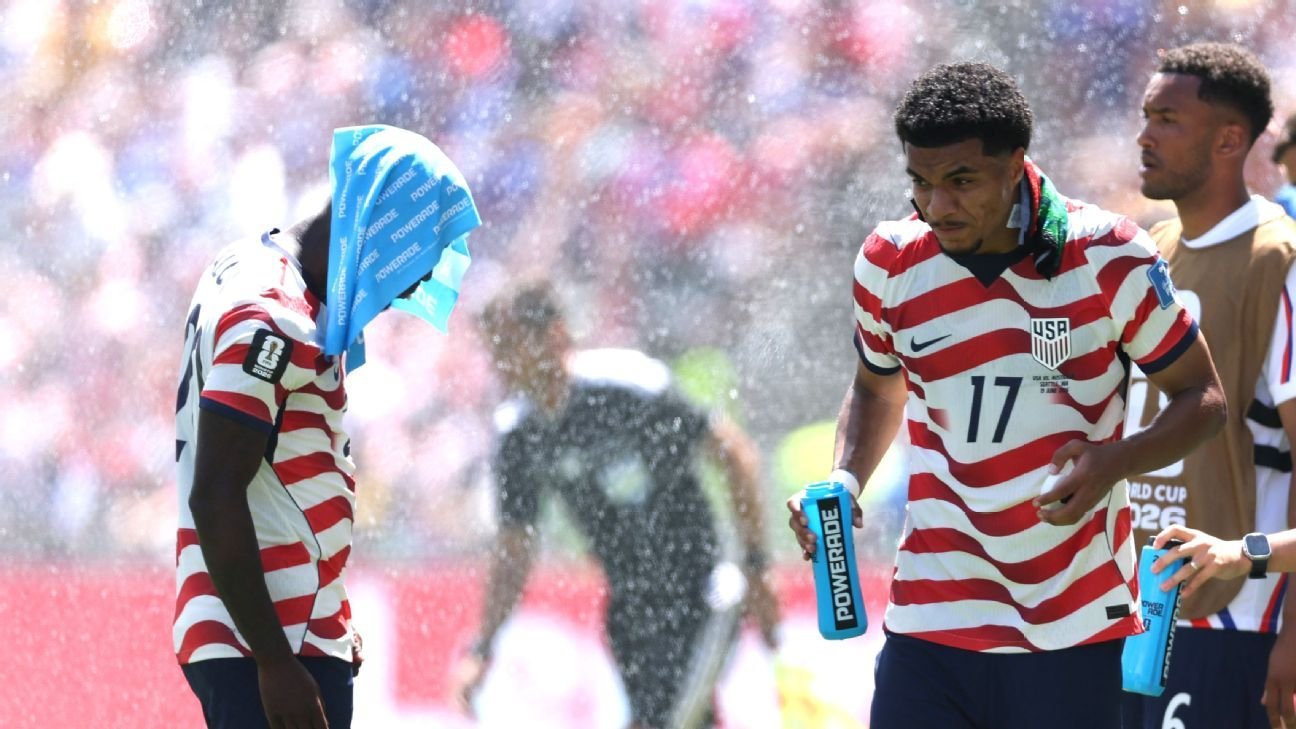
The draw for the 2026 World Cup took place in December, igniting a flurry of speculation among coaches, players, and fans about which teams might have an edge based on the bracket, scheduling, and travel logistics.
However, a crucial yet often overlooked factor is the potential advantage of playing multiple matches in indoor venues.
The inaugural indoor World Cup match occurred on June 18, 1994, when the U.S. faced Switzerland in a 1-1 draw. On that occasion, the indoor humidity at the Silverdome in Pontiac, Michigan, provided little advantage.
However, advancements in building technology have transformed indoor stadiums into fully climate-controlled environments, ensuring stable conditions throughout the games—a feature that will be unprecedented in this World Cup.
In total, there are four indoor venues—Atlanta, Dallas, Houston, and Vancouver—scheduled to host 31 of the tournament’s 104 matches. SoFi Stadium, with its roof design that permits ambient air, will also be included. The remaining matches will occur outdoors, exposing players to the sweltering heat of the American summer in cities like Miami, East Rutherford, and Kansas City.
This distinction is significant, as it confers a clear competitive advantage to teams competing indoors.
While both teams in an indoor match share the same advantageous conditions, the tournament’s progression will lead to scenarios where one team may have played their previous match indoors and the opposing team outdoors, potentially skewing outcomes significantly.
How Indoor Venues Could Shape the World Cup Outcome
Doug Casa, a kinesiology professor at UConn and CEO of the Korey Stringer Institute, specializes in exertional heat stroke and has been pivotal in researching heat management and hydration. Since the institute’s establishment in 2010, named in memory of NFL lineman Korey Stringer, he has emphasized the benefits of climate-controlled venues for athletes.
“Playing indoors is a huge, huge advantage,” Casa explained to ESPN. “Your recovery post-game will be significantly more efficient. After a match in Miami, it could take three or four days to recover to 95%, while in Houston, Dallas, or Atlanta, recovery could be at least twice as quick.”
With game intervals ranging from five to seven days, there is ample time for recovery. However, this extra recovery period will impact training intensity, especially for players who have just emerged from long club seasons.
Casa outlined two main issues with outdoor summer play: hyperthermia, where body temperature rises to dangerous levels, and dehydration. Indoor play significantly reduces these risks due to the controlled environment.
“Playing indoors minimizes hyperthermia and dehydration risks,” Casa stated. “Athletes can perform better and recover more efficiently under these conditions.”
Consequently, the World Cup draw appears to have favored some teams over others regarding indoor opportunities. A total of 12 teams are slated to play two group stage matches in indoor venues.
This list includes formidable teams like Spain, Argentina, the Netherlands, and Portugal. Co-hosts Canada, playing at Vancouver’s BC Place, will also benefit from two matches indoors. Other participating countries that will experience indoor play include Cape Verde, Congo DR, Japan, New Zealand, Saudi Arabia, Uzbekistan, and Sweden.
If teams like Argentina or Spain emerge victorious in their group, they could enjoy the further advantage of playing additional matches indoors during the knockout stages.
Adapting to the Transition from Comfortable Indoors to Challenging Outdoors
Players in MLS are no strangers to the heat and humidity. However, teams like the Vancouver Whitecaps, who generally play indoors, can find the shift to outdoor venues challenging—a transition that provides insights into the World Cup experience.
“Playing in the heat is definitely a challenge. The temperature difference can be about 20 to 30 degrees hotter,” said Whitecaps striker Brian White. “We have to adjust every time we travel during the summer, regardless of whether it’s indoors or outdoors.”

1:31
Van Dijk: Every team must ‘adapt quickly’ to World Cup conditions
To alleviate the transition impact, White indicated that preparation, particularly hydration before and after the games, plays a critical role in recovery.
Acclimatizing athletes to hot and humid conditions is essential to mitigating adverse effects, typically requiring two weeks of adjustment. However, for teams based in Vancouver, this wasn’t practical.
The head of physical preparation for the Whitecaps, Jon Poli, explained that players would participate in “sauna protocols,” spending time in a sauna post-training at least two to three times a week over a three-week span to adapt to warmer conditions. While such options may be limited during the World Cup, some acclimatization processes are vital.
“Individual experiences will vary, but for those unaccustomed to heat and humidity, adapting for their first games can be exceptionally challenging,” Poli mentioned.
Not all teams have the financial resources or expertise for these protocols, which may affect their players’ ability to adapt to hot and humid conditions.
Casa noted that the cumulative effect on players can lead to fatigue when continuously playing outdoors in high temperatures, heightening the risk of injury as players tire more quickly.
Concerns regarding outdoor heat are not unfounded, as evidenced by incidents during the 2024 Copa America—hosted in the sweltering summer in the U.S. When Canada faced Peru, assistant referee Humberto Panjoj collapsed, prompting a swift response from then-Canada goalkeeper Maxime Crépeau. Additionally, during Uruguay’s opening match of the tournament, defender Ronald Araújo had to exit early due to dizziness from dehydration.
A study co-authored by Dr. George Chiampas, the former chief medical officer of the U.S. Soccer Federation and a member of Concacaf’s medical committee, underscores that if players’ core body temperatures exceed 102.2 degrees Fahrenheit, they risk not only heat-related illness but also cognitive impairments.
“Hyperthermia and dehydration can diminish mental acuity, leading to mistakes on the field,” Casa explained.
Tactics Shaped by the Environment: Indoor vs. Outdoor
Environmental factors can also influence tactical approaches. Indoors, conditions are largely stable, making it easier to prepare teams. Conversely, outdoor games can be affected by weather variables like wind, heat, humidity, or rain, necessitating adjustments to game strategies.
“We have a high-pressing, aggressive style that takes a toll physically,” commented Whitecaps manager Jesper Sorensen. “In hotter climates like Houston, we might have to scale back our intensity, as players won’t maintain peak performance for the entire match.”
“Water breaks enforced during the World Cup could help maintain player stamina, but conditions will still considerably influence tactical decisions,” he added.
According to ESPN Stats & Information data, among World Cup teams, Austria (16.4 pressing sequences per game), Japan (16.4), and Belgium (15.9) demonstrated the highest pressing activity during qualifying. Moreover, data from TruMedia shows Spain and the Netherlands, with average possession starts at 47.6 and 47.0 yards from their goal, respectively, indicate an emphasis on aggressive defensive strategies. Notably, Japan allowed just 3.6 passes per possession.
Such statistics suggest that these teams engage in more assertive defensive tactics, positioning them to reap greater benefits from indoor play.
As the tournament enters its second week, the full implications of these factors may not be clear until the knockout rounds commence. However, monitoring how top-tier teams perform and whether their intensity shifts will be critical, particularly concerning their indoor versus outdoor match experiences.