



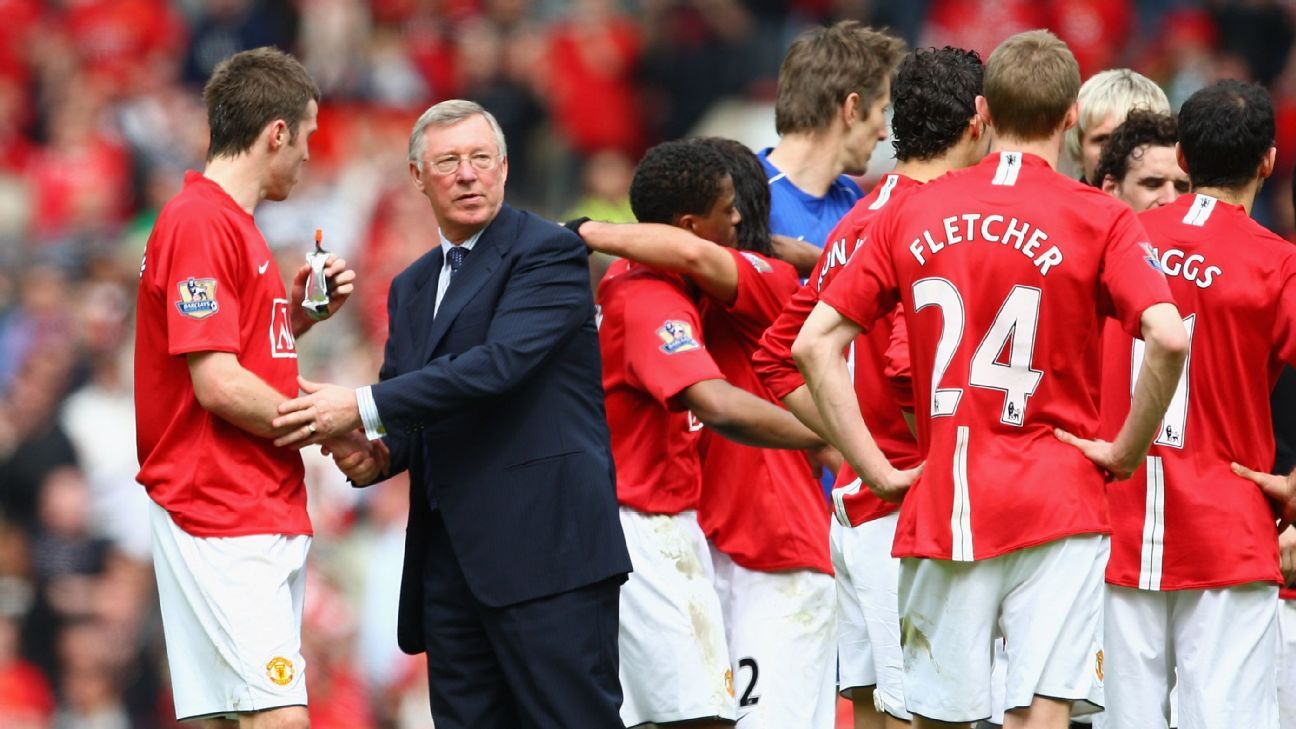
Michael Carrick embodies the Manchester United spirit, and after just one match as interim head coach at Old Trafford, he’s already being seen as a potential savior for the club. In contrast, Thomas Frank, lacking any Tottenham Hotspur lineage or football philosophy, finds himself fighting to keep his position.
Of course, the situation is more nuanced than that, but it’s shaping up in that direction. Coaching a top football team has devolved into a zero-sum game; you either uphold the club’s traditions or risk alienating fans and a vocal group of former players—especially club legends.
If you choose to go your own way and disregard the club’s perceived DNA, success is non-negotiable—you need to win, and fast.
But what exactly is football DNA? This term tends to surface chiefly when a manager is underperforming, as supporters and former players distill their frustrations into this one broad, vague expression of discontent.
After Manchester United dismissed Ruben Amorim earlier this month following a disappointing 14-month tenure, former captain Gary Neville emphasized the need for the club to reconnect with its essence to escape a malaise that has lingered since Sir Alex Ferguson’s retirement in May 2013.
“Man United must appoint a manager who embodies the DNA of the club,” he stated on Sky Sports. “Ajax will never alter their philosophy for anyone, and Barcelona will remain true to themselves as well. Manchester United shouldn’t change for anyone either.”
Whether intentionally or not, United listened to Neville’s advice by interviewing three former players—Carrick, Ole Gunnar Solskjaer, and Ruud van Nistelrooy—as candidates for Amorim’s successor until the end of the season.
Carrick emerged victorious and orchestrated a 2-0 triumph against Manchester City in his debut. United played fast-paced, attacking football reminiscent of the club’s storied past, reigniting aspirations for a top-four finish. United DNA? Undeniably.
However, this theory has its flaws. No manager has secured more trophies in United’s rich history than Ferguson, who brought home 48 titles. Yet when he took over in November 1986, he had no ties to the club; his playing career had been entirely spent in Scotland, and the only “United” in his history came from a year with Ayr United in the 1973-74 season.
Similar narratives exist with other clubs. Arsene Wenger, for instance, had no Arsenal connections when he came from Nagoya Grampus Eight in September 1996, while Jose Mourinho brought no Chelsea lineage with him from Porto in 2004.
Before Wenger’s arrival, Arsenal’s play was marked by defensive solidity with little flair, earning them jibes of “Boring, Boring Arsenal.” However, Wenger revolutionized their style, turning them into a team known for attractive, attacking football.
When Mourinho arrived at Chelsea, the club was seen as entertaining yet lacking a winning mentality. He instilled a brand of effective, organized, and direct football that led to success at Stamford Bridge, even though it had little resemblance to Chelsea’s prior ethos.
On the other hand, Manchester City effectively adopted Barcelona’s philosophy by hiring Guardiola in the summer of 2016. The club’s ownership sought a team that could dominate while playing a style akin to Barcelona’s, and Guardiola certainly delivered. As Guardiola prepares to leave, one wonders what kind of DNA the fans and legends will expect.
Fans of Arsenal, Chelsea, and City will likely never complain about Wenger, Mourinho, or Guardiola altering their club’s DNA while bringing success.
In essence, football DNA is simply a euphemism for nostalgia—a comforting term used during tough times, when the successes of the past cast a long shadow over the present struggles. For Manchester United, with Ferguson frequently present in the directors’ box, the urge to measure the current team and coach against his achievements is inescapable.

2:52
Michallik: I can’t see Thomas Frank staying at Tottenham
ESPN FC’s Janusz Michallik reflects on Tottenham’s unexpected 2-1 loss to West Ham in the Premier League.
Unlike Spurs, who have become synonymous with unmet expectations and failure, Frank doesn’t have a legacy of successful former players and managers to contend with. The club’s DNA, if such a thing exists, seems to be one of repetitive disappointment, while fans pine for the club’s golden years in the 1950s and 1960s when it was known for league titles and an attractive style of play.
If modern coaches are supposed to honor the traditions of the past—especially those nearly 80 years gone—they face an uphill battle for success unless they’re bold enough to forge their own path, much like Ferguson, Wenger, and Mourinho did.
Nevertheless, having some connection to a club’s DNA often grants coaches a longer grace period compared to those who lack it.
Tottenham supporters initially welcomed Frank’s appointment last summer after his successful run with Brentford. However, concerns arose as they witnessed goalkeeper Guglielmo Vicario taking free kicks from the halfway line and defender Kevin Danso making long throw-ins during the UEFA Super Cup final against Paris Saint-Germain at the beginning of the season.
This style of play is certainly not a hallmark of Tottenham’s heritage, so Frank needed to secure victories to prevent criticism over his approach. However, as six months have passed without results, Frank’s methods have sparked controversy, potentially putting him at risk of being dismissed as soon as this week.
In contrast, Carrick faces no such worries; with United’s victory over City embodying Ferguson-style football—similar to that which Carrick himself played—he has built up substantial goodwill. If performances and results continue to reflect the success of the past, there will undoubtedly be calls for him to secure the position on a permanent basis.
In the end, it’s not about DNA; it’s about winning. When a team is successful, no one questions the appropriateness of its DNA.