



-

Ben Strauss
Multiple Authors
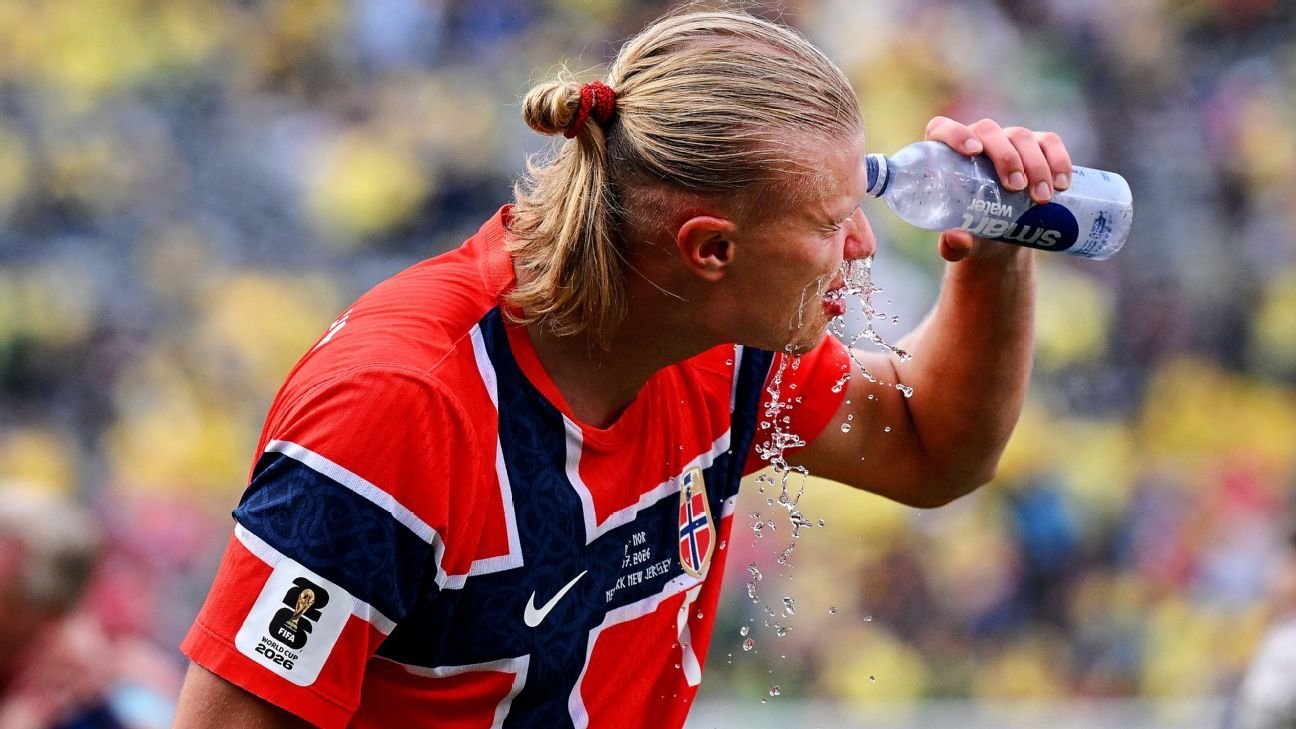
The defining feature of this summer’s World Cup is unlikely to be political controversies or biased officiating favoring Lionel Messi. Instead, it will likely center around hydration breaks.
The three-minute breaks mandated by FIFA for each game this World Cup are expected to play a significant role in future media rights negotiations, as revealed in discussions with various media and soccer executives in both the U.S. and abroad. Fox, broadcasting the tournament in the U.S., is projected to earn at least $250 million solely from advertising during these hydration breaks, as reported by The Hollywood Reporter.
“Once hydration breaks have proven to be profitable, it will be challenging to revert to the old ways. Whether it’s hydration breaks or something else, the bottom line is the financial incentive,” said David Levy, the former president of Turner Sports, who now leads the sports marketing agency Horizon Sports & Experiences.
This World Cup has presented a unique opportunity for American media executives to more effectively monetize a globally popular sport, which traditionally lacks the frequent ad breaks of American football, basketball, or baseball. Despite the mixed reactions from fans and players, the networks and advertisers have benefited from these pauses in play. Following this tournament, a number of critical questions will arise regarding how domestic leagues in the U.S. address these breaks, the impact on European leagues facing flat broadcast revenue, and the overall influence of the U.S. in the international sport.
“Change won’t happen overnight,” remarked Charlie Methven, a former chief executive in English soccer. “However, as the traditional TV model continues to decline, leagues will have fewer options to enhance broadcast revenue, making every potential solution vital.”
FIFA first introduced cooling breaks during the 2014 World Cup in Brazil, prompted by a labor court ruling that mandated rest periods for players when temperatures soared above 89.6 degrees Fahrenheit. Presently, many leagues around the world have implemented regulations for breaks during extreme weather but allow referees discretion regarding their timing.
In December, FIFA announced that for this World Cup, breaks would be included in every match, independent of weather conditions (including in climate-controlled stadiums). This allowed Fox to pre-sell ads for these intervals, creating a revenue stream for the network and giving advertisers an opportunity to connect with fans during key moments of the game. According to the Wall Street Journal, ad costs for these breaks range from $200,000 to $750,000 a spot. Some broadcasts have opted to run ads in a split-screen format, while others cut to commercial breaks, though this varies by country.
This new advertising landscape emerges at a precarious time for global soccer leagues and their media rights. Ligue 1 in France has faced challenges with broadcast deals, leading to the creation of its own direct-to-consumer platform. One recent estimate valued the league’s TV rights between 150 million and 250 million euros (about $171 million to $286 million). Similarly, many European leagues are experiencing stagnant broadcast revenues, with none of the top soccer leagues achieving the significant increases seen in major American leagues like the NBA and NFL.
Moreover, many leagues are vying for viewership of the Premier League, which, according to accounting firm Deloitte, was expected to generate £7.4 billion ($10 billion) in revenue last season—over double that of the Bundesliga ($4.9 billion), La Liga ($4.8 billion), Serie A ($3.4 billion), and Ligue 1 ($2.2 billion). However, Deloitte also noted that Premier League profits have been declining. While hydration breaks may not single-handedly resolve these issues, they could be integral to a broader strategy for commercialization.
In response to dwindling broadcast revenues, leagues are exploring new revenue streams. La Liga sold an 8% stake in its media rights to the private equity firm CVC Capital Partners for approximately 2 billion euros. Iconic club FC Barcelona has also sold a 25% stake of its La Liga TV rights for 25 years to the investment firm Sixth Street.
The Bundesliga attempted a similar strategy but discontinued its plan following significant fan backlash.
“Discussions between league executives and teams will inevitably address the reality that TV revenues could decline by 10%,” remarked Methven. “Clubs may then suggest allowing additional breaks for TV partners as a viable solution. The critical question is how committed clubs are to maintaining their TV revenues regardless of potential fan discontent.”
“The pressure to secure media rights for secondary leagues is already considerable. Ligue 1 has lost a TV deal, and Italian leagues are facing similar challenges, reflecting the reality of lower TV revenues for clubs.”
Given its historical significance and financial strength, the Premier League may be the last to adopt such changes, as noted by executives who highlighted various factors, including UK government regulations over commercial breaks and lower temperatures during the English season. Furthermore, public resistance to the Bundesliga’s private equity dealings and team ownership structures that empower fans further complicate adaptations.
While hydration breaks seem less likely in the Premier League, it is believed that leagues in France, Italy, and Spain might eagerly explore methods to generate increased broadcast revenue. These breaks could be marketed as tactical adjustments rather than health-related pauses and presented to fans as enhancements to game strategy. Fox has labeled these stoppages “Match Breaks,” indicating a branding strategy focused beyond hydration. However, if the rationale shifts from health to strategy, it could complicate rule changes requiring feedback from governing bodies and player associations.
Representatives from the Premier League declined to comment, with sources indicating no current plans for new breaks. UEFA also stated it has no intentions to introduce breaks for its upcoming events, including the 2028 Men’s European Championship and the Champions League.
Similarly, La Liga chose not to comment, while the Bundesliga, Ligue 1, and Serie A have not responded to requests for responses.
Matt Drew, who formerly negotiated international soccer broadcast rights with DAZN, emphasized that broader acceptance of breaks in the long term seems probable, noting, “Numerous local factors in Europe will need to be considered, as we’ve seen strong fan reactions to ownership-driven changes. Spain is likely to be a focal point due to their ambitions in the U.S. market.”
“For MLS and NWSL, integrating breaks makes the most sense moving forward.”
Indeed, both Major League Soccer and the National Women’s Soccer League are poised to negotiate new media deals in the coming years. They already have protocols for extreme heat and have actively discussed ways to build on the momentum generated by this summer’s World Cup. MLS is even modifying a broadcast agreement that previously restricted most of its games to Apple TV’s paywall.
One MLS executive shared, “It’s going to be tough to resist these changes. The league has a significant opportunity post-World Cup and upcoming negotiations, and incorporating breaks could provide an avenue for owners to invest more in their teams while securing supportive media partners.”
In a statement to ESPN, MLS spokesperson Dan Courtemanche remarked, “We have not discussed any alterations to our hydration break policy, but as in previous years, we continuously review every aspect of our competition.”
“MLS has a long history of innovating and testing practices that enhance the game,” he added, including rules that require players to receive injury treatment off the field and limiting time for substituted players exiting the pitch—both of which have been adopted in the World Cup.
An NWSL representative stated, “Any commercial decisions we make will prioritize player safety. It is currently challenging to evaluate hypothetical scenarios. We are monitoring the World Cup and will maintain our present policies.”
Kara Nortman, co-founder of NWSL’s Angel City FC and managing partner at the investment firm Monarch Collective, suggested that teams and leagues might gain from strategically implementing breaks.
“The integrity of the sport is paramount. Balancing player welfare and commercial interests is just as significant in today’s game,” she observed. “If nutrition breaks become a staple, they should focus not only on revenue but also positively contribute to player health and fan engagement, driving overall growth and competition.”
“And ultimately, is it too much to allow these athletes a moment to hydrate?”
Levy recalled negotiating with UEFA a decade ago about how much Turner could maximize its Champions League rights. While planning to invest hundreds of millions, Turner sought more commercial opportunities within broadcasts, like picture-in-picture advertising and increased display banners. UEFA remained firm on its terms.
Today, the role of U.S. media companies in global soccer has changed, with a growing number of leagues seeking lucrative broadcast arrangements from the U.S. Ten years ago, just under 10% of World Cup media rights came from the U.S., according to Ampere Analysis. Presently, that figure is around 25% and could rise even more. The UEFA Men’s European Championship now sources approximately 15%, up from under 10% a decade ago. The Premier League’s share of American broadcast revenue has climbed from about 5% to 10%, per the analysis. Industry experts suggest hydration breaks could yield tens of millions in additional value for NBC’s Premier League coverage.
Methven believes that for U.S. broadcasters to gain a more prominent say in league matters, that percentage might need to reach 30%. Derek Aframe, executive vice president at Octagon, who has collaborated with sponsors at the World Cup for years, foresees this emerging influence.
“American consumers and broadcasters will increasingly be open to refining soccer in response to their preferences,” he said.
U.S.-based broadcast companies have historically transformed how viewers engage with ads during live sports. ESPN was the pioneer in utilizing CGI to conceal rink logos and replace them with those of TV partners, as noted by Forbes.
Drew suggested that as streaming services like Netflix and Amazon seek to expand their global advertising reach, they might find breaks beneficial for their business models as well. Fox, CBS, NBC, ESPN, Netflix, and Amazon all declined to comment on how additional commercial breaks could influence their media properties or if they planned to address such issues in rights discussions.
Even those skeptical about broader adoption agree that soccer leagues will inevitably scrutinize these break opportunities, regardless of their initial stance.
“The heated debate around hydration breaks could be leveraged as a means to introduce other forms of commercialization,” explained Murray Barnett, a media rights executive in the U.K., pointing to additional sponsored replays or graphics. “The possibility of advertising during hydration breaks is likely to prompt a more adaptable approach to other commercial integrations.”