



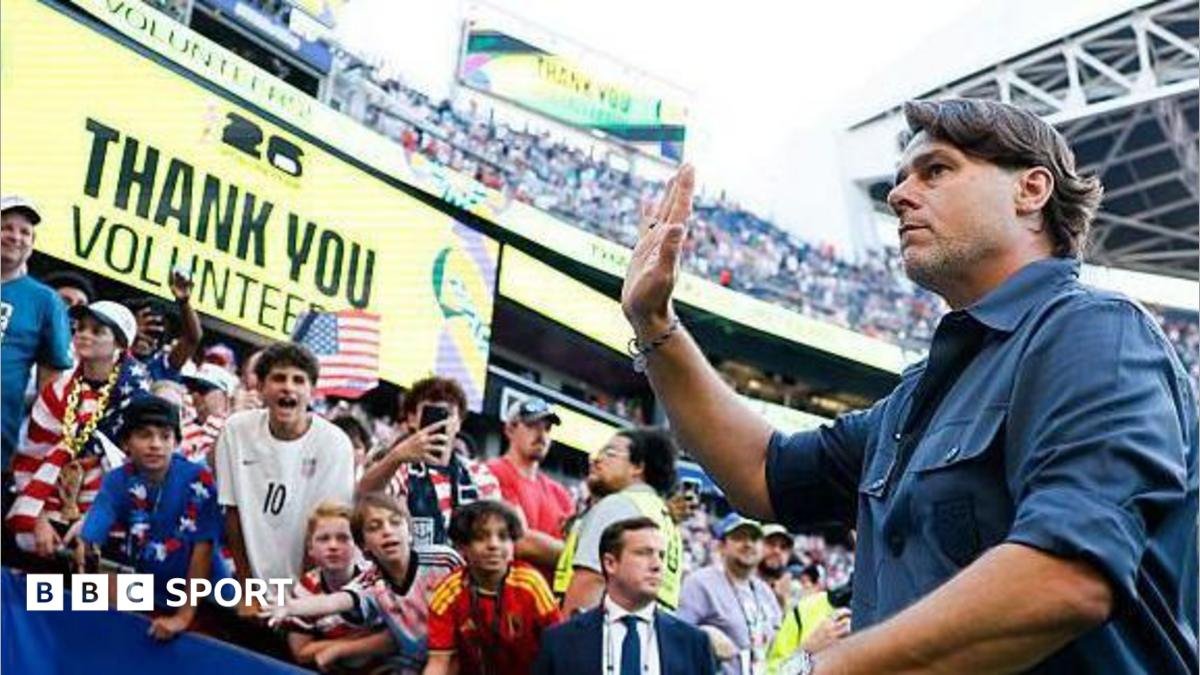
Beyond the result, something about the U.S. display felt different.
Under Pochettino, the underdog mindset had faded; earlier in the tournament they carried a bold swagger, attacking with such conviction that fans began to believe they could defy the odds here.
“We’re going to win the World Cup,” one supporter predicted before the match, and his confidence was not alone among the supporters who had gathered outside the Seattle Stadium in the hours before kick-off.
Many also relished that their in-form striker Balogun had been cleared to play despite being shown a straight red card for a foul on Bosnia-Herzegovina defender Tarik Muharemovic in the previous round.
Fifa’s surprise decision to suspend the automatic one-match ban for 12 months sparked widespread criticism, including from Uefa, Belgium and England boss Thomas Tuchel.
The matter reached the top of U.S. politics, with President Donald Trump saying on Monday that he had asked Fifa to review the decision because he “didn’t think it was a foul”.
Balogun, who had scored three goals at the World Cup, started against Belgium but struggled to influence the game.
Asked afterwards if he had been affected by being the focus of much of the attention in the build-up, US boss Pochettino said: “It didn’t affect our performance. It’s not an excuse. It wasn’t our day.
“But in a personal way, what is the point to insult or receive a lot of bad messages?
“It’s a rule for the federation to apply and to try [to overturn the ban]. My position was to train the team. If Balogun is available because Fifa allow for you to have the player, it’s not a problem.
“I feel disappointed with too many people. They put politics and manipulation, talk about ethics and integrity [first]. If we talk about the history of this game, I am disappointed in a personal way.”
Belgium boss Rudi Garcia revealed that Balogun approached him straight after the game.
“It’s not his fault, he’s not the one to blame and that’s what I told him,” he said.