



The 2026 World Cup will mark a historic moment as it features 48 national teams for the first time, running from June 11 to July 19, hosted by the United States, Mexico and Canada.
Amidst various changes, it’s interesting to reflect on the past: some countries participating in the tournament have names that have shifted over time due to political, cultural, or identity-related reasons.
Advertisement
Here are five notable examples:
Czechia — preference for practicality 🇨 Czech Republic
In many broadcasts and news articles, you may still see “Czech Republic.” However, in 2016, the country’s government officially endorsed the shorter name, Czechia, for global use. This more concise version simplifies usage in passports, trade, and sports.
Years later, FIFA and UEFA adopted this name for their official competitions. While the formal title remains Czech Republic, it’s Czechia that donates its name to the national team’s gear. They secured a spot in the World Cup through European playoffs in March 2026.
Advertisement
Netherlands — saying farewell to Holland 🇳🇱
This change might appear as just a matter of terminology, but it is rooted in geography. In 2020, the government initiated a global push to eliminate the nickname “Holland” and promote “Netherlands” as the standard reference.
This is because “Holland” only pertains to two of the country’s twelve provinces: North Holland and South Holland. It’s akin to addressing Brazil by the name of only one of its states! 😅 Using “Holland” for the entire nation was deemed inaccurate and unfair to the other regions.
In a bold move, the football federation updated its crest and branding accordingly.
Advertisement
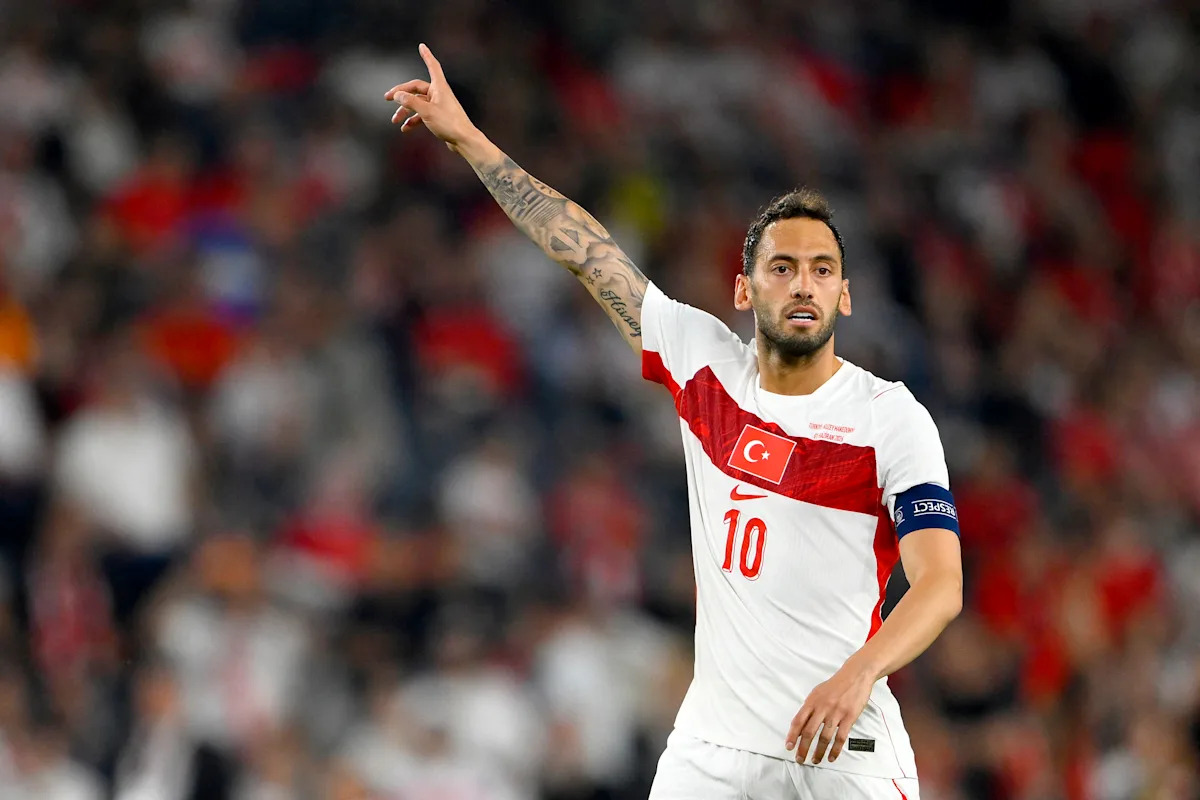
Türkiye — the shift from “Turkey” 🇹🇷
In late 2021, Turkey’s president announced that the country would be known internationally as Türkiye, pronounced as in the native language. The UN and FIFA formalized this change in 2022, aiming to preserve cultural identity and distance the nation from the negative connotations associated with the English term “Turkey,” which can also signify failure or disaster.
The national team secured its place in the 2026 World Cup through the European playoffs.
Advertisement
Democratic Republic of the Congo — returning after Zaire 🇨🇩
This entry has significant geopolitical undertones. From 1971 to 1997, during Mobutu Sese Seko’s dictatorship, the country was called Zaire, and it was under this designation that the national team played in its previous World Cup, in 1974.
During that tournament, Zaire gained notoriety for an unusual incident involving Ilunga Mwepu, who infamously kicked the ball away during a Brazil free kick. Following the regime’s collapse in 1997, the nation reverted to the Democratic Republic of the Congo.
Advertisement
Now, fifty years after 1974, DR Congo returns to the World Cup, having displaced Nigeria in the intercontinental playoffs.
Iran — the land formerly known as Persia 🇮🇷
This is the oldest change on this list, but still very significant. Until 1935, the country was referred to internationally as Persia.
That year, the government formally requested that the international community adopt the indigenous name, Iran, which translates to “Land of the Free” or “Land of the Aryans.” As the Iranian Football Federation was established in 1920, the national team experienced this shift in identity during its early years.
In 2026, Iran will participate in its seventh World Cup and its fourth consecutive tournament, having qualified directly from the Asian qualifiers, though they have yet to advance past the group stage.
This article was translated into English using Artificial Intelligence. Read the original version in 🇧🇷 here.