



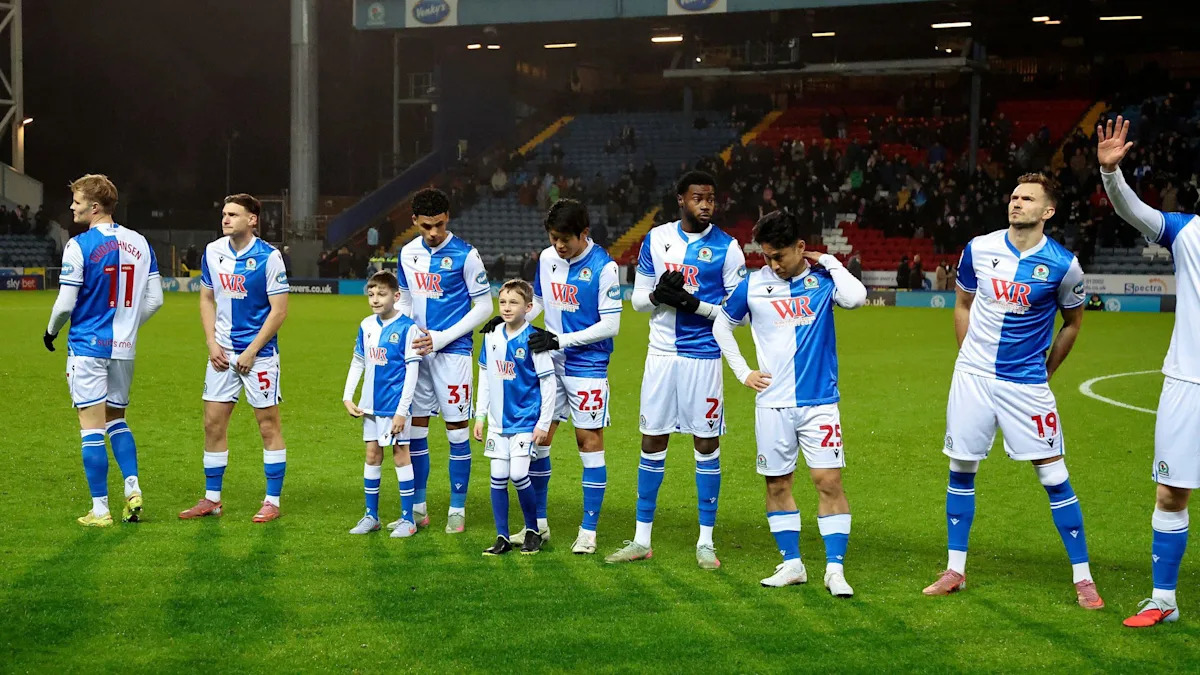
The recent record of six defeats in eight home matches in the Championship is a significant worry for everyone at Blackburn Rovers.
Head coach Valerien Ismael referred to the 1-0 defeat to QPR at home on Wednesday as “the worst feeling.”
Advertisement
So far this season, only Southampton has left Ewood Park without any points, while Stoke City managed to secure a draw.
The performance on Wednesday was flat, to say the least. Just five days prior, a derby victory against Preston had sparked some optimism, suggesting a possible turning point. However, this outing felt like a setback for a team that struggled throughout the match.
Right now, it seems like playing at Ewood Park is a burden for the players. They exited the field to a chorus of boos at halftime with the game still scoreless, and the same reaction awaited them at the final whistle.
The stats for Rovers’ home form this year are concerning—19 league matches played with 10 losses, not to mention additional cup defeats to Wolves and Bradford. They’ve managed to win only six and draw three, which is raising serious concerns.
Advertisement
While Ismael has faced a litany of injuries this season, he isn’t facing these challenges alone. Against QPR, it seemed that several key players were absent, impacting the team’s performance.
Currently, they’re coping with the absence of an international goalkeeper, two senior center-backs, the club’s best holding midfielder, a speedy winger, and their captain and talisman.
Without undermining those who played, I believe the team would have performed significantly better had more of their key players been available.
Passes were either under-hit or over-hit, leading to frequent turnovers. They repeatedly lost possession in their defensive half, which directly contributed to the goal against them. A careless mistake allowed Paul Smyth to score from an in-swinging cross, leaving him unmarked.
Advertisement
Substitutions were made in an attempt to change the game’s outcome, but they didn’t yield the desired results, unlike QPR’s successful substitution. I can’t fault Ismael for making changes; without them, I would likely have questioned his tactical decisions in the post-match analysis.
The noticeably low attendance is hard to overlook, and I believe there are several reasons for this.
Some supporters are choosing to stay away due to dissatisfaction with the club’s management. This has been an ongoing issue. There’s no indication that the current ownership is considering a sale.
The availability of the ‘red button’ option has certainly affected the atmosphere at midweek Championship games. Many fans now prefer to watch from the comfort of home instead of attending in person.
Advertisement
Additionally, it’s essential to note that Rovers have four more home matches scheduled before December 20. It’s challenging for working families to afford match tickets during the festive season alongside their usual expenses.
The size of Ewood Park also contributes to the feeling of lower attendance, as the stadium has a capacity of just over 30,000 seats.
When Jack Walker inaugurated the ‘new Ewood Park’ in 1995, the capacity seemed appropriate. Unfortunately, that no longer appears to be the case.
No one is to blame for this; it’s simply a reality. If Rovers were to return to the top tier, I have my doubts about whether they would consistently sell out Ewood for every match. We’ll have to see what the future holds.
Advertisement
With 12 more home points up for grabs before the end of 2025, how the team performs against Ipswich, Sheffield Wednesday, Oxford, and Millwall will significantly influence the second half of the season and shape their potential achievements.