



Just 11 weeks ago, Aston Villa found themselves without a win and sitting third from the bottom in the Premier League.
Today, under the guidance of manager Unai Emery, they have climbed to third place, sparking discussions about their potential involvement in the title race.
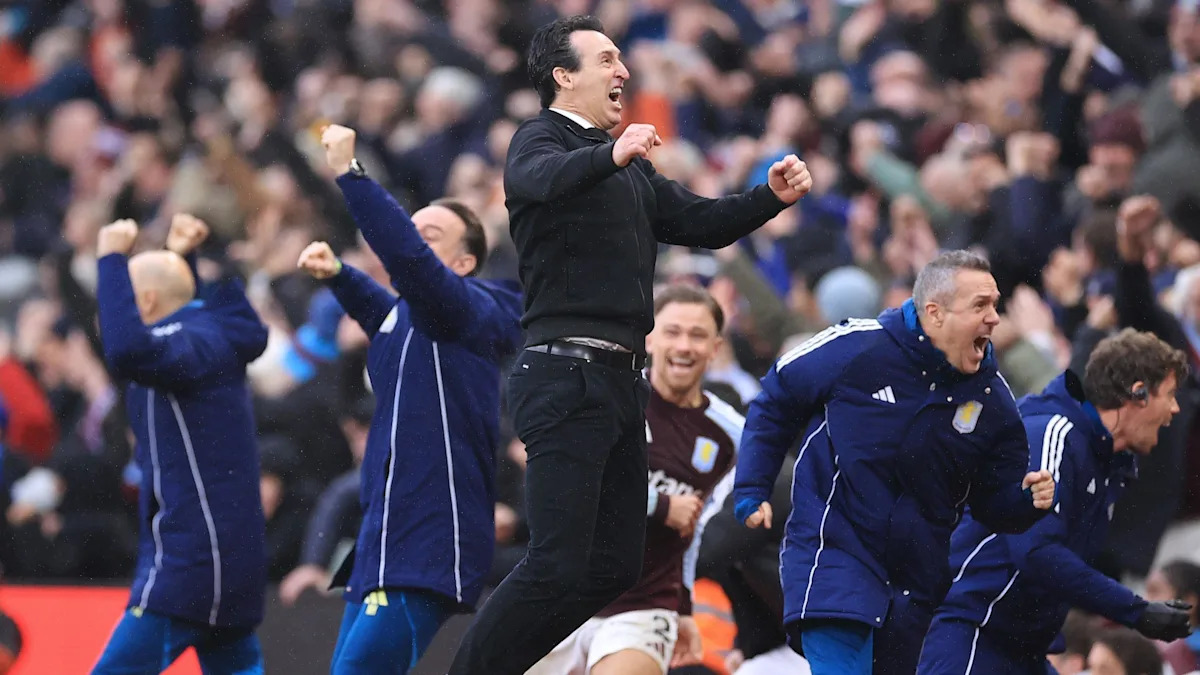
Saturday’s thrilling finish against league leaders Arsenal showcased their capabilities, with a 2-1 win marking Emery’s 63rd Premier League victory, a club record.
Advertisement
Emery boasts a win rate of 54.94% from his 162 matches, with only Arsenal and Manchester City earning more points—71—than Villa’s 67 across 34 games in 2025.
This Thursday, they face Basel in the Europa League, and a win would nearly secure their place in the last 16, with Villa currently positioned third in the group stage.
Just a short while ago, the beginning of the season had them in the relegation zone, eliminated from the Carabao Cup, and they were the last team in the Football League to score a goal.
Monchi, the club’s president of football operations, departed in September, and due to profit and sustainability regulations, Emery’s summer transfer budget was limited, raising doubts about his managerial effectiveness.
Advertisement
Yet, months later, the conversation has shifted to how seriously Villa should be taken in the title race.
What has changed under Emery’s stewardship? The straightforward answer is not much.
It might seem tedious that the diligent Spaniard has not radically altered his approach to help Villa rebound, but this is perhaps the most accurate reflection of the situation.
Emery has remained steadfast in his principles, skillfully guiding his team through early-season challenges.
The team’s struggle was apparent, not just in their results, but also in the rising expectations following three years of great progress under Emery. Pressure mounted for Champions League qualification and significant signings.
Advertisement
From battling relegation in 2022 to reaching the Champions League quarter-finals in under two years, the mounting fatigue was felt both in the stands and on the pitch.
The season began with a goalless draw against Newcastle and a lackluster 1-0 defeat to Brentford, followed by a loss to Crystal Palace, ending their 12-month home unbeaten streak in late August.
There were also concerns that goalkeeper Emi Martinez might depart for Manchester United—he was even left out of the match against Palace—but he remained, and Villa managed to secure Jadon Sancho, Harvey Elliott, and Victor Lindelof on deadline day, albeit with little impact thus far.
Despite some departures like Marcus Rashford and Marco Asensio, Villa felt they had started the season on a weaker note, especially after selling Jacob Ramsey for £40m.
Advertisement
The squad required a summer overhaul, but amidst strict PSR rules, Villa only managed to invest in striker Evann Guessand and goalkeeper Marco Bizot.
Despite Ollie Watkins’ struggles, with just one goal in his first 19 games, Emery has persistently maintained his strategy.
They are expected to bolster their squad in January, with teenage Brazilian winger Alysson nearing a transfer from Gremio.
Emery regards Bodymoor Heath, the training ground, as a fortress, allowing few entry and demanding intensive focus.
When privately questioned about altering tactics or strategies, Emery has shown frustration.
Advertisement
Villa’s training schedules have not extended, nor have his detailed video reviews changed. Essentially, he has rallied the squad at Bodymoor and propelled them back on course.
The former manager of Arsenal, Paris St-Germain, and Sevilla has been described as a force of nature, embodying an intensity and ambition that Villa previously lacked and that has ultimately fueled their progress.
Emery’s level of control at Villa shouldn’t be underestimated—a contrast to his experiences at Arsenal and PSG.
After Monchi left, he had significant influence in choosing Roberto Olabe as his successor—another Basque figure from his time at Almeria—and he has relied on trusted staff, particularly director of football operations Damian Vidagany.
Advertisement
At Arsenal, when he took over from Arsene Wenger in 2018, Emery lasted just 18 months—possibly affected by the circumstances following the departure of the successful French manager. The Qatari owners at PSG did not extend his initial two-year contract despite a domestic treble.
How far might Emery have taken Arsenal had he received the same level of support as his successor, Mikel Arteta?
Currently, he sits three points behind Arsenal, aiming to help Villa qualify for the Champions League for the second time in three seasons while also keeping them in the title conversation—despite his modest claims.
“I’m not focused on the title,” he stated following the impressive win against Arsenal. “I understand 38 matches are challenging. We are not contenders.”
Advertisement
Consistency is Key to Emery’s Vision
By adhering to his principles, Emery’s beliefs have come to light.
Villa has secured victories in nine of their last ten Premier League matches, with only a 2-0 defeat to Liverpool blemishing their record, and they have won 13 of their last 15 games across all competitions.
That said, their performances have not always been convincing, with only a standout 4-0 victory over Bournemouth showcasing their potential. This serves as a reminder to Arsenal and Manchester City—both of whom suffered defeats against Villa during their near-flawless run—that Emery’s side has yet to find its peak form.
In their last five league matches against Bournemouth, Leeds, Wolves, Brighton, and Arsenal, they recorded less possession and fewer entries into the penalty area compared to their winless starts.
Advertisement
Nonetheless, with Emery’s perseverance, their stats reveal positive trends elsewhere.
The most notable change is their increase in expected goals (xG), rising to 8.8 in their last five outings, up from just 3.8 at the season’s outset.
They boast more shots (75 to 52) and have created more significant chances (10 compared to six), alongside increased touches in the opposition box and more successful tackles.
While it took some time for Villa to find their rhythm, Emery has proven to be their greatest asset, leading them forward in impressive fashion.