



This season has been full of ups and downs for Nervion, but they have just hit another high point on their rollercoaster ride. Their hard-fought victory against Athletic Club this past weekend has provided a significant boost in their league standings. Following a challenging January, the match felt like a revival for Matias Almeyda’s squad. The atmosphere at Sanchez Pizjuan Stadium buzzed with excitement, reminiscent of the thrilling back-and-forth contest the fans adore.
Significantly, the night showcased the strength of the academy talent. As
Sevilla’s club communications
later noted, Almeyda included seven homegrown players in this match. Juanlu Sanchez, Carmona, Kike Salas, and Isaac Romero were in the starting lineup, with Andres Castrin, Oso, and Manu Bueno coming off the bench.
Advertisement
The current emphasis on nurturing academy players could steer Sevilla in a new direction, distinct from the path that brought them success over the last two decades. Utrera has been a breeding ground for remarkable talent that has shaped Sevilla and Spanish football—such as Jesus Navas, Jose Antonio Reyes, Antonio Puerta, and Sergio Ramos. However, Sevilla’s prominence in the 21st century was largely built on Monchi’s transfer wizardry, capitalizing on inefficiencies in the markets, particularly in France and Portugal. Over the past 15 years, this advantage has diminished as the Premier League’s financial power and data-driven scouting have encroached upon the territories where Sevilla once thrived.
Adapting to this new environment has proven challenging for Sevilla. For clubs outside the wealthiest tier, even a few missteps can plunge a team from the top of the table into a relegation battle—an experience Sevilla has faced. Their margin for error has narrowed significantly compared to earlier decades.

Almeyda Stabilizes the Ship
Into this turmoil stepped Almeyda, balancing pragmatism with motivation. He recognizes that this Sevilla team is not as talented as those of previous eras and understands the fast-paced style the Nervion crowd craves. Almeyda’s strategy emphasizes teamwork, compressing the space between lines, and making Sevilla a tougher opponent to penetrate. He has successfully instilled this mentality across the team, with even veterans like Alexis Sanchez embracing the coach’s pressing demands.
Advertisement
Almeyda’s methodology involves the team pressing vigorously from a medium block. While their defensive line is not particularly high compared to other La Liga teams,
according to Opta Analyst
, they rank second in the league for the lowest passes allowed per defensive action (PPDA).
The core players embody this identity. Odysseas Vlachodimos may not always perform miracles, but he has brought stability to the goal. The midfield trio of Djibril Sow, Batista Mendy, and Lucien Agoume serves as the backbone of Almeyda’s aggressive defensive system. Up front, Nigerian forward Akor Adams effectively complements Isaac Romero, who enhances the team’s link-up play and defensive tenacity.
Despite their tactical solidity, Sevilla’s squad has its limitations, reflected in uneven results. The team has swung from a resounding 4-1 victory against league leaders Barcelona to a disappointing 0-3 defeat against relegation battler Levante.
If Almeyda can continue to instill hard work and pressing into his players, Sevilla should at least manage to maintain a mid-table positioning. The club’s true constraints, however, stem from off-field issues.
Advertisement
The Underlying Chaos: Club Politics and Finances
Above Sevilla’s performance fluctuations looms the ongoing
family dispute between Jose Maria del Nido Benavente and his son, current club president Jose Maria del Nido Carrasco
. The hostility of this feud has permeated daily club operations: executives are hesitant, departments operate under varying priorities, and long-term strategies face repeated interruptions.
Financially, the ground has been shaky for some time. The 2024/25 accounts ratified in December 2025 registered roughly €54 million in losses, following even larger deficits in 23/24. The board led by del Nido Carrasco attributed these losses to missing European revenue, declining television income, and underperforming transfer sales.

Photo by ABC
Advertisement
Ironically, it was already a minor miracle that these accounts were ratified, considering that previous board meetings had devolved into disputes regarding whether del Nido Benavente could cast a vote. This time, it appears del Nido Carrasco forged enough alliances with other minor shareholders in Sevilla to not only get the 2024-25 financial statements approved but also the ones from the previous three seasons that had been mired in political disputes.
Despite this progress, del Nido Carrasco’s board remains unpopular, facing boos and insults throughout the meeting. However, these actions help pave the way for new investors to step in. As the club’s losses and debts mount, the current board views a sale as the only viable escape from potential bankruptcy.
Sergio Ramos’ Potential Return
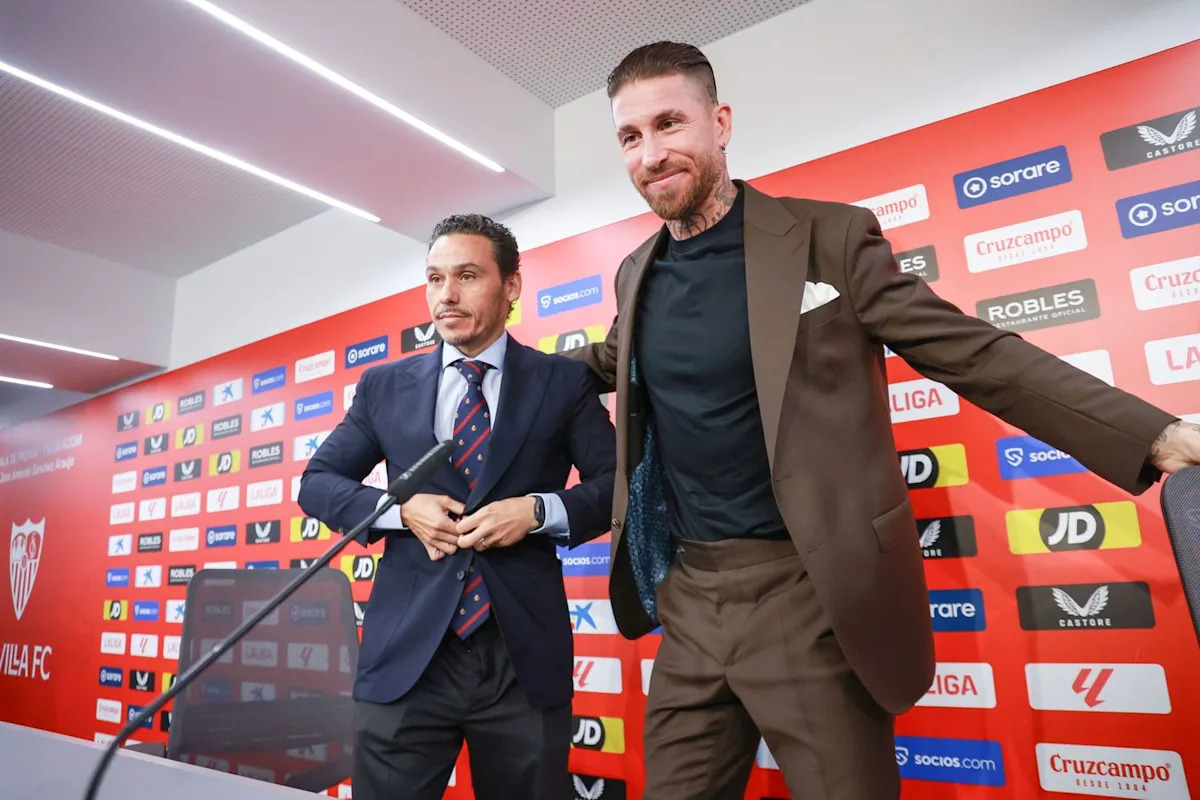
This week brought explosive news: prodigal son Sergio Ramos is plotting a return to the club, but this time as a member of the owner’s box rather than as a player.
A consortium led by Ramos and his partners from Five Eleven Capital
has signed a Letter of Intent with key Sevilla investors to pursue a takeover valued at approximately €450 million. This
deal grants Ramos’ consortium a three-month exclusivity period
to conduct due diligence and audit the club’s accounts.
Advertisement
While Ramos is the face of the bid, the financial backing comes from across the Atlantic. The Spanish firm Five Eleven Capital has acted as an intermediary connecting Ramos with American investors. Interestingly, Sevilla’s current sporting director,
Antonio Cordon, served as Five Eleven Capital’s football director
for a year before joining Sevilla, likely playing a pivotal role in facilitating this partnership.
The objective of the bid is to buy out the warring shareholders (the del Nidos and Castros) and inject immediate liquidity to repay high-interest loans. Additionally, the project aims for a capital expansion similar to those executed by Atletico Madrid or Real Betis, enabling the club to increase their salary cap and procure players without recurring to the sale of their best youth talent annually. The final price and structure depend on the due diligence process and particularly on how Sevilla’s liabilities are categorized.

Image via ZUMA Press Wire/Shutterstock / GTRES
Advertisement
However, del Nido Benavente, Sevilla’s primary stakeholder, previously remarked that Ramos and his partners
had not approached him regarding the bid
. Without cooperative efforts from del Nido, gaining traction will be significantly more challenging.
While Ramos might not be the most unifying figure within Nervion, it is difficult for even his critics to ignore his passion and commitment to the club. For now, Ramos’ consortium appears to be in a strong position to help resolve Sevilla’s internal leadership conflict.
Hope and Uncertainty for the Future
Emotionally, Sevilla fans are adjusting to a wave of shifting expectations. They have grown accustomed to memorable European nights and significant knockout runs, but it will require several years of financial restructuring and astute transfer market maneuvers to regain that Eurozone status. In the meantime, the team’s current focus should be on the consistent effort emphasized by Almeyda and taking small steps: debuting academy players, demonstrating resilience, and showcasing tactical unity.
Advertisement
This gradual recovery could see the academy play a more significant role than it has in previous decades. If sales become necessary, then allocating playing time to youth prospects isn’t merely nostalgic; it is a more sustainable strategy. Sevilla may not be reverting to its former blueprint, but it might be charting a new path for progress.