



As the Women’s Super League (WSL) returns on March 15 after a month-long hiatus, several prominent players will be missing from the line-up.
This absence is due to many of the league’s star athletes representing their national teams at the 2026 AFC Women’s Asian Cup in Australia.
Advertisement
Commencing on Sunday, the tournament will see Asia’s top football nations compete for the championship until March 21.
All WSL teams will have at least one player participating, making for a closely watched event by both fans and clubs.
Here’s what you need to know about the tournament and the representatives from your favorite clubs.
What is the Asian Cup, and how is it structured?

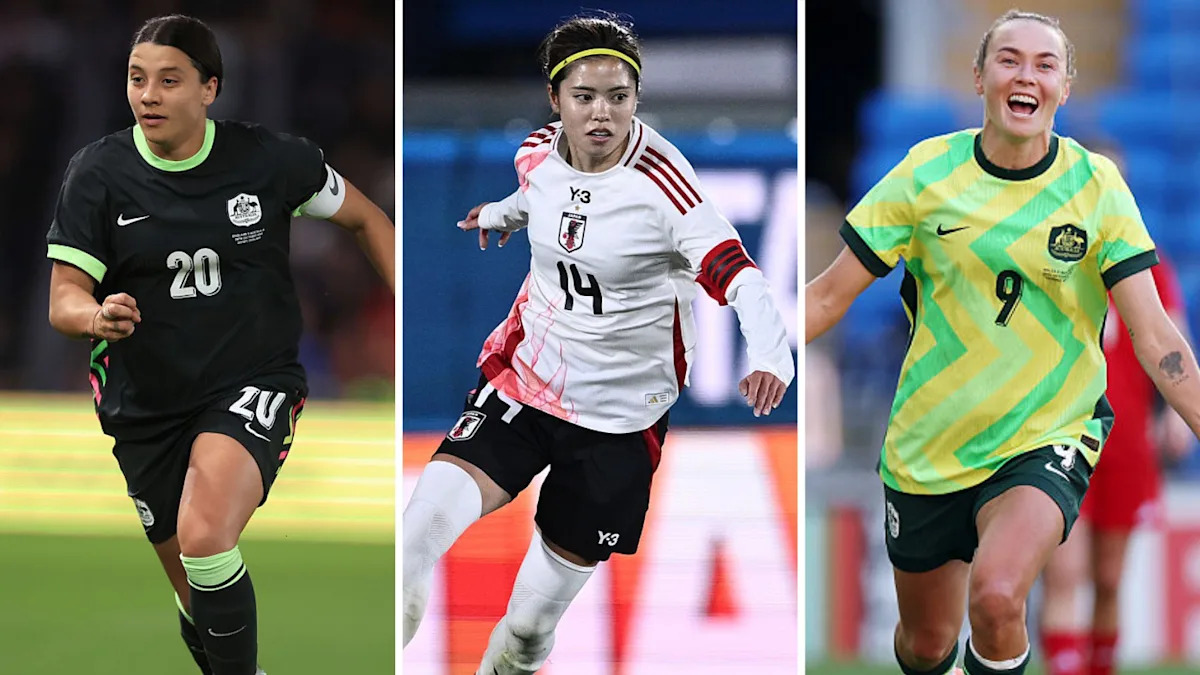
Chelsea’s Sam Kerr, Manchester City’s Yui Hasegawa, and Arsenal’s Caitlin Foord will be away throughout much of March [Getty Images]
This will mark the 21st edition of the tournament, the premier international women’s football event within the Asian Football Confederation.
Advertisement
The competition will kick off on Sunday, March 1, featuring a group stage with three groups of four teams each. Teams within the same group will compete in a round-robin format, resulting in three matches for each team.
The top two teams from each group, along with the two best third-place teams, will advance to the quarter-finals, scheduled for March 13-15, followed by the semi-finals on March 17-18.
The final will take place at Stadium Australia in Sydney on Saturday, March 21, where England faced Spain in the 2023 FIFA Women’s World Cup final.
Advertisement
The four teams reaching the semi-finals will secure automatic spots in the Women’s World Cup in Brazil in 2027, while the quarter-final losers will enter the World Cup inter-continental playoffs.
The groups will be as follows:
Group A: Australia, South Korea, Iran, Philippines
Group B: North Korea, China, Bangladesh, Pakistan
Group C: Japan, Vietnam, India, Chinese Taipei
Which WSL players are participating, and which club is affected the most?
A total of 28 players from across the WSL will participate in the Asian Cup, representing either Australia (12 players) or Japan (16 players).
Any player whose team reaches the final will be unavailable for WSL matchdays 17 and 18.
Advertisement
The final is also set just two days ahead of the first leg of the Women’s Champions League quarter-finals involving Arsenal, Chelsea, and Manchester United.
Considering the strength of both Australia and Japan, it’s likely that many of the players listed below will be out for their clubs during a pivotal period of the season.
In anticipation, some clubs have made strategic moves, such as Manchester City acquiring US star Sam Coffey in January to strengthen their midfield in Yui Hasegawa’s absence.
“It’s definitely a challenging situation,” stated former Scotland and Arsenal defender Jen Beattie on the Women’s Football Weekly podcast. “The travel demands are quite intense, and even once they return, players will need time to readjust.”
Advertisement
“However, this is part of the sport. Clubs signing these players are aware they will be unavailable for certain periods and have plans set up for these situations.”
Australia: Steph Catley, Kyra Cooney-Cross, Caitlin Foord (Arsenal), Charlize Rule (Brighton & Hove Albion), Ellie Carpenter, Sam Kerr (Chelsea), Clare Wheeler (Everton), Emily van Egmond (Leicester), Alanna Kennedy (London City Lionesses), Mary Fowler (Manchester City), Clare Hunt (Tottenham Hotspur), Katrina Gorry (West Ham).
Japan: Maya Hijikata (Aston Villa), Moeka Minami, Kiko Seike (Brighton & Hove Albion), Honoka Hayashi, Rion Ishikawa, Hikaru Kitagawa (Everton), Fuka Nagano, Risa Shimizu (Liverpool), Saki Kumagai (London City Lionesses), Aoba Fujino, Yui Hasegawa, Ayaka Yamashita (Manchester City), Hinata Miyazawa (Manchester United), Maika Hamano, Toko Koga (Tottenham Hotspur), Riko Ueki (West Ham).
Who are the favorites?

Japan is the only Asian team to have won the Women’s World Cup (2011) and has finished as runners-up in the Asian Cup more than any other nation (four times) [Getty Images]
Japan, ranked eighth in the FIFA world rankings and winners of two out of the last three Asian Cups, are considered one of the favorites to win this tournament.
Advertisement
Hosts Australia are also seen as strong contenders, though they have not secured a win in the competition since 2010. The Matildas faced Japan in the finals in 2014 and 2018, losing both times.
Recent history saw China claiming victory in India in 2022, although they remain the most successful team in the tournament’s history with nine titles and should never be underestimated.
Additionally, North Korea, a traditional powerhouse with three tournament victories (2001, 2003, 2008), is back after a prolonged absence from major competitions since the 2011 World Cup due to various sanctions and situations stemming from a doping scandal, along with strict Covid-19 restrictions preventing their participation in the last two editions.
North Korea’s recent performance at the 2023 Asian Games, where they won silver, shows their potential as they narrowly missed qualifying for the 2024 Olympic Games in Paris.
This article is part of a series from BBC Sport’s Ask Me Anything team.

[BBC]
Ben Haines, Ellen White, and Jen Beattie are back for another season of the Women’s Football Weekly podcast. Tune in every Tuesday on BBC Sounds for new episodes, featuring interviews and additional content from the Women’s Super League and beyond.