



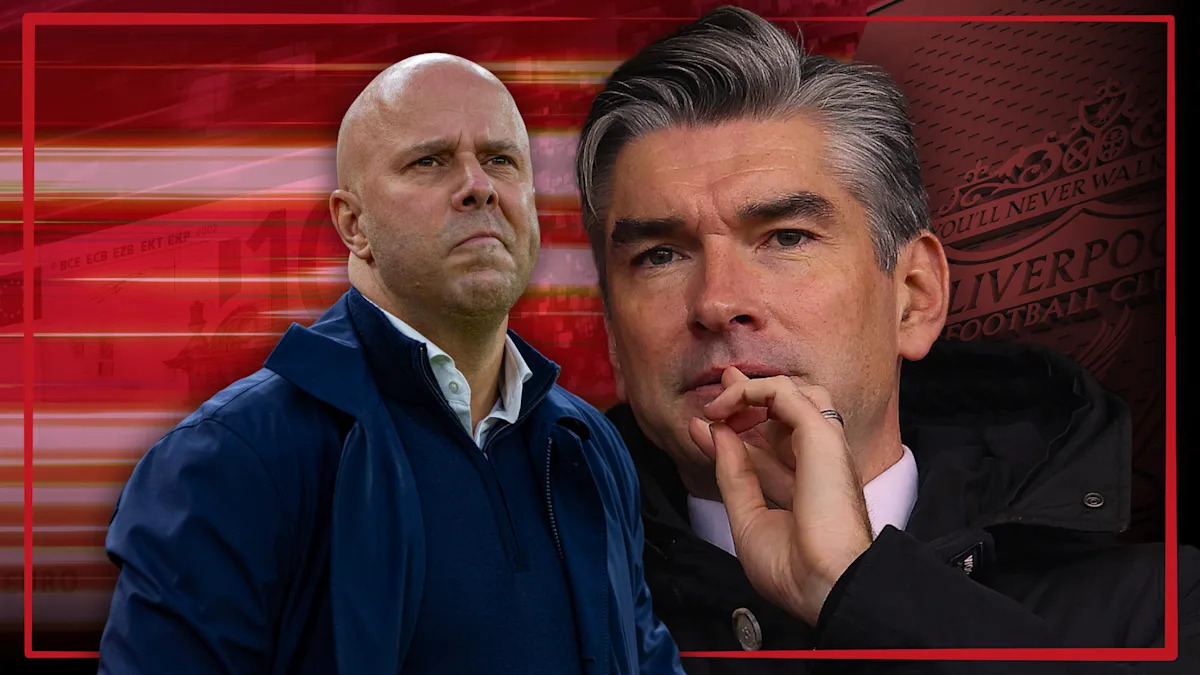
Liverpool is facing challenges in Arne Slot’s second season as manager.
The 47-year-old took charge in 2024 after joining from Feyenoord on a three-year contract that runs through 2027. His debut season was remarkable, culminating in Liverpool winning the Premier League title for the 2024/25 season.
Advertisement
However, after a £450 million summer transfer overhaul — which included British record signings for Florian Wirtz and Alexander Isak — the team’s fortunes have considerably declined.
Liverpool is currently engaged in a battle to secure a Champions League spot, leading to speculation about Slot’s future.
A report from Flashscore notes that the Dutch coach’s future remains uncertain.
According to the report, “Slot is aware that sporting director Richard Hughes is conducting a thorough evaluation of the situation, considering team development, progression, and performance metrics in conjunction with results.”
“Multiple factors are being assessed, and currently, there is no clear direction for the club beyond this season.”
Advertisement
Arne Slot Contract: Summary of the Situation
As Arne Slot approaches the latter stage of his first contract with Liverpool, the club is deliberating on the length of his tenure in their post-Klopp era.
He signed a three-year deal upon joining from Feyenoord in 2024, with an estimated salary of £6.5 million per year — putting him below several of his Premier League counterparts despite leading the team to an immediate title.
Negotiations regarding an extension commenced after his successful debut season, as Liverpool aimed to replicate the model of rewarding managers early, reminiscent of Jurgen Klopp’s tenure. However, the team’s inconsistent performance in 2025 has complicated these discussions.
Advertisement
If Liverpool can mount a strong recovery in late 2025-26, stabilize their results, advance deep into the Champions League, and maintain a top-two position in the league, it would likely compel FSG to formalize a longer contract and raise his salary, ensuring continuity in their recruitment strategy and playing style.
Conversely, if the team’s performance falters and anxiety rises again at Anfield, the original 2027 end date for his contract, previously seen as a mere formality for extension, could turn into a pivotal point, allowing Liverpool to reevaluate the project rather than automatically renewing it.