



In just four years, a lot can change.
The last time the U.S. men’s national team participated in the FIFA World Cup in 2022, the team was noted for being the youngest to qualify for the tournament, with an average age of just 25. The roster, which managed a respectable round-of-16 exit, sparked optimism that this young core could elevate their game ahead of the next World Cup on home soil in 2026.
However, for some rising stars, circumstances have not unfolded favorably. Various factors, including form, playing time, and simply failing to impress head coach Mauricio Pochettino, mean several players once considered almost certain for the 2026 squad now find themselves facing uncertain futures. It’s possible that a few who should have been deemed locks at this stage of their careers will miss the upcoming tournament.
Once viewed as key components for the national team, here are some players currently on the bubble as the roster announcement approaches next month.
– The mental toll of injuries that threaten players’ World Cup dreams
– Sargent’s exit from Norwich has benefited a World Cup rival
– Post-Poch considerations: USMNT’s need for a forward-thinking succession plan
Josh Sargent, who earned two starts at the last World Cup at just 22, appeared to be a mainstay for the national team in the future. After making his mark as a reliable goal scorer in the EFL Championship with Norwich City, what went awry?
First, competition among strikers has intensified. Promising players like AS Monaco‘s Folarin Balogun, PSV Eindhoven‘s Ricardo Pepi, Coventry City‘s Haji Wright, and the injured Derby County‘s Patrick Agyemang have stepped up their game. Following a move to MLS with Toronto FC earlier this year, Sargent has also found himself sharing the spotlight.
Additionally, his club-level statistics have not bolstered his case. In the ongoing 2025-26 season — encompassing both his five MLS games and his time with Norwich — he ranks fifth in metrics like goals per 90 minutes, shot conversion rate, and non-penalty expected goals per 90, trailing the aforementioned strikers. He also sits fourth in expected goals per shot among this group.
A 2025 scoring drought, both for club and country, has further diminished his prospects. After failing to net a goal in two U.S. appearances last year, Sargent experienced a 14-match goal drought at Norwich during the winter.
Even with Agyemang’s injury, there’s a strong argument that Sargent may not secure one of the top three striker positions.
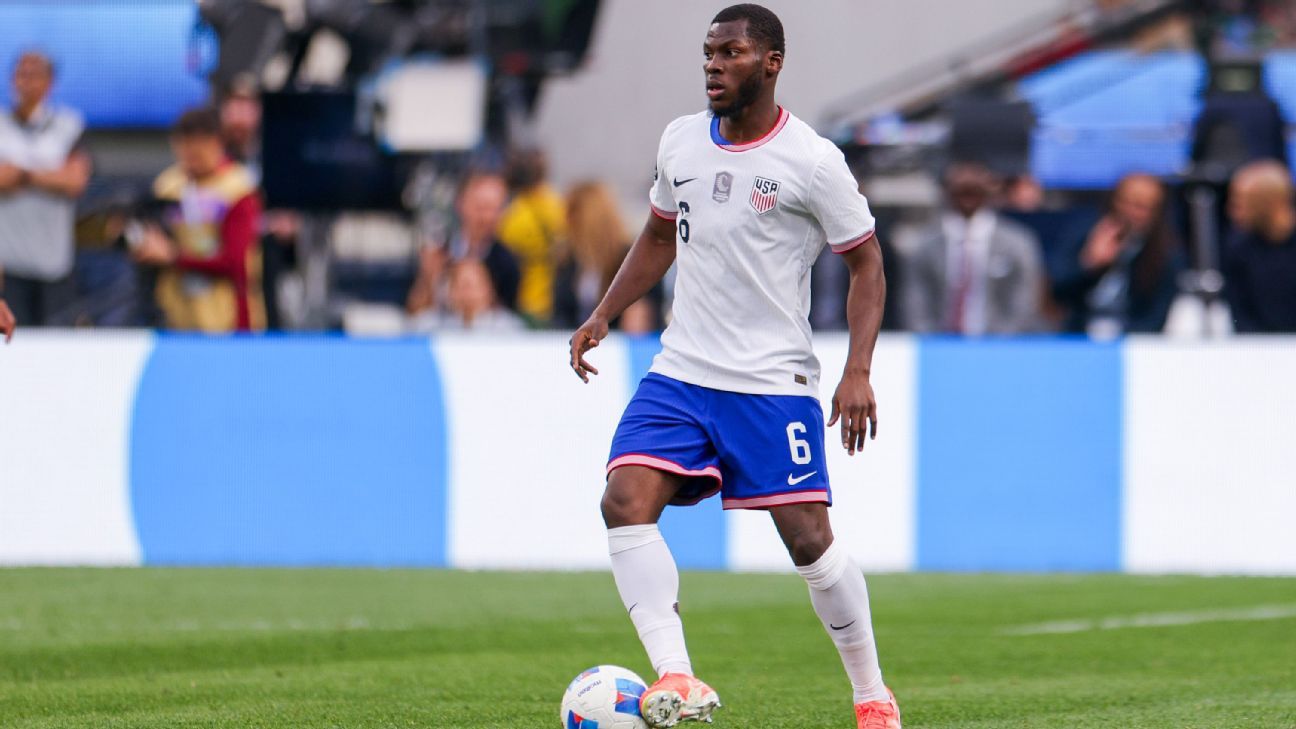
Yunus Musah, the 2022 U.S. Soccer Young Male Player of the Year, is now fighting for regular playing time at the club level. At just 23, he was a starting fixture in all matches for the U.S. during the previous World Cup, yet the rotational midfielder at Atalanta has not yet fulfilled the potential that many expected from him as a promising teenager.
Currently on loan from AC Milan, Musah has made only seven starts across all competitions this season. In his last five Serie A games, he has played a mere 14 minutes, totaling only 529 minutes for the season. In contrast, teammate Weston McKennie is enjoying 2,395 minutes of playing time at Juventus.
Since last year, Musah’s lack of appearances has indicated Pochettino’s lack of interest in calling him up from LaLiga‘s Valencia.
“You can ask me about why Messi isn’t in the lineup, right? When you’re discussing different names, it’s important to respect the players that are present,” Pochettino remarked when pressed by ESPN last October regarding the absence of Musah and defender Joe Scally.
As for Scally, he could emerge as a surprise inclusion on the World Cup roster after having been a bench player in 2022.
At 23, the versatile fullback has earned regular playing time in the Bundesliga with Borussia Mönchengladbach. He represents a reliable option in a critical defensive role, capable of adapting to a three-center-back formation.
So what are the challenges? Besides Pochettino’s indifference to include him late last year, Scally lacks the same offensive output as other fullbacks. However, it should be noted that he scored for Gladbach recently.
Although the sample size is small, statistics from U.S. appearances since the 2024-25 Concacaf Nations League show that Scally has not matched Alex Freeman‘s scoring in the right back position. Despite having more appearances (seven) than Sergiño Dest (four), Scally’s expected goals and assists are lower.
While one appearance in a three-man defense may skew the statistics, it’s evident that Scally isn’t as much of an offensive threat as Dest or Freeman.
Also in the mix is Tim Weah, who might claim a starting role if wing-back selections are made. However, defensively, Scally doesn’t offer the same strength as Mark McKenzie or Miles Robinson for a potential center back position. Then there’s Scally’s teammate Gio Reyna, whose unpredictable talents could also land him a surprising spot on the World Cup roster.
Zack Steffen, who was a surprising omission from the 2022 World Cup squad, remains a topic of discussion. Despite the disappointment of not making the last tournament, he was expected to peak as a goalkeeper at age 31 in 2026.
However, confidence in the Colorado Rapids goalkeeper has waned after he ranked 21st in MLS for goals prevented last season, and ninth among American goalkeepers (with Sean Johnson still leading this statistic).
Injuries have certainly presented challenges for Steffen, but there’s little evidence from his recent performances that suggest a return to national prominence.
Despite the traditionally longer careers of goalkeepers, it remains uncertain if Steffen will reclaim a spot in discussions leading up to the next World Cup. His waning status may very well mean he watches the tournament from the sidelines.