



Tottenham Hotspur narrowly escaped a catastrophic fate, but it’s time for scrutiny and reflection.
Sunday’s 1-0 victory against Everton on the season’s final matchday kept Spurs from experiencing one of the most humiliating relegations in Premier League history. However, the most pressing question remains: how did they find themselves in this precarious position?
– Sleepwalking over: Tottenham stave off relegation after nightmare season
– Inside Arsenal’s 5-phase plan to win first Premier League title in 22 years
– Liverpool’s end of an era: Salah, Robertson say goodbye as questions linger
Shortly after becoming Tottenham’s non-executive chairman last September, Peter Charrington upheld a tradition of hosting dinners with Spurs legends. In the past, former chairman Daniel Levy held these gatherings to connect the club’s history with its future and share long-term strategies with a trusted audience of supporters.
This time, however, Charrington approached the evening differently. After introducing himself, he opened a notebook and, rather than detailing the club’s objectives, invited the legends to share their insights on how to improve Spurs. This method, which may have offered useful feedback, was perceived by many at the club as a sign of disarray and directionlessness; insiders have described Tottenham as “rudderless” and “lacking soul.”
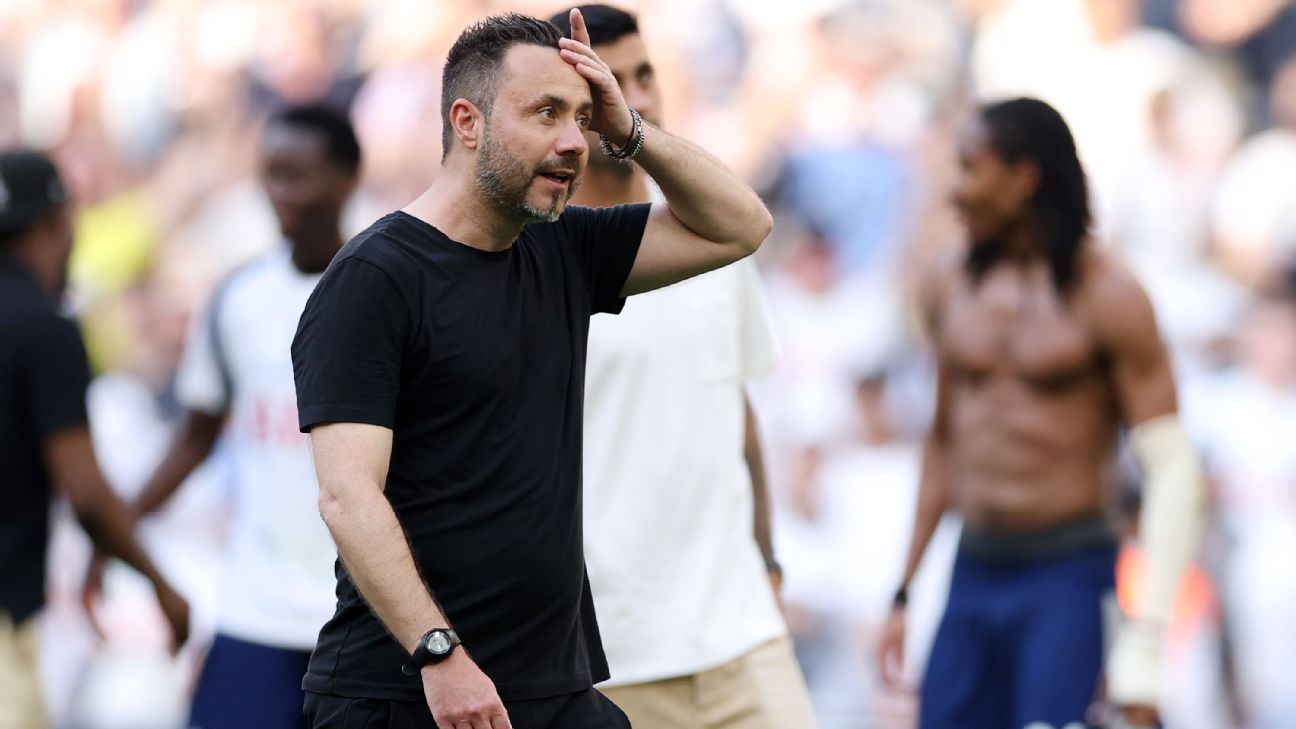
Coach Roberto De Zerbi, hired just two months ago, managed to hold back the tide of collapse. His ecstatic celebration at the final whistle against Everton didn’t just reflect the relief he felt; it also emphasized that a club of Tottenham’s stature must never be in such a vulnerable position again. The recent decline nearly sent the world’s ninth-richest soccer club spiraling into the Championship.
The Void Left by Levy
While Levy’s lengthy tenure had its issues, his unexpected departure in September created a leadership gap that many believe remains unfilled. This void undermined Spurs’ efforts at a reset following their UEFA Europa League victory, which saw the dismissal of head coach Ange Postecoglou and his replacement with Thomas Frank.
Reports indicated that friction arose due to delays in sale discussions between Levy and the Lewis Family Trust, which holds the majority stake in ENIC — Tottenham’s parent company. Recent insights reveal that a potential sale was further along than previously thought, with a rough agreement of £3.5 billion reached with a preferred buyer. However, complications surrounding the sale escalated tensions between Levy and Joe Lewis, contributing significantly to Levy’s exit.
The stalled sale ultimately fell through, leading to Levy’s exit. In the aftermath, the Lewis Family Trust expressed its commitment to the club, soon announcing a £100 million capital commitment.
Despite this, Spurs confirmed that ENIC had “unequivocally rejected” interest from several parties, including a consortium led by American entrepreneur Brooklyn Earick. This included dismissed offers from other investor groups, all of whom later stated their compliance with the Takeover Code and indicated they wouldn’t resubmit offers.
This left ENIC and the Lewis Family Trust with continued control of the club amidst a need for a renewed footballing vision.
With Levy gone, the primary decision-maker now falls to new CEO Vinai Venkatesham, who previously held a chief executive role at local rival Arsenal. Internal assessments revealed numerous persistent issues that both Venkatesham and Frank acknowledged would require time to address.
Declining Standards
Levy’s achievements included the development of a modern training facility and overseeing the construction of one of Europe’s most impressive stadiums. Yet some staff members have reminisced about his approachable nature, always open to feedback. However, criticisms of the training facility have also surfaced, suggesting that while luxurious, fundamental aspects need enhancement.
The Lodge, a purpose-built 45-bedroom complex with high-end catering and entertainment services, has become a draw for potential players. Nevertheless, there are those at the club who feel other, core elements, such as the gym and medical department, are not up to elite Premier League standards. The overwhelming usage of The Lodge for recruiting could have led to an erosion of standard performance measures contributing to the club’s struggles.
The culture surrounding the first-team squad and academy has been called into question frequently. Reports indicate that even at the youth level, staff feel players are not being sufficiently encouraged to cultivate resilience for competing in the top tier.
While Frank never truly connected with the players, some suggest that a malaise had set in; Postecoglou’s historic Europa League triumph in 2025 was partially at the cost of domestic performance, highlighting that standards could drop at critical moments.
Multiple sources have suggested that Frank recognized the need for sweeping changes but faced challenges delivering immediate results, leading to his sacking in January after only eight months.
A significant factor in the team’s struggles has been an inability to maintain player fitness. Postecoglou’s high-tempo style was cited by some as the reason for these issues; although injury rates diminished compared to the previous season, there are deeper concerns. Overhauls in the sports science and medical departments have not delivered desired outcomes. Training regimens will be reviewed this summer in light of claims that both Frank and his successor, Igor Tudor, overworked players.
Hiring Challenges and Missed Opportunities
The approach to player acquisitions has long faced criticism for being too frugal, especially in comparison to rival clubs. While Levy maintained that Tottenham’s net spend was competitive for years, the wage bill remained relatively low.
Reports within the club indicate several missed opportunities where decision-makers failed to act on internal recommendations for certain players. Two specific examples are highlighted: Antoine Semenyo was signed by Manchester City this January after having been identified as a target during his time at Bristol City, while Adam Wharton, another notable player, has emerged at Crystal Palace after being recommended when he was at Blackburn Rovers.
Last summer, Spurs failed to secure Morgan Gibbs-White, who opted to extend his contract with Nottingham Forest, and Eberechi Eze, who chose Arsenal when they matched the £60 million agreement Spurs had reached with Palace, further complicating matters for Frank prior to the season starting.
Venkatesham’s decision to bring back Fabio Paratici in October was short-lived. Paratici, who was working in an advisory role due to a FIFA ban relating to financial issues from his tenure at Juventus, was appointed co-sporting director with oversight of transfers while Johan Lange managed the academy and scouting. This arrangement lasted merely three months before Paratici departed for Fiorentina.
Though Spurs claimed Paratici wished to return to Italy, there were disputes centered on his desire to terminate Frank’s contract due to dismal results in November and December—something Venkatesham and Lange, who had a close relationship with Frank, resisted. Ultimately, Paratici left in January, and Frank was dismissed on February 11 following a poor run of results.
Sources indicate Paratici had recommended Tudor as a potential replacement before leaving. Lange has neither confirmed nor denied who offered recommendations after Tudor’s appointment when he gave a rare public interview.
Tudor’s tenure was a disaster; he garnered just a single point from five league matches before being dismissed. Following his initial match—a 4-1 defeat to Arsenal—he publicly questioned “what is the goal of this club?”—a sentiment that resonated internally as the threat of relegation intensified.
A New Era with De Zerbi?
Turning to Roberto De Zerbi with only seven matches left in the season seemed like a risk. Known for his volatility, De Zerbi was nevertheless an intriguing choice, coming into a team low on confidence and entrenched in a relegation battle. His dynamic personality quickly began to fill the leadership void, introducing a clear tactical approach that the players embraced.
Unlike Tudor, De Zerbi aimed to unify the squad, fostering a sense of teamwork. Even injured players like midfielder James Maddison and goalkeeper Guglielmo Vicario contributed as cheerleaders in matches even while sidelined. Their efforts were apparent in key draws against Brighton & Hove Albion and a victory over Aston Villa.
In these encounters, Tottenham demonstrated renewed commitment and competitive spirit, pressing higher up the pitch. De Zerbi’s strategic adjustments propelled Spurs forward, notably with the midfield trio of Conor Gallagher, Rodrigo Bentancur, and João Palhinha starting together.
Palhinha’s relentless work rate made a crucial impact, scoring the decisive goal against Everton that secured survival.
However, the threat of relegation should serve as a wake-up call for Tottenham. The underlying issues that brought them to the brink must be addressed swiftly.