



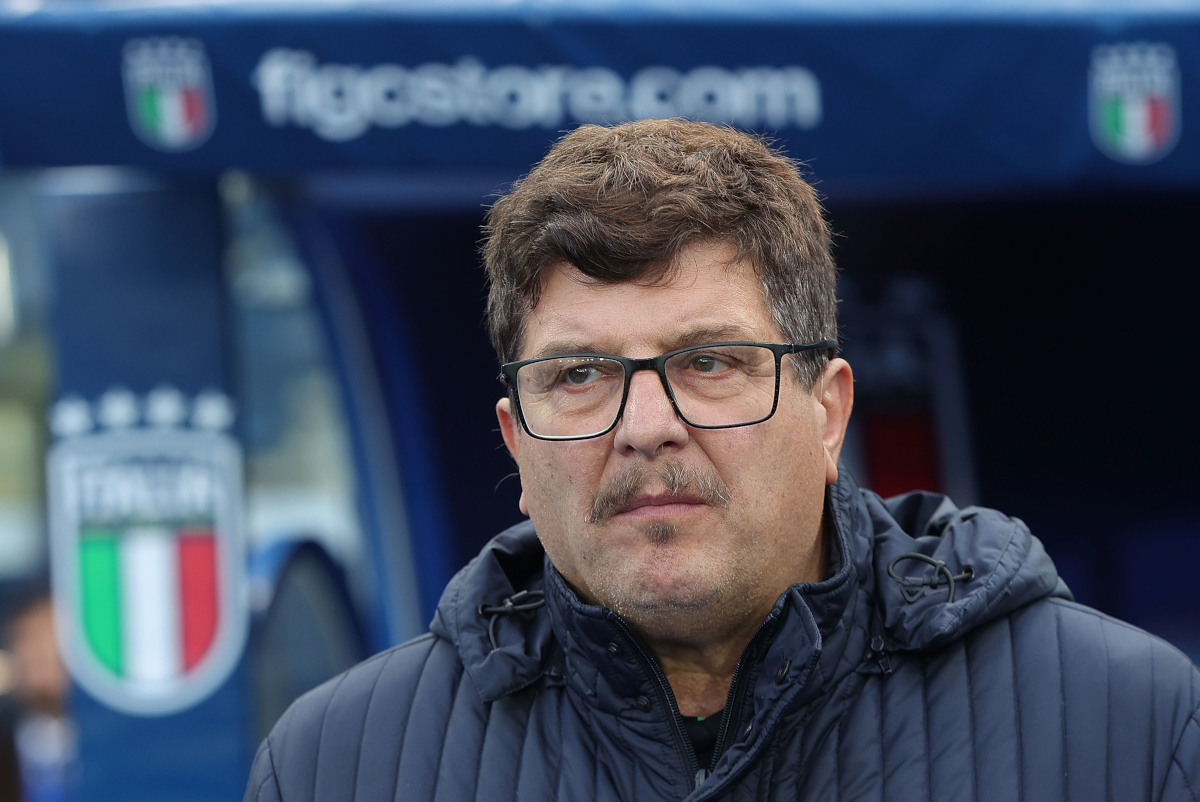
Silvio Baldini, Italy’s interim head coach, attributes the country’s decline in football on the international stage to directors who prioritize their own interests over the development of the sport. His critique highlights the troubling situation currently faced by Serie A.
Baldini’s Thoughts on the Decline of Calcio and the Italian National Team
Baldini is set to lead Italy in upcoming international friendlies against Luxembourg on June 3 and Greece on June 7. He has stepped in as the interim coach following Gennaro Gattuso’s resignation after Italy’s failure to qualify for the 2026 World Cup.
A new permanent coach is not anticipated until after the FIGC presidential elections on June 22.
Baldini addressed the media for the first time as interim coach on Friday, discussing why he opted for a squad featuring 20 uncapped players, his reluctance to take the position permanently, and the overall struggles of Italian football.
In his assessment, Baldini placed the blame on unscrupulous directors, who he claims “focus on their own gains rather than the advancement of the sport.” He stated emphatically, “Italian football is in the hands of individuals who prioritize their interests over the game’s growth.”

Baldini expressed serious concerns regarding transfer market practices, noting, “The focus appears to be on acquiring older players instead of nurturing young talent from our academies. Some refer to these tactics as ‘cheating’, and those who engage in them often hold the decision-making power.” He emphasized that without competent directors, the issues will persist.
Baldini agrees with the prevailing sentiment that young players in Italy do not receive adequate opportunities to shine at the highest levels. “Experience is derived from playing. If that exposure is limited, their value stagnates. While youth teams have historically excelled, the leap to the senior level remains problematic. It’s essential for these young players to gain playing time, but that issue lies more with the clubs than the federation.”

Baldini questioned the strategy of signing older players, asking, “What advantage do we gain by opting for a 39-year-old over a promising academy prospect? The persistent issues within Italian clubs will continue as long as we lack serious leadership.”
“This also translates into our gameplay; we tend to play at a slower pace. Young players infuse energy, rhythm, and speed into the match. In contrast, older players often conserve their efforts and engage less in offensive actions. Look at how teams like PSG and Aston Villa operate.”