



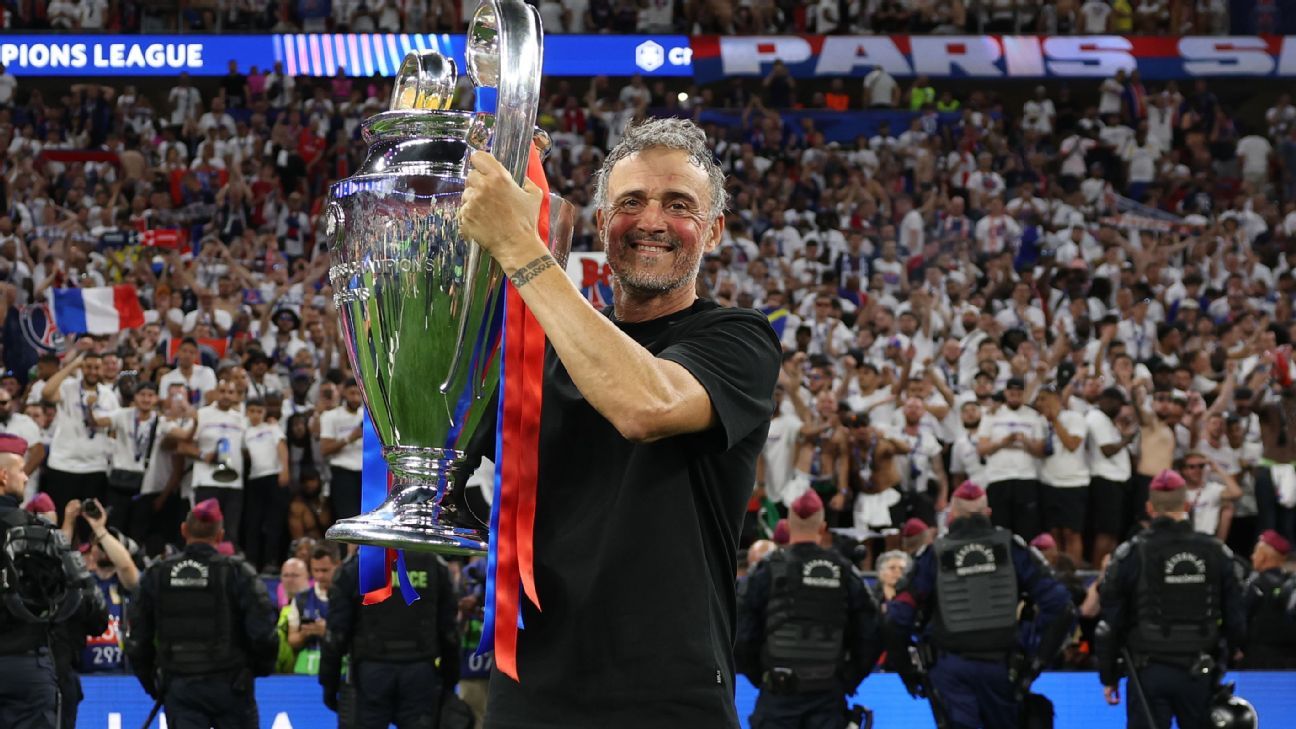
BUDAPEST, Hungary — Paris Saint-Germain’s consecutive victories in the UEFA Champions League have raised intriguing questions about what their success signifies for contemporary football. Their triumph over Arsenal was not only decisive in terms of chances but also illustrative of PSG’s impressive path to the final, defeating strong teams like Liverpool and Bayern Munich. What implications does this success hold? Have they found a winning formula, and can other teams replicate their approach?
The answers are complex due to various contradictions at play.
Under coach Luis Enrique, PSG’s playing style reflects the aspirations of many clubs: a dynamic 4-3-3 formation characterized by athleticism and fluidity, allowing a versatile center-forward to roam freely. The team can quicken the pace or slow the game down as needed, demonstrating a tactical “control” that coaches often emphasize. Although filled with creative talents who have the freedom to express themselves, this creativity is balanced with structure, ensuring the team performs cohesively.
– How PSG overcame Arsenal to clinch the UEFA Champions League
– Arsenal’s struggle in the Champions League final despite their resilience
– VAR analysis: The UCL referee’s critical Mendes-Madueke decision was spot on, yet contentious
In many ways, PSG embodies the pinnacle of modern football practices, with their approach thrumming along the same lines as elite clubs in Europe, especially those outside the extraordinary competition of the Premier League. While elite squads might tweak their strategies as per their unique assets, PSG’s style resonates as a benchmark that most clubs aspire to emulate.
However, PSG’s situation is rather distinct. They kicked off their season with Luis Enrique acknowledging a delayed start due to their participation in the FIFA Club World Cup, which meant treating early matches like a training camp, allowing for a gradual build-up and heavy rotation of players.
It’s easy to forget that just a few months ago, they narrowly avoided defeat in the UEFA Super Cup against *ahem* Tottenham Hotspur, a team that nearly faced relegation from the Premier League. For the second year in a row, they also had to navigate the playoff rounds to qualify for the Champions League knockout stage.
Playing in an 18-team Ligue 1, paired with a budget that surpasses that of their competitors, allows PSG the flexibility to manage their efforts throughout the season. They can operate at a measured pace, reserving their peak performances for critical moments, a luxury not afforded to many of their counterparts.
Nonetheless, it requires considerable coaching expertise to navigate this unique scenario, a credit to Luis Enrique. The argument about “iron sharpens iron” suggests that playing in leagues like La Liga or the Premier League offers a higher competitive standard, thus better preparing teams for European challenges. This notion, often repeated, overlooks the nuances of skill development, which isn’t simply honed by competition alone.
Having a coach with such confidence and security is also atypical. Luis Enrique’s firm resolve allows him to overshadow his players, who reportedly earn less than him. PSG’s pivot away from high-profile stars like Lionel Messi, Neymar, and Kylian Mbappé to focus on a younger, perhaps more motivated squad reflects both a strategic and financial decision, providing Enrique with a foundational group to mold. Few clubs, including Bayern or Liverpool, would centralize a coach in such a manner as PSG does.
Moreover, PSG has excelled in branding, merging urban and Parisian aesthetics in a way that resonates with a global audience. Their bite-sized highlights and engaging playing style enhance their appeal, as fans outside of France typically consume their games through selective clips rather than full matches. This success creates a club identity that thrives in the social media era, transforming PSG into an aspirational luxury brand known worldwide.
Financially, PSG has excelled as well, reportedly generating over €160 per match for each seat in their 48,000-capacity Parc des Princes stadium—significantly exceeding what clubs like Arsenal earn per attendee at the Emirates. While lucrative agreements with Qatar contribute to this success, PSG competes favorably despite lacking the regular visibility of leagues like the Premier League, a larger stadium, or a century of heritage.
Yet, a paradox exists. At home games, the mantra “Ici c’est Paris” (“This is Paris”) is omnipresent, and the Eiffel Tower features prominently in their logo. They leverage their city’s image more effectively than most, creating an authentic connection with their Parisian supporters. PSG strikes a remarkable balance between global outreach and maintaining local fan engagement—an area where many clubs struggle. While clubs like Manchester United or Barcelona cannot claim their respective cities in the same expansive way, PSG manages to embrace both a local and a global identity.
Currently, PSG sets the gold standard, embodying growth and excellence in football. Their circumstances, however, are remarkable and involve distinct advantages and challenges. In a rapidly evolving world, both in football and beyond, PSG has charted a course that has proven successful, propelling them to the pinnacle of the sport.