



As the 2026 FIFA World Cup in North America wraps up from June 11 to July 19, numerous team and individual records are likely to be shattered.
This tournament marks a historic expansion from 32 to 48 teams, raising the number of matches from 64 to 104 thanks to the addition of a round of 32. The increased number of games will provide more chances for players, coaches, and nations to chase records once thought unattainable.
Since the first World Cup in Uruguay in 1930, countless players and coaches have etched their names into the annals of football history with stellar performances on the sport’s biggest stage. With this in mind, let’s explore which records might be challenged this summer and which seem firmly out of reach.
Records Likely to be Broken
Most Matches Won by a Manager: Helmut Schön (West Germany), 16
Helmut Schön’s remarkable tenure with West Germany from 1966 to 1978, spanning four consecutive World Cups, is legendary. He holds the record for the most matches managed at the World Cup with 25, guiding his team to the 1966 final, a third-place finish in 1970, and championship glory in 1974. He was also the first coach to win both the European Championship (1972) and the World Cup (1974), a feat later matched by Vicente del Bosque with Spain in 2010 and 2012.
Assuming no major setbacks, France manager Didier Deschamps is poised to surpass Schön’s win record. Under Deschamps’ guidance, the French national team has reached the quarterfinals in 2014, clinched the World Cup in 2018, and finished as runners-up in Qatar in 2022, boasting 14 wins in 19 matches.
France’s favorable group draw (Norway, Senegal, Iraq) further boosts their odds for a successful tournament run. If France avoids an unexpected early exit, Deschamps may not only overtake Schön in wins and matches managed but could also emulate Italy‘s Vittorio Pozzo (1934, 1938) by becoming just the second manager to win two World Cups.
Most Total Goals in a Tournament: 172 (2022)
The 2022 World Cup in Qatar featured a record 172 goals across 64 matches with 32 teams, averaging 2.69 goals per game and surpassing the previous record of 171 goals set in 1998 and 2014. With the 2026 event expanding to 48 teams and a total of 104 matches, this record is certain to be broken.
For comparison, the 1990 World Cup had the lowest average of 2.21 goals per game and is often considered one of the most defensive tournaments. If the 2026 edition merely matches that 1990 average, it would yield approximately 230 goals over 104 matches—far above the current record. If, on the other hand, it replicates the 2.69 goals-per-game rate from Qatar, we could see nearly 280 goals, which is more than a hundred above the existing record.
In summary, even under conservative scoring projections, this summer’s World Cup should easily surpass the 200-goal mark. Given the contemporary emphasis on attacking football, high pressing, and open matches, the expanded tournament could set a groundbreaking record that stands for years—unless FIFA further enlarges the field in the future.
Most Players in Their 40s
Since the first World Cup in 1930, only seven players aged 40 or older have participated. However, 2026 promises to alter this trend, potentially featuring a significantly larger number of seasoned veterans at the tournament.
Among the players who might compete at age 40 or older are Portugal‘s Cristiano Ronaldo (41), Germany‘s Manuel Neuer (40), Bosnia and Herzegovina‘s Edin Dzeko (40), Scotland‘s Craig Gordon (43), Croatia‘s Luka Modric (40), Uruguay‘s Fernando Muslera (40), and Mexico‘s Guillermo Ochoa (40). Should any two of these seasoned athletes step onto the field for even a minute, this World Cup will set the record for the highest number of players aged 40 and above in a single tournament.
Records That Could Be Broken
Most Goals, All Time: Miroslav Klose, Germany, 16
While scoring goals is universal in football, only a handful of players can claim the title of all-time World Cup leading scorer.
French player Just Fontaine scored 13 goals in a single tournament in Sweden in 1958, with subsequent records being broken only three times since then. Gerd Müller of West Germany scored his 14th World Cup goal during the final in 1974, a record that stood for over 30 years until Brazil’s Ronaldo surpassed it with his 15th goal in the 2006 World Cup. Finally, German striker Miroslav Klose set the current record of 16 goals during his career, notably achieving this feat during Germany’s memorable 7-1 semifinal victory over Brazil at the Maracanã.
Today, for the first time in over a decade, Klose’s record is genuinely at risk.
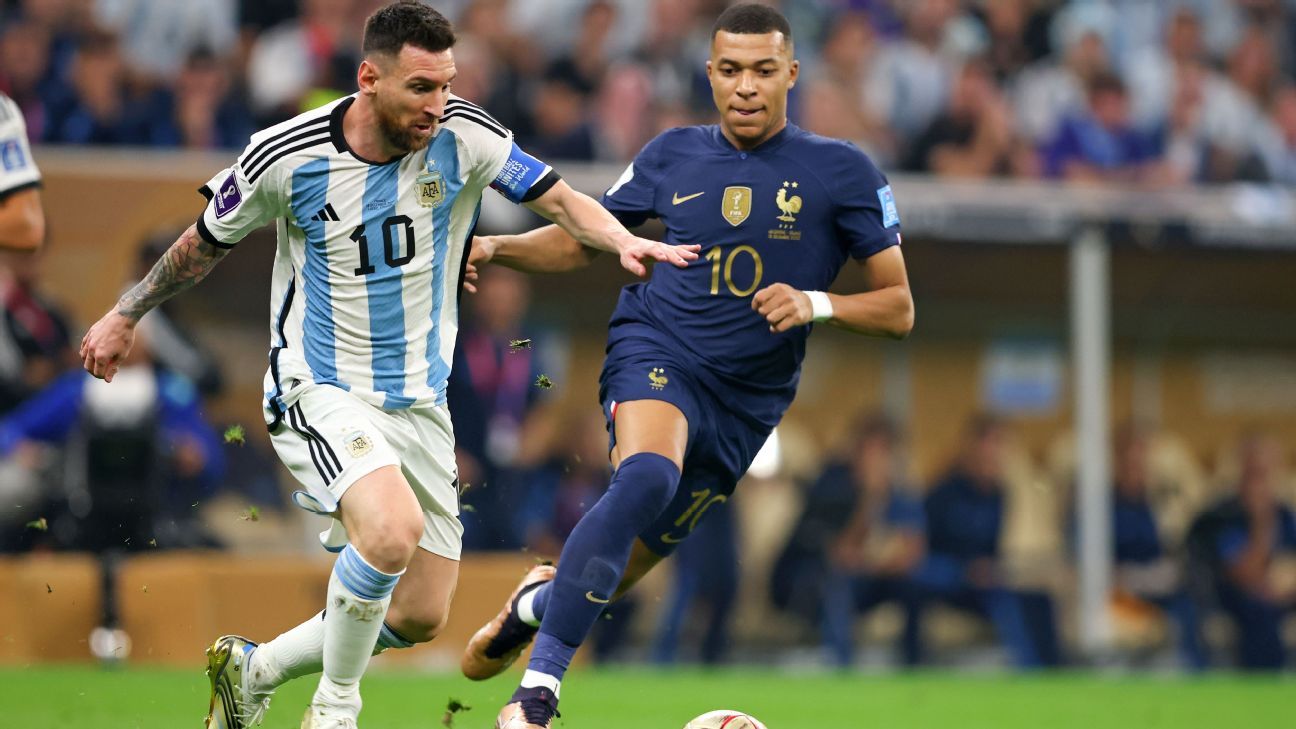
Argentina‘s Lionel Messi (13 goals) and France’s Kylian Mbappé (12 goals) both sit within striking distance. Other players like Portugal’s Ronaldo (eight), England‘s Harry Kane (eight), and Brazil’s Neymar (eight) are in contention but would require an impressive scoring performance to catch up.
Messi and Mbappé combined for five goals during the 2022 final—Mbappé netting a hat trick while Messi and Argentina lifted the trophy—and both are now closing in on Klose’s milestone.
Even if Messi scores one more goal than Mbappé this summer, the latter still holds an advantage due to his age (28), giving him the prospect of participating in at least one more World Cup before retirement, while Messi will be turning 39 during the group stage.
How realistic is this record-breaking opportunity? Historically, Golden Boot recipients (the tournament’s leading scorers) have typically tallied at least five goals. Messi and Mbappé finished first and second in the scoring charts during the last tournament, with the latter winning the award with eight goals to Messi’s seven.
Youngest Golden Boot Winner: Thomas Müller, Germany, 2010 (Age 20)
Another German record faces a serious challenge at the upcoming World Cup in North America. In the 2010 event held in South Africa, Thomas Müller broke onto the scene by scoring five goals while leading Germany to a third-place finish, becoming the youngest player to win the Golden Boot and also receiving the Best Young Player award.
Fast forward 16 years, and there’s a strong contender rising to potentially dethrone him: Spain’s Lamine Yamal.
At just 18 years old, Yamal has already made a name for himself as one of the top young talents in football after helping Spain secure the Euro 2024 title. The Barcelona forward is now seen as one of the next generation’s brightest stars. If Spain progresses deep into the tournament, Yamal could be a frontrunner not just for the Golden Boot but also for several individual accolades before reaching his 20th birthday.
Nonetheless, his fitness will play a crucial role in his success this summer. Yamal endured a significant hamstring injury late in the club season, and any setbacks in his recovery could impact his playing time and goal-scoring chances during the tournament (reports indicate he may miss La Roja’s opening match, potentially extending to their second game as well).
Yamal isn’t the only teenager who could challenge Müller’s record; Lennart Karl, an 18-year-old winger from Germany, and Brazil’s 19-year-old Endrick are also up-and-coming attackers with the potential to break Müller’s record. However, all eyes will likely be on Yamal, who finished the last season with a remarkable 24 goals in all competitions, setting him up for a historic World Cup adventure.
Youngest Golden Ball Winner: Ronaldo, Brazil, 1998 (Age 21)
During the 1998 World Cup, Brazil entered as the defending champions, and much of the spotlight was on Ronaldo, who was not only the reigning Ballon d’Or winner but also regarded as one of the greatest players at just 21 years old. Despite Brazil’s loss in the final to France, where Ronaldo struggled, he still secured the Golden Ball as the tournament’s best player.
More than 25 years later, no player under the age of 21 has matched Ronaldo’s level of impact at a World Cup. Since 1998, the Golden Ball has primarily gone to veteran players at their career peaks, such as goalkeeper Oliver Kahn (Germany), playmaker Zinedine Zidane (France), Luka Modric (Croatia), and elite South American forwards like Messi and Diego Forlán of Uruguay.
With the exception of Messi in 2014, every Golden Ball winner post-Ronaldo has been over age 30, highlighting the challenge young players face in making a significant impact in a World Cup setting. This is what makes Yamal’s potential so compelling as we approach 2026.
Other emerging youngsters capable of making a similar impact include Karl, Endrick, and France’s Désiré Doué who are all viewed as breakout candidates, along with younger midfielders who might rise to prominence this summer. Portugal’s João Neves is already a vital figure in the midfield for back-to-back UEFA Champions League champions Paris Saint-Germain, while England’s Kobbie Mainoo and Argentina’s Nico Paz could also shine if fortunate in their campaigns.
Records Highly Unlikely to be Broken
Longest-Range Goal: David Villa, Spain vs. Chile (2010), from 41.4 Meters (136 Feet)
This record might lead many to think, “Surely this can be broken?” However, breaking it is far more complex.
Since 1966, only six World Cup goals have been netted from 35 meters (115 feet) or more. Among these, one of the most iconic was Ronaldinho’s extraordinary strike for Brazil against England in the 2002 quarterfinal, from 37.6 meters (123 feet)—catching keeper David Seaman off his line. Villa’s 2010 record-breaking goal against Chile has stood firm since then.
This isn’t to say long-range goals occur only due to keeper errors, but the reason this record has remained unbroken even as overall tournament scoring has increased is more about modern football strategies. Teams now prioritize transitions, creating high expected goal (xG) chances, and generating clearer opportunities in the box rather than relying on long-distance shots. The focus has shifted to set pieces, cutbacks, and penalties more than in previous World Cups.
The expanded 48-team format in 2026 could lead to more mismatches, potentially resulting in top teams registering more shots versus weaker defenses. Thus, while Villa’s record could face a challenge, breaking it would likely require an ideal set of circumstances to align.
Is it doable? Yes. Is it likely? Probably not.
Records That Will Not Be Broken
Youngest Goal Scorer: Pelé (17 Years, 239 Days; Brazil vs. Wales, 1958)
Not every World Cup record will face threats in 2026. Records like Fontaine’s 13 goals in a single tournament (1958), or Egypt‘s Essam El-Hadary becoming the oldest player to compete at a World Cup at 45 years and 161 days in 2018, seem nearly unachievable. Pelé’s record is similarly unlikely to be surpassed, simply because no one younger than he was in 1958 is expected to participate in 2026.
The closest contender, and perhaps the most unfortunate, is Mexico’s Gilberto Mora. Should he score against South Africa on June 11, he will be 17 years and 240 days old, just one day shy of Pelé’s record. Unless a generational talent appears at just the right moment and earns significant playing time, Pelé’s record is likely to remain intact.
Biggest Win: Hungary 10-1 El Salvador (1982)
Quick quiz: How many times have teams recorded double-digit scores in a World Cup match?
It has occurred only once in almost a century.
Hungary’s 10-1 victory over El Salvador at the 1982 World Cup in Spain remains the largest margin of victory in tournament history and the only instance of a team netting 10 goals in a single match. While the expanded 48-team format might suggest such a record is vulnerable due to increased team participation, it’s important to note that heavy defeats are not a frequent occurrence.
While routs are part of World Cup history (as demonstrated by Spain’s 7-0 triumph over Costa Rica four years ago), the achievement of scoring 10 goals in a single match remains exceedingly improbable, even in a larger tournament. This sentiment holds true for the record of the highest-scoring match, which stands at Austria‘s 7-5 win over Switzerland in 1954.
In conclusion, while we can expect plenty of goals during the summer, it’s unlikely they will all arrive in a single match.