



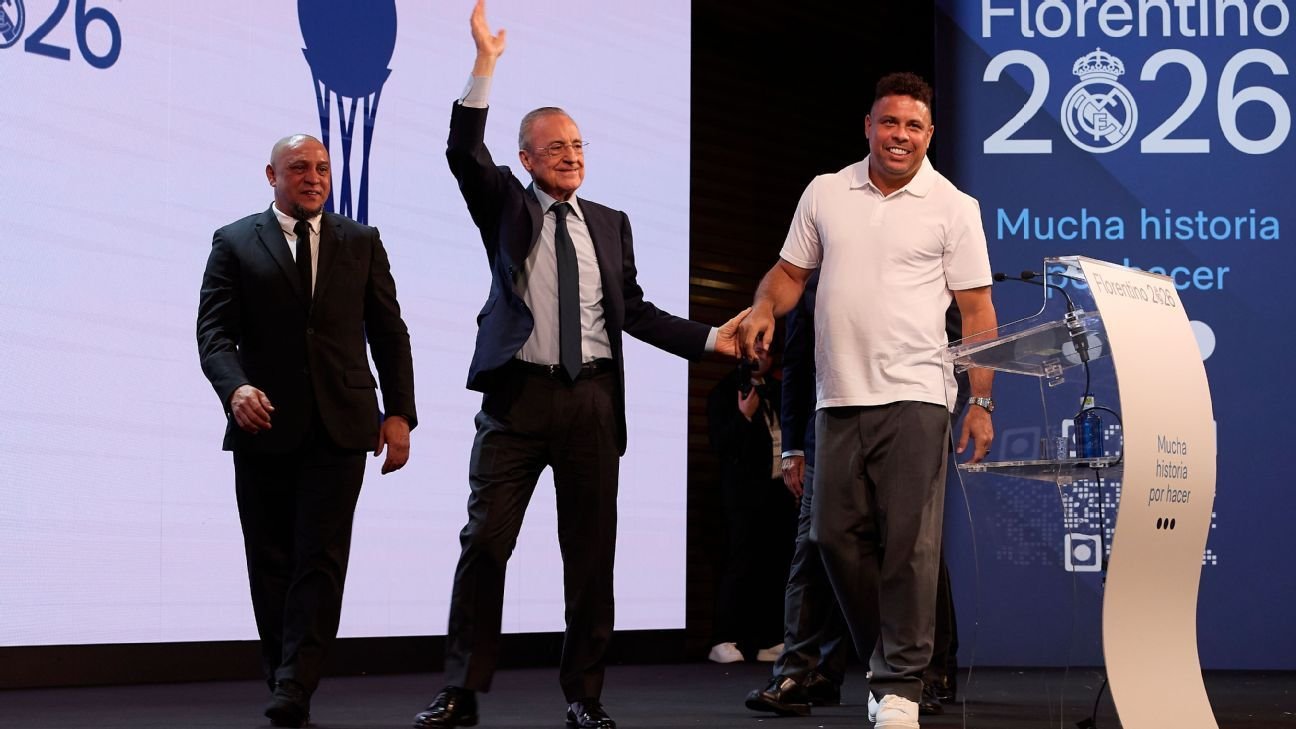
When Florentino Pérez stepped onto the stage at the Eurobuilding hotel, just north of the Bernabéu, the clock read nearly 1 a.m. in Madrid. As the crowd erupted in chants of “Presidente! Presidente!“, Pérez acknowledged them with a wave and launched into his victory speech. “Good evening, everyone. Today has been a remarkable day for Real Madrid,” he declared.
Just moments prior, Pérez’s opponent, Enrique Riquelme, had emerged from his election headquarters to concede defeat. As Riquelme graciously congratulated Pérez, the news broadcast swiftly shifted its attention to the election winner.
After two weeks filled with allegations, promises of major signings, and promotional antics, Madrid’s first contested presidential elections since 2006 concluded with Pérez as the clear victor. While the official results would be finalized shortly thereafter, both candidates acknowledged the outcome: Pérez secured 65% of the votes, compared to Riquelme’s 35%.
– Should Mourinho’s return as Real Madrid coach really be a surprise?
– Riquelme’s Haaland promise: a classic election tactic
– Real Madrid unveil new home kit for quest to end major trophy drought
For 20 years, Madrid’s members had awaited the opportunity to cast their votes. From early Sunday morning, fans arrived via car, train, or specially arranged buses to the club’s Valdebebas training ground. A converted basketball pavilion with 60 polling tables facilitated voting, organized by member seniority.
By afternoon, temperatures soared above 86°F. Despite warnings of transportation issues due to Madrid’s first Papal visit in 15 years, thousands of fans made the journey to witness history. Notably, in Pérez’s last five election cycles—2009, 2013, 2017, 2021, and 2025—he faced no competition and no votes were cast. This time was different; Pérez, aged 79, had a challenger in the 37-year-old renewable energy mogul Riquelme.
Two accomplished businessmen from different generations presented contrasting visions for Real Madrid’s future. After casting his vote just before 11 a.m., Riquelme, identified as socio number 41,736, expressed his sentiments to reporters outside. “Twenty years later, we are able to vote. These elections are not normal; they are a referendum,” he stated.
Riquelme claimed Pérez aimed to “privatize” the member-owned club, while Pérez retaliated by labeling Riquelme’s statements as “lies” and accusing him of spearheading a “shadow campaign” aimed at tarnishing his image. Riquelme pledged to sign Erling Haaland and Rodri, and to entice Jürgen Klopp to be the coach. In response, Pérez promised to rehire José Mourinho and secure signings like Ibrahima Konaté and Denzel Dumfries, along with a €150 million investment in an undisclosed “Galáctico” signing.
Given the stakes, it was no surprise that members turned out in droves to make their voices heard. When the polls opened at 9 a.m., hundreds were already in line, and by the time they closed at 8 p.m., a total of 33,555 votes were validated, representing approximately 45% of Real Madrid’s 75,000 members.
Minutes post-voting, various Spanish media outlets released accurate exit polls indicating a Pérez victory by a margin of around 2:1. It took almost five hours for the candidates to accept the results, partly due to contested postal ballots that were disqualified. Riquelme even had to abandon his chosen venue for election night, a drive-in theater, due to a midnight curfew.
The election outcome was widely anticipated, yet the margin surprised many. Pérez had opted for voluntary elections last month—having been re-elected just the previous year and with the option to wait until 2029—expecting either a landslide victory or possibly facing no challenger at all, despite two seasons devoid of major trophies. However, the depth of fan division became clear.
The pressing question moving forward is how Pérez will navigate the next four years and address his most contentious proposal: selling 5% of the member-owned club to an external investor.
Achievements and Star Signings
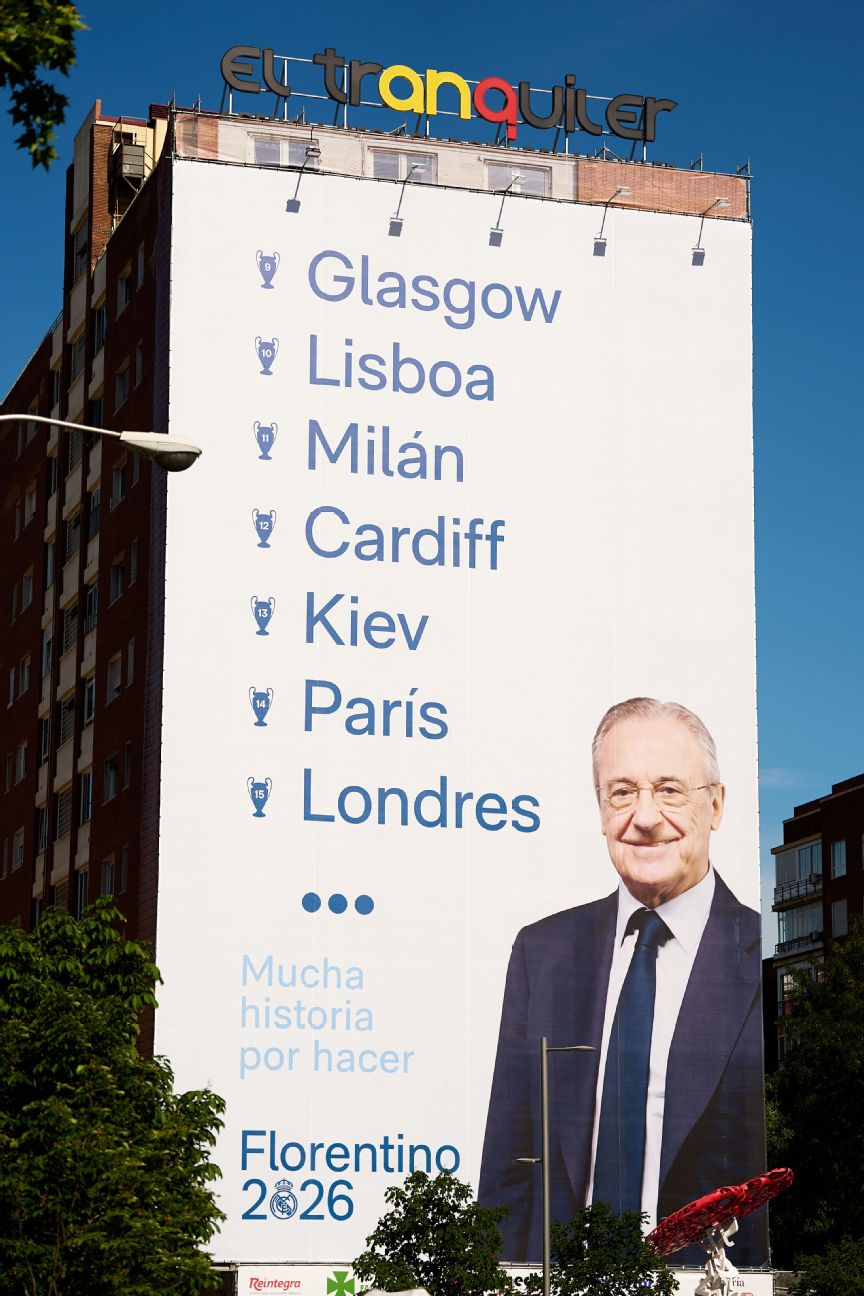
Pérez’s accomplishments and electoral strengths were prominently displayed on massive billboards throughout Madrid during the campaign. One featured the cities where the team has triumphed in the Champions League under Pérez’s management: Glasgow [2002], Lisbon [2014], Milan [2016], Cardiff [2017], Kiev [2018], Paris [2022], and London [2024]. Madrid has claimed a record 15 European Cups, with Pérez at the helm for seven of those victories.
Regardless of opinions on the merits of specific teams and their wins, the sheer volume of trophies amassed under Pérez is undeniable. Fans can visit the Bernabéu museum to see the gleaming awards on display.
A second billboard highlighted the stars Perez signed during his two terms as president, from 2000 to 2006 and from 2009 to the present. “Figo, Zidane, Ronaldo, Beckham …” the list begins, culminating with current superstars Jude Bellingham and Kylian Mbappé, emblazoned with the phrase: “Continuará.” To be continued.
“New stars will arrive next season,” Pérez told supporters at a meeting in Toledo the prior week, before announcing the acquisitions of Konaté and Dumfries, along with the mysterious €150 million signing. “That’s how it has always been with me. The finest players will always be here.”
While not all teams have been successful—Pérez resigned in 2006 when the past star-driven Galáctico approach faltered, and uncertainty remains regarding whether the current lineup featuring Mbappé, Bellingham, and Vinícius Júnior will harmonize—these names carry immense commercial weight. In today’s attention-driven landscape, they command attention.
Off-Pitch Challenges
Beyond trophies and star signings, Pérez’s legacy is expressed in physical terms with the development of the renovated Bernabéu stadium and Real Madrid City, the club’s training ground, rising prominently on the east side of Castellana and extending toward Barajas Airport. Work on Valdebebas commenced under Pérez in 2004 and continues to evolve. Now, Pérez seeks to establish a Silicon Valley-style tech hub on adjoining unused land. In the heart of the city, the costly and controversial Bernabéu renovation is nearing completion, except for the VIP ‘Sky Bar’ which has been delayed due to legal disputes, alongside travel route improvements. However, Pérez has significantly enhanced the club’s infrastructure.
While Pérez boasts an impressive portfolio that many sports executives can only dream of, his global standing as an adept football administrator has suffered. This is partially attributed to Madrid’s underperformance on the field: two seasons without a major trophy, along with the appointment and dismissal of two coaches—Xabi Alonso and Álvaro Arbeloa—in the past year, with Mourinho viewed nostalgically as a potential successor.
However, the more significant blow to his reputation arose from high-profile setbacks. Pérez was a vocal proponent of the ill-fated European Super League, notably during an unscripted late-night television pitch. After Madrid stood alone as the sole remaining club in the Super League, the team sought reconciliation with UEFA earlier this year. Additionally, ongoing disputes with Spanish football institutions—particularly with the national football federation regarding officiating and LaLiga concerning broadcasting rights—have stretched over several years with little resolution.
“Real Madrid protests against absolutely everything,” stated Villarreal CEO Fernando Roig Negueroles last year, prior to UEFA’s reconciliation. “I find agreement with them on many issues, yet their excessive opposition diminishes their legitimacy … They are losing influence at a European level.”
1:26
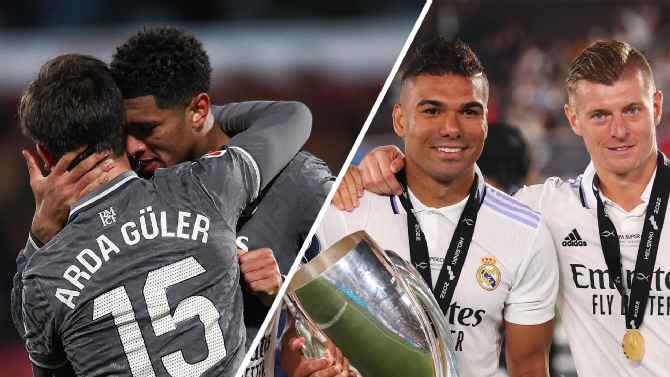
Burley: Real Madrid’s current midfield is a far cry from what it used to be
Even the flagship Bernabéu project has been impacted by noise complaints regarding postponed concerts. Pérez mentioned to El País during the previous election campaign that Madrid’s city council would facilitate “special rules” to allow concerts to resume, emphasizing their importance for prestige rather than revenue.
Pérez’s management of the election campaign, particularly in its initial phase, raised concerns about his competence, beginning with a chaotic press conference where he clashed with a journalist amid lengthy pauses as he sifted through messages on his phone.
Ultimately, the dominant issue throughout the election, and one that is likely to continue to incite debate in the weeks ahead—besides Mourinho and transfer news—is Pérez’s attempt to alter Madrid’s ownership structure.
The Path to Change
Pérez first broached this idea in a speech to members in 2024, branding it a “corporate reorganization proposal.” A year later, he elaborated.
“We’ll conduct a referendum so that all members can vote [on it],” Pérez stated on November 23, 2025. “We will remain a members’ club while creating a subsidiary, with the members holding ownership. We will maintain absolute control, yet allow for a 5% stake for a partner willing to invest a significant amount for a nominal stake. Governance will always rest with the members.”
During the campaign, Pérez reiterated these proposals, but Riquelme, spotting a vulnerability, positioned it as his “red line.”
“After 20 years of [Pérez’s] management, without any opposition, they think the club belongs to them,” he told ESPN. “But that’s not the case. It belongs to the members … They want to ‘privatize’ the club. We need to understand who has financial interests in privatizing the club. Who is closely allied with president Pérez, that has led him to pursue the Super League, the privatization, and the concerts? Who genuinely benefits from this?”
1:51
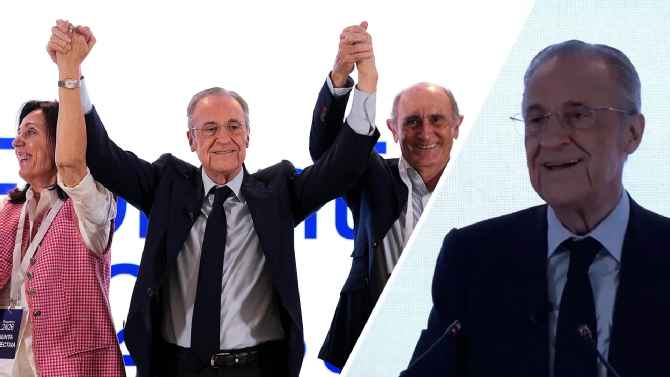
Pérez hails ‘extraordinary result’ after winning Real Madrid presidential election
The renewed scrutiny of this proposed sale compelled Pérez to clarify his intentions, denying any notion of “privatization,” though he left many critical questions unaddressed.
“Nothing [would change],” he asserted in a campaign video. “The club will still belong to its members; it will maintain its president, board, and assembly of delegates, elected every four years. Everything that is vital to the club will continue as it has.”
“The club would establish a company, wholly owned by the club, that oversees football and basketball operations. The intent is that if we wish to determine the club’s actual value, we can invite an investor. If we decide to bring in an investor who could take a maximum of 5% stake to help evaluate the club’s global brand, they will not run the club and have no role in decision-making … This isn’t privatization; it’s the opposite. It gives financial ownership of the club to the members.”
However, it remains unclear why an investor would invest a substantial amount—potentially hundreds of millions of euros—without obtaining any control. Many details require further clarification, including the legal processes involved, the necessary authorization from members, and the implications for them if their membership becomes a taxable asset.
“They’re going to amend the bylaws to facilitate the sale of the club,” Riquelme told Cadena SER, suggesting that this action could trigger a slippery slope.
Pérez has a history of pushing through initiatives rather than compromising. However, the ownership issue could prove complicated. Only four Spanish clubs are member-run: Madrid, Barcelona, Athletic Club, and Osasuna. The rest became limited companies in 1990 due to legislation aimed at better financial control. This member status is highly valued, and Riquelme has hinted at leveraging his newfound role as the de facto opposition leader to mobilize resistance.
A significant change to the club’s structure would likely necessitate another referendum, requiring an absolute majority—approval from over half of all members—to pass. The results from Sunday’s election suggest this would be a demanding hurdle to overcome.
“We should be united,” Pérez said on Sunday night. “Our passion for Real Madrid drives us. There’s still much history yet to be made.”
The extent of that unity will hinge on the outcomes on the pitch. Plans for a referendum regarding the ownership issue have already faced delays over the last six months. Success for Mourinho’s squad would create a supportive climate for Pérez’s ambitions. Conversely, a third consecutive season without a major trophy could make the atmosphere considerably more challenging.