



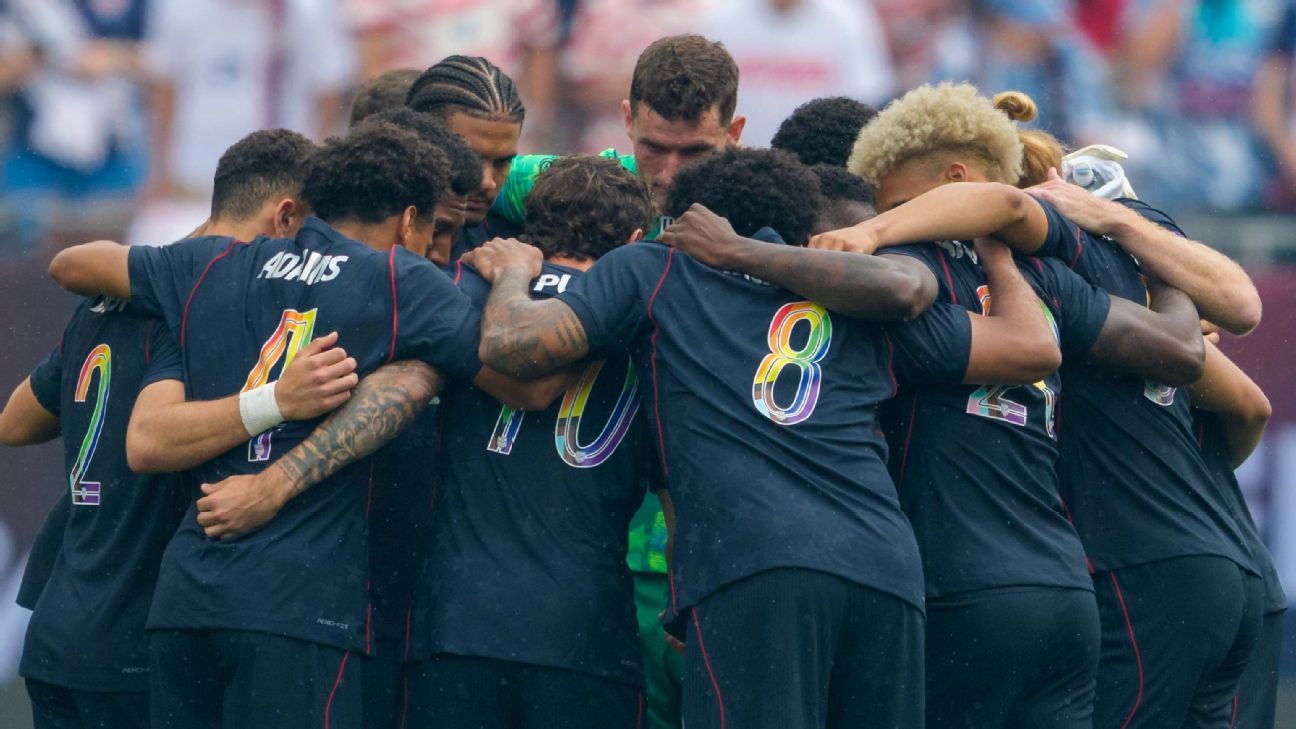
During his 20 months at the helm of the U.S. men’s national team, Mauricio Pochettino has led the team to 15 victories, 10 defeats, and one draw. He has evaluated 67 players, ultimately narrowing it down to a 26-man roster. Recently, he witnessed two notable performances: a thrilling 3-2 victory against Senegal and a narrow 2-1 loss to Germany. On Friday, he will lead the USMNT into the FIFA World Cup.
This marks a historic moment for the program. While the U.S. previously hosted the tournament in 1994, which was a transformative experience for soccer in the country, the expectations were different at that time. Back then, the goal was simply “not to get embarrassed.” Fast forward to today, with a high-profile manager like Pochettino and a squad featuring players from Europe’s elite clubs, the expectations are significantly elevated.
– 2026 FIFA World Cup: All fixtures, results, and features
– World Cup Rank: The tournament’s top 50 players
– Final World Cup Power Rankings: Who are the favorites?
So, is this team prepared for the challenge? What is their potential? To explore these questions, ESPN consulted experts who have been covering the USMNT throughout this World Cup cycle: Jeff Carlisle, Herculez Gomez, Sam Borden, Cesar Hernandez, and Ryan Clark.
Did Pochettino make the right squad selections?
Carlisle: Overall, I believe so. Due to injuries, he sidestepped some difficult decisions, like the choice between Patrick Agyemang and Haji Wright for center forward. The central defense remains a concern, but Pochettino made the best choices available.
I wasn’t surprised by Diego Luna‘s exclusion. He’s talented, but other attacking options have been more reliable. Alejandro Zendejas rightly deserves his place.
Gomez: Yes, considering it’s been 20 months since Pochettino took charge, we are finally seeing a clearer starting XI. If Chris Richards were fit, we could see him paired with Miles Robinson, creating the ideal lineup against Paraguay. He got it right, but the lengthy process to arrive here is concerning.
Borden: Overall, yes. While the key players are present, the tricky part remains in depth. Selecting Gio Reyna was wise—his talent is undeniable. However, leaving out Tanner Tessmann was unexpected, especially after his impressive performance at the Paris Olympics. The midfield depth remains a key concern; losing any player to injury or suspension could be detrimental.
Hernandez: The midfield is indeed critical. While seeking a more offensive-minded partner for Tyler Adams is understandable, it may not bode well for a deep knockout stage run.
Clark: Perhaps? Some selections were dictated by injuries, but there remain questions about the roster omissions. Luna and Tessmann are particularly notable, given Tessmann’s key role at a Lyon team that finished fourth in Ligue 1.
Where do the team’s vulnerabilities lie?
Gomez: The transitional period right after losing possession is their weak point. This team often pushes forward with numbers, but when that ball is lost, it leaves defenders exposed to one-on-one situations where errors can occur.
Borden: In addition to midfield depth, scoring remains a perennial concern. Folarin Balogun has proven himself as a strong striker (19 goals, four assists for AS Monaco), but the overarching question persists: can the U.S. find the back of the net consistently? With Christian Pulisic recently breaking a goal drought against Senegal, offensive capabilities will be a concern for American fans.
Hernandez: Related to this, the team is one injury or red card away from major trouble if Adams is unavailable. While Pochettino has indicated there are alternatives for the central midfield role, no player currently matches Adams’ level. There’s not enough defensive cover in the midfield.
Clark: The defense is another area of concern, particularly regarding personnel choices. The German team faced by the U.S. in their latest warmup was not among the strongest, yet it highlighted Antonee Robinson as the U.S.’s top defender.
Carlisle: My only critique of Pochettino’s selections is including a fifth outside back like Joe Scally rather than opting for another central midfielder like Aidan Morris. Given Adams’ injury history, and the likelihood of yellow cards affecting play, this choice could prove costly.
Pochettino seems to have a preference for a playmaker type alongside Adams, such as Malik Tillman, rather than a more defensive-minded player like Cristian Roldan. We’ll see if this decision undermines their performance in the tournament.
Will Pochettino’s future impact the team?
Borden: In short, not significantly. While the optics aren’t ideal, athletes tend to focus on winning rather than coaching changes. Their priority will be the World Cup games, not where their coach may go afterward.
Hernandez: This situation is more a problem for fans and media than for the players. The signs indicate that Pochettino is likely to pursue other opportunities after the tournament, but that shouldn’t distract the team.
Clark: Probably not at all. Pochettino’s hiring always felt like a temporary solution, which explains the speculation surrounding his future. It’s typical for this time of year, with managers and players often being linked with new roles.
Carlisle: I don’t anticipate it affecting performance. These players are accustomed to frequent coaching changes, especially those competing in Europe, where managerial turnover is common. This is a professional group capable of tuning out external noise, including speculation about transfers or coaching positions.
Gomez: I believe it won’t impact the team at all. Players were aware from the start that Pochettino was primarily focused on this World Cup cycle.
Which player could pleasantly surprise this summer?
Hernandez: Reyna will definitely want to prove himself this summer. Although he has yet to meet his once-high expectations, he has the skills to create game-changing moments, depending on Pochettino’s faith in him.
Clark: I expect big things from Sergiño Dest. This World Cup provides a platform for him to showcase versatility, as he’s adept at attacking while still contributing defensively. He’s likely to grab the attention of clubs seeking to make moves for PSV Eindhoven.
Carlisle: Dest and Zendejas could both emerge as impactful players. Dest showed his potential on the wing against Senegal, where pushing him higher up the field reduced his defensive burden while playing to his strengths.
Zendejas possesses the ability to surprise as well. His stunning goal against Japan last September showcased his talent, and I hope he gets the chance to demonstrate it in this tournament.
Gomez: Weston McKennie could be a standout player. He possesses both the ability to score and create plays on the field while also having charisma off it. A strong World Cup could elevate his profile to a much larger audience of casual soccer fans.
Borden: Using a hockey metaphor, a stellar performance from the goalkeeper is crucial for any deep run the U.S. hopes to make. For that reason, I’ll highlight Matt Freese as a potential surprise player. He may not be playing in Europe like Tim Howard or Matt Turner were entering their respective World Cups, but his talent is undeniable. If he can deliver on the world stage, it would significantly boost the U.S.’s chances.
How far is the U.S. likely to go in this World Cup?
2:43
What would make a good World Cup for the USMNT?
Clark: The round of 16 seems like a realistic expectation. Progressing beyond that is complex considering past performances against teams like Belgium, Portugal, and Germany—all teams the U.S. struggled against since March.
Carlisle: I still anticipate the round of 16 will be the exit point for this team. They would likely face Belgium in that round, and the friendly result earlier this year is concerning. While the Americans will benefit from playing at home, they will also need a bit of luck to advance.
Gomez: The U.S. performance hinges on the group draw. If they finish as group leaders, the pathway to the knockout rounds looks promising. Conversely, if they place second or third, they could find themselves in a scramble. However, ultimately, I believe they will make it to the round of 16.
Borden: The favorable draw has pros and cons; although there are no overwhelming teams, there aren’t any easy matches either. I’m optimistic, expecting the U.S. to win their group, defeating Paraguay and Australia while potentially losing to Türkiye, advancing further than in Qatar and reaching the quarterfinals.
Hernandez: An exit in the round of 16 seems a fair expectation—neither a disappointment nor a significant leap. Assuming they either top their group or finish second, an anticipated loss to a strong team like Belgium or Argentina appears likely.