



-

Chuck Culpepper
Multiple Authors
The excitement surrounding a World Cup journey for a small nation emerged on June 2, one fateful afternoon at Logan Airport in Boston. The international arrivals hall, alive with the sound of songs and cheers from a crowd of enthusiastic supporters brandishing flags and scarves, became an unexpected scene of jubilation. To those waiting with flowers and balloons for arriving passengers, the question lingered: What is Cabo Verde, and why such joy?
Cabo Verde, the third smallest nation by population to qualify for the tournament and the second smallest in land area, had arrived to embark on its first-ever World Cup adventure. The significance of this moment for a country with a complex history was overwhelmingly joyous. Upon exiting customs, the players would have been met by a vibrant gathering of the largest Cabo Verdean diaspora in the U.S.—around 70,000 in Massachusetts alone—some of whom had traveled great distances to show their support.
But then, disappointment struck as an airport official announced that the players would not greet the crowd but would board a bus directly inside the terminal.
As word spread, initial frowns transformed into renewed determination as they began to sing:
Look where we’re walking
Look where we’re standing
We’re all over the world
Look where we’ve gone
We’re spread all throughout the world
These lyrics, from a renowned anthem by Soraia Ramos (translated from Cabo Verdean Creole), resonate deeply with Cabo Verdeans, a community whose history is ripe with migration, now culminating in this World Cup moment.
“Just the fact that our name is being spoken globally, that people are discovering ‘Cabo Verde,’ is astonishing,” remarked Ed Lopes, 30, as he stood in Terminal E. “They’ll pull out their phones and be amazed by what they find.”
If you’re from a larger country used to the spotlight, you might find it challenging to locate Cabo Verde, or “Cape Verde,” as it’s informally known. This archipelago of 10 islands, located approximately 350 miles off the western coast of Africa, is often overlooked on maps. Discovered in the mid-15th century, Cabo Verde was colonized by Portugal from 1462 until 1975—a timeline interspersed with instances of pain, such as its role in the transatlantic slave trade. Even today, when American weather forecasters mention hurricanes, some recognize the name Cabo Verde with that context.
Given its vast history of emigration—where the number of Cabo Verdeans abroad (between 1.5 and 2 million, significantly in the Netherlands, Portugal, and the U.S.) far exceeds those on the islands (around 500,000)—it’s unsurprising that the country’s weather, notorious for droughts, has contributed to its immigration narrative. Iconic songs like Codé di Dona’s “Fomi 47” echo the heartache of famine from 1947, capturing the plight of families during stretches of severe drought, impacting childhood memories with tales of both joyous rain and sorrowful departures.
The historical connection between Cabo Verdeans and New England dates back to the 19th century when both communities crossed paths through the whaling trade. The New Bedford Whaling Museum highlights how this relationship flourished when the city became the wealthiest per capita in the U.S. during the 1840s and 1850s. As whaling ships sailed in and out, many Cabo Verdeans were drawn to jobs in this booming industry.
“My grandfather came to the U.S. in 1918, then returned to Cabo Verde, passed away there after years of going back and forth,” recounted 67-year-old Alex Do Souto.
Carlos Almeida, a Cabo Verdean professor at Bristol Community College in New Bedford, describes the nation as a transnational one, where identity forms in the movement between the islands and abroad, punctuated by feelings of longing and belonging. The gratitude felt towards the U.S. and other nations coexists with a profound yearning to return home. “A Cabo Verdean immigrant often feels a piece of them is missing,” Lopes stated, likening the dilemma to, I want to stay, but I need to go.
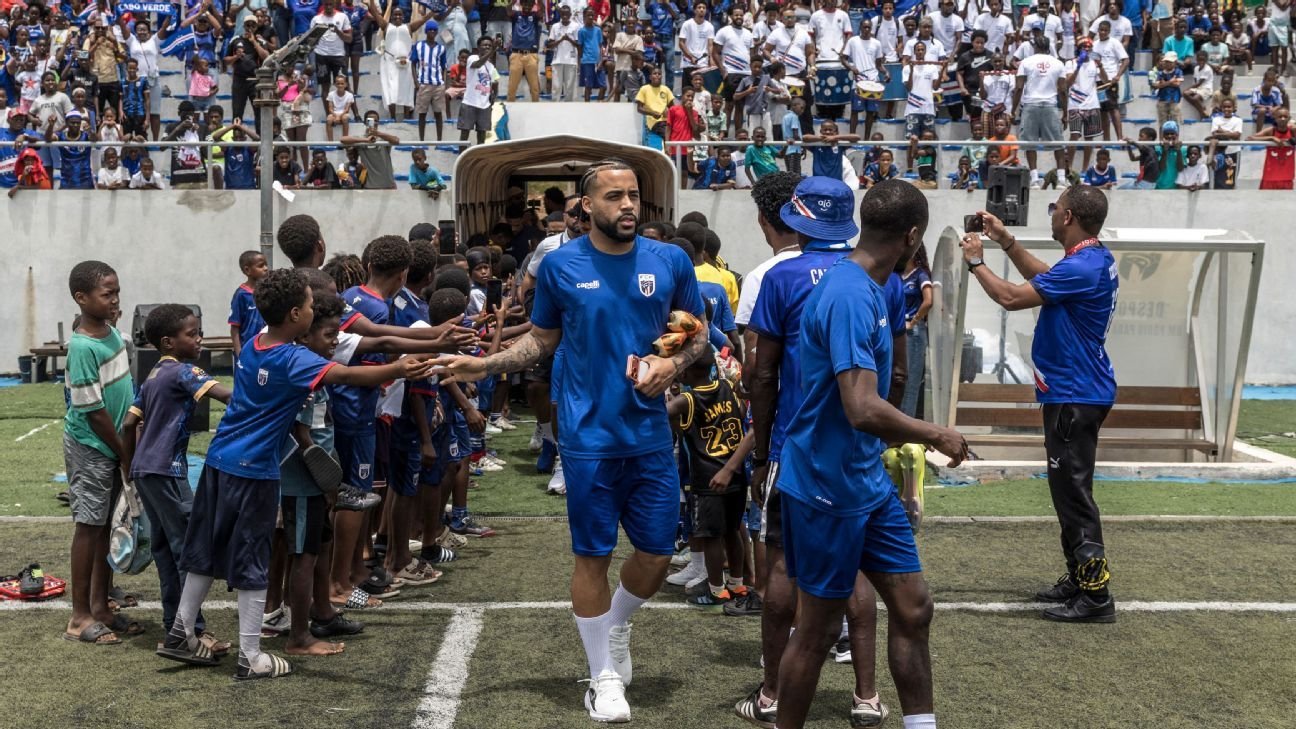
In anticipation of the World Cup, joy intensified, especially for a team that triumphed in its qualifying group and secured a place in the tournament, affectionately dubbed the Tubarões Azuis (Blue Sharks). The players are dispersed across leagues globally, uniting diverse Cabo Verdean communities in a shared experience.
At her home in Connecticut, Genie Lomba, 61, co-founder of Cabo Verdeans United, expressed her passion for her homeland as she reminisced about childhood days spent in Cabo Verde. She spoke of the emotional goodbye when she left her aunt behind and her experiences with her family’s connection to the homeland, likening the smell of items shipped back from America to perfume, representing warmth and love.
Lomba recounted the arduous journey to gather water for laundry in Cabo Verde, a task often fraught with danger along steep cliffs, underlining the resourcefulness instilled in Cabo Verdeans. Her memories reveal her deep appreciation for every drop of water and each act of sustainability.
Meanwhile, in Boston’s Dorchester neighborhood, Alex Do Souto reflected on his own journey from Cabo Verde to the U.S. He has built a flourishing life and thriving business while maintaining strong ties to his roots, evident in his support for development back home.
Ed Lopes, only 30 but filled with fervor for his nation, expressed the collective pride Cabo Verdeans felt with their World Cup qualification, his emotions running deep due to his family’s ties to Cabo Verde. Sitting in New Bedford, surrounded by memories and connections, he celebrated their victories while sharing the resiliency of their culture.
A barrel, emblematic of the diaspora’s tradition of sending goods back to Cabo Verde, constantly resides in Lopes’ home, symbolizing the enduring connection and support for those still living on the islands.
The joy of Cabo Verde’s World Cup qualifier extended throughout the diaspora. The celebration culminated in exuberance as news of their first World Cup berth spread, with fans preparing to support their team in upcoming matches. Among the many discussions in barbershops and celebrations filled with music and dance, a sense of community thrived. Lomba articulated the sentiment perfectly: “It is about believing that a small island nation with a big heart can achieve extraordinary things.” The anticipation and camaraderie among Cabo Verdeans created an atmosphere filled with pride and hope.
As the friendly matches approached, excitement filled the air, each game attended by thousands of passionate supporters wearing team colors and symbols representative of their culture. Family connections bloomed, with familiar faces reunited, reminding them of the enduring bonds they share.
The euphoria peaked following the friendly against Bermuda, where the players took time to engage with jubilant fans who had gathered to cheer them on. Even as dark clouds began to gather, a metaphorical rain of joy had already blessed this proud community, affirming their place in the global soccer arena.