



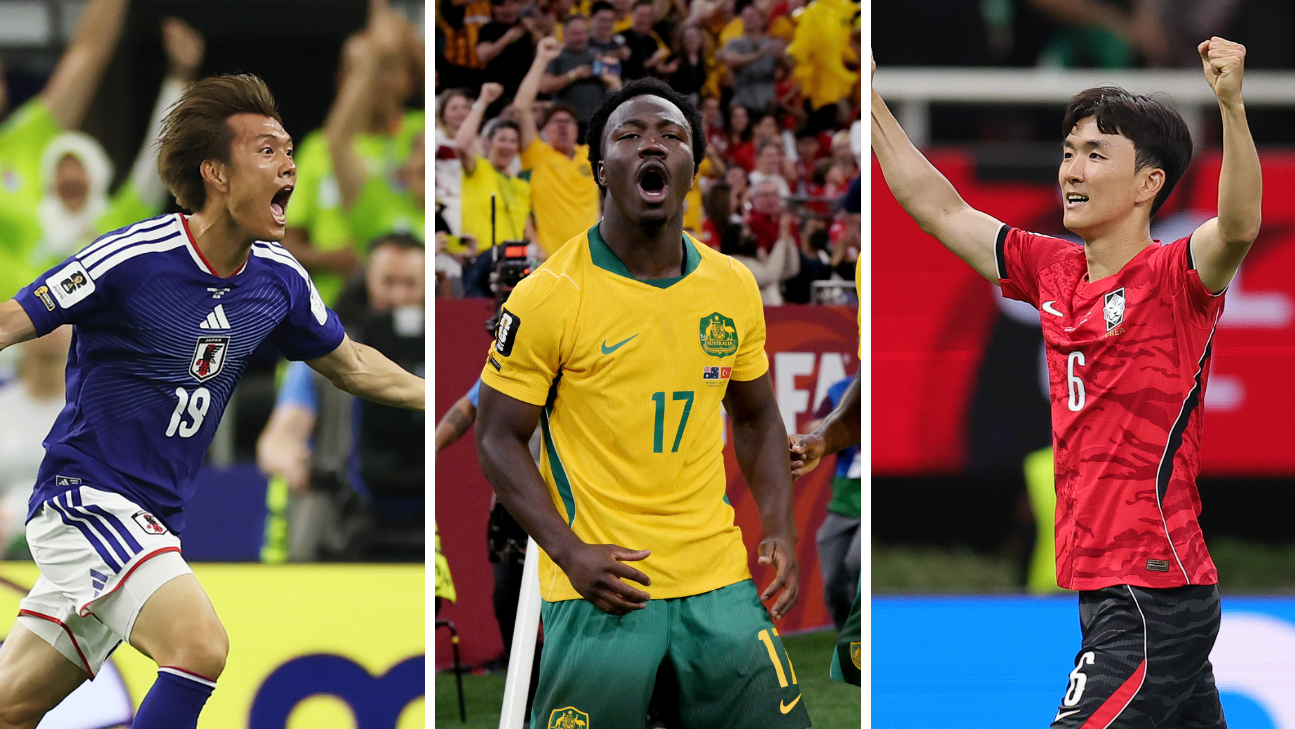
GUADALAJARA, Mexico — Amid ongoing discussions about the impact of expanding the FIFA World Cup to include 48 teams, representatives from the Asian Football Confederation (AFC) have swiftly demonstrated their competitive edge.
With six out of nine teams already taking the field, the AFC remains unbeaten, recording two victories and four draws, including matches against strong opponents.
South Korea opened the tournament with a dramatic win against Czechia, overcoming an early deficit. Just two days later, Australia secured a 2-0 victory over Türkiye, who had downplayed their threat.
– Hwang In-Beom shines against Czechia, now eyes Mexico
– Japan makes a statement with a thrilling draw against Netherlands
– Australia’s Irankunda emerges as a star in upset over Türkiye
In what may be the tournament’s most riveting match to date, Japan came from behind twice to secure a draw with world No. 8 Netherlands, while Saudi Arabia and Qatar each earned commendable draws against Uruguay and Switzerland, respectively.
The only minor setback came with Iran‘s 2-2 draw against New Zealand, who were the lowest-ranked team during the group stage draw but have since moved above Curaçao and Haiti. Nonetheless, Team Melli displayed resilience, clawing back from two goals down and nearly clinching a late winner.
However, it’s important to note that these teams are not new to World Cup competition; all of them participated in the previous edition in Qatar just three and a half years ago.
The real challenges await in the coming days for debutants Jordan and Uzbekistan, set to face Austria and Colombia respectively. Meanwhile, Iraq returns to the World Cup stage for the first time since 1986, matching up against Norway.
The results so far remind us that while these teams may not be household names, they are not to be taken lightly by more established European and South American countries, who often rely on their star players, like Uruguay’s Federico Valverde, Türkiye’s Arda Güler, or Switzerland’s Granit Xhaka.
Given that Qatar is ranked 30 places below Switzerland, and Saudi Arabia sits a staggering 42 places behind Uruguay, these results illustrate that so-called “weaker nations” can’t be underestimated.
Türkiye’s captain, Hakan Çalhanoğlu, asserted that his team would dominate Australia, remaining confident even post-defeat. Nonetheless, it is the Socceroos who sit atop Group D, executing their game plan flawlessly and prioritizing the win above possession.
While world rankings can sometimes mislead, South Korea’s ranking 22 spots above Czechia suggests an expectation for their opening victory. Similarly, Australia is positioned four places higher than Türkiye.
Despite their rankings, many expected Czechia and Türkiye to achieve opening wins simply due to their European stature.
That said, the World Cup often produces surprising outcomes. Japan’s victories over both Germany and Spain in the last tournament come to mind, along with Saudi Arabia’s stunning win against Argentina, which marked the eventual champions’ sole defeat. Additionally, South Korea had notable success against Portugal.
For some fans who only tune in every four years, it’s easy to assume these teams will be easy targets. In the interim, average fans may have tracked the progress of players like Güler, Valverde, and Xhaka through European leagues.
Yet, the achievements of players like Saudi Arabia’s Salem Al-Dawsari, Qatar’s Akram Afif, and Australia’s Nestory Irankunda may not have received the attention they deserve; these athletes have been meticulously preparing for their World Cup opportunities with dedication and determination.
Asia’s undefeated start in the World Cup reinforces that teams from the region should not be underestimated or disrespected. While not all may progress to the knockout stages, they have already proven their capability and rightful place in this competition. UEFA president Aleksander Čeferin would be wise to recognize this.