



-

Sam Borden
Multiple Authors
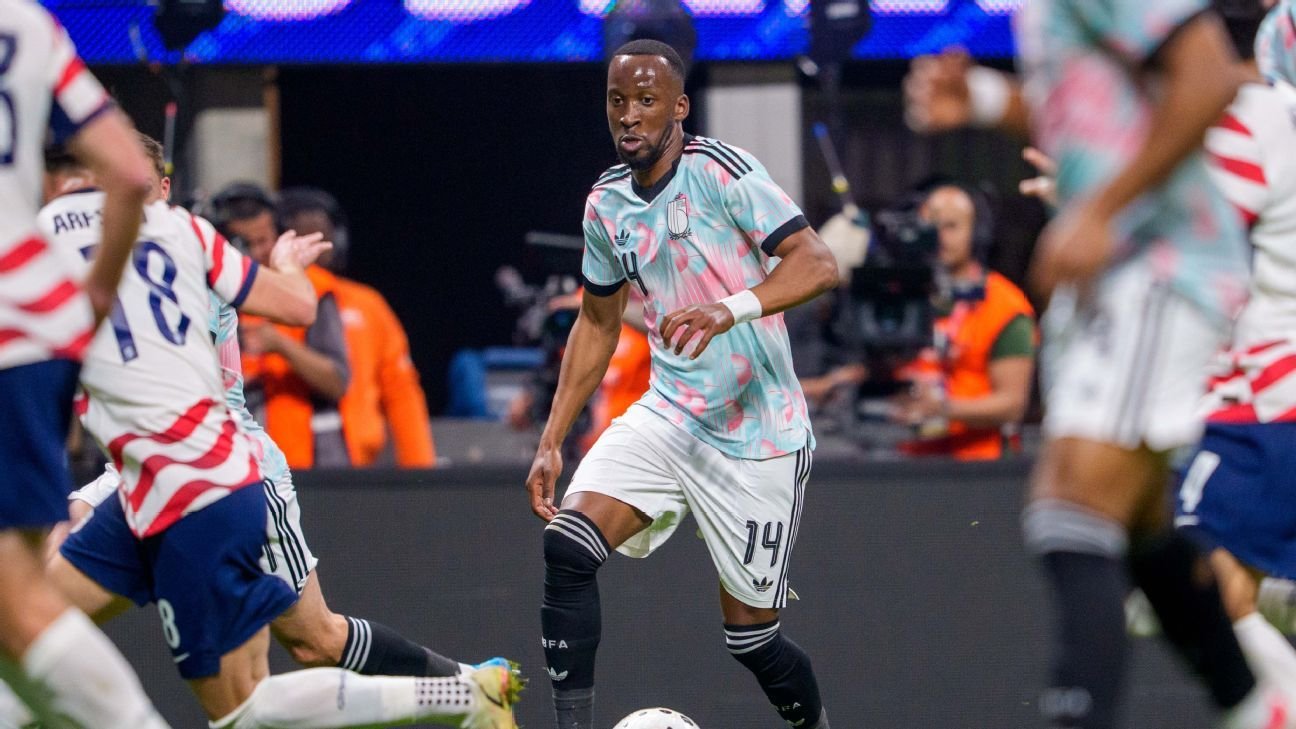
Just moments after the kick-off in the U.S. men’s national team’s friendly match against Belgium in March, players and fans alike quickly recognized a significant issue: The uniform colors of both teams were almost indistinguishable.
“Everyone was a bit shocked,” said Christian Pulisic.
“It was challenging to quickly identify which team was which,” Weston McKennie added, with Pulisic emphasizing, “That can’t happen.”
The situation was a disaster, especially with crucial FIFA World Cup matches taking place soon after, with a diverse array of uniforms from 48 teams. This raises two critical questions: How did such a mix-up occur, and could it happen again under the scrutiny of the world’s audience?
Let’s delve into both questions.
U.S.-Belgium: ‘The Computer Isn’t Reality’
Prior to any significant soccer match, teams typically engage in communication to discuss logistics. For official tournaments, this correspondence can be exceedingly detailed, though friendlies tend to be brief.
In the case of the U.S.-Belgium match, the discussions about uniform choices were mainly carried out electronically. According to various sources, both federations exchanged “kit CADs”—computer-aided design graphics illustrating their new uniforms ahead of the World Cup.
Upon reviewing the kit CADs—the U.S.’s red-and-white striped jersey and Belgium’s light-blue with pink designs—one could hardly foresee a potential clash.
“The issue is that the computer representation doesn’t capture reality,” said a soccer executive experienced with uniform protocols for international matches. “In real life, both kits ended up looking primarily white, especially from behind.”
The back design is pivotal here. The large white “number plate” on the U.S. jersey highlighted the clash, as Belgium’s jerseys also appeared quite light under bright stadium illumination.
Ironically, in a previous version of the striped jersey worn in 2012, there was no number plate, resulting in another dilemma: officials and broadcasters struggled to differentiate players due to the stripes obscuring many numbers.
This time, the white number plate contributed to the confusion instead of alleviating it.
“It feels like a perfect storm of poor circumstances,” the executive noted. “With the stadium lighting and camera angles, it presented a very different picture than anticipated based on the graphics. It’s easy to see why no one would predict this outcome.”
Adding to the frustration, neither team could change their uniforms. As the home team, the U.S. had first choice but would have opted for their blue kits if they were available, which were reportedly still back at the hotel. Belgium, who might have packed all their kits post-match, had unfortunately sent much of their luggage—uniforms included—to their next destination.
“I can’t imagine the frustration of the equipment staff,” lamented a kit manager familiar with national team duties at World Cups. “To see such a disaster and be unable to rectify it is the worst-case scenario for us.”
‘Sometimes, There Are Mannequins …’
Despite the letdown of the U.S.-Belgium match, sources suggest it’s highly unlikely a similar issue would occur during a World Cup game.
For those acquainted with world soccer, it’s common knowledge that FIFA strictly regulates team uniforms during World Cup events. While the U.S. and Belgium sought to promote their new jerseys in that friendly, FIFA would have mandated that one team wear a distinct uniform not even close to the same color if it had been a tournament match. Team preferences take a backseat.
“You don’t have any say in the matter,” the executive explained. “Months before the tournament kicks off, teams must submit designs for everything—jerseys, shorts, socks, and even rarely used items like goalkeeper hats. FIFA assembles matchups at its discretion.”
Ironically, a kit manager remarked that he would send in standard sizes for uniforms initially, but upon learning that FIFA officials often kept those submissions as mementos, he shifted to sending oversized or child-sized jerseys marked with “SAMPLE” instead.
Unlike the U.S.-Belgium friendly, FIFA mandates that teams have all their uniforms on hand for each game, ready for any unexpected situation. Their color selection process is comprehensive, taking into account broadcast visibility and the unique perspective of assistant referees trying to spot offside calls in a crowded field.
The rules are strict. Take, for instance, the excitement surrounding Curaçao‘s bright yellow away jersey, which generated much fanfare. Unfortunately, FIFA scheduled the team to wear its blue home kit for all three group stage matches.
Before every tournament match, whether at a World Cup or significant confederation event, extensive protocol meetings are convened, led by a match commissioner assigned by the organizers. Representatives from each team attend these meetings to discuss match details, such as entry timings or emergency protocols, and uniform layouts are often displayed.
“Sometimes you’d walk into one of those meetings and find mannequins dressed in each team’s jerseys, including the referee kits—it felt like being in a store,” recounted a former national federation official who participated in numerous such meetings. “Even if teams have particular jerseys they want to wear for superstitious or marketing reasons, such requests are typically declined.”
One match commissioner recalled a game between a Chinese team and an Australian team in the Asian Champions League, where both teams had red kits. Because the Australian team’s second kit was red and white, the commissioner directed the Chinese team to wear their yellow second kit, which caused an outrage among the Chinese representatives. They insisted on wearing red, believing it to be a color of good fortune in their culture.
“They claimed, ‘We can’t wear yellow; it’s all in the laundry—we last used it in our previous match,'” the commissioner chuckled. “They ended up in yellow.”