



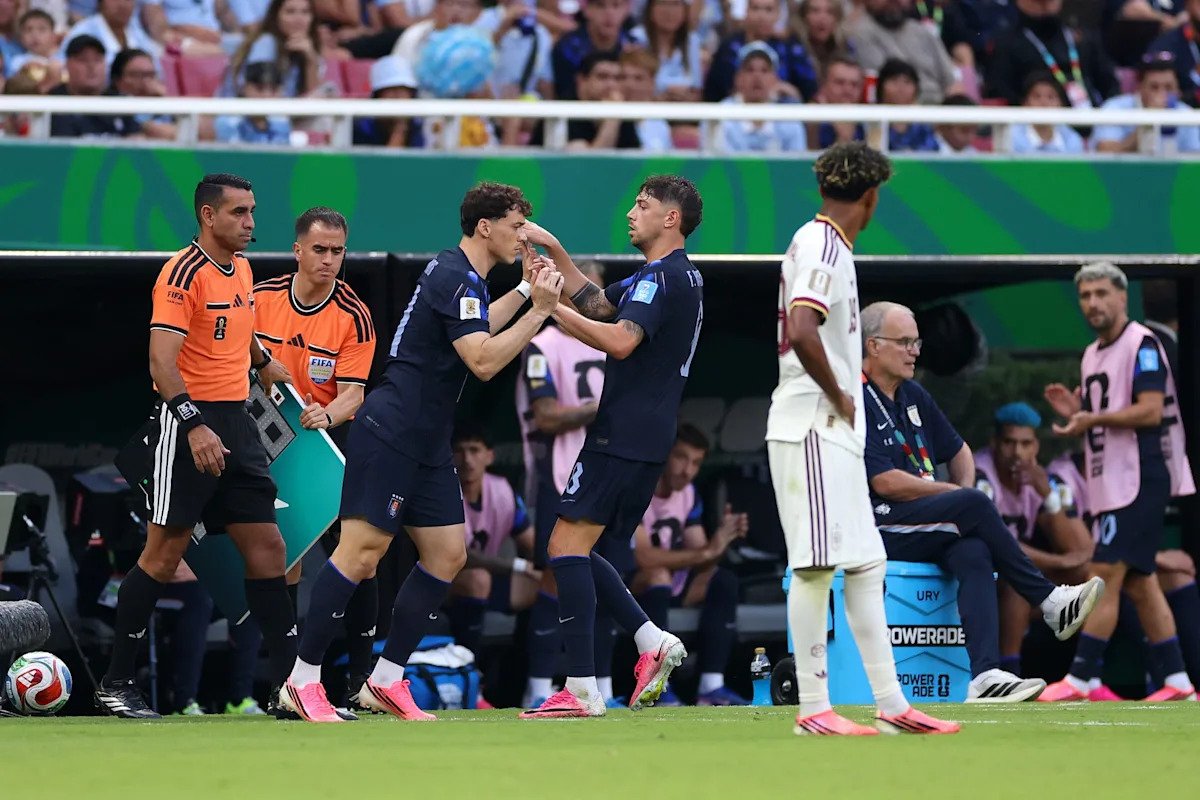
Federico Valverde faced a challenging evening as Uruguay was eliminated from the 2026 FIFA World Cup after a 1-0 loss to Spain in their final Group H match.
Amidst Uruguay’s exit, much of the focus turned to the Real Madrid midfielder’s reaction after being substituted by Marcelo Bielsa in the second half.
Advertisement
Spain’s win guaranteed their progression to the knockout rounds while Uruguay’s disappointing tournament came to a sudden conclusion.
For Valverde, who captained the Uruguay national team against Spain, the night grew even more frustrating following a controversial substitution by Bielsa.
Valverde’s Unexpected Substitution
With Uruguay down and in urgent need of a goal, Bielsa opted for a significant change in the 57th minute, pulling Valverde from the game in favor of Federico Vinas.
This decision ignited controversy, considering Valverde’s pivotal role in the Uruguay squad.
Advertisement
The Real Madrid midfielder has been a key figure for the national team in recent years, but struggled to impact the game against Spain as Uruguay faced challenges in dominating the midfield.
While Bielsa could have changed the tactical approach at halftime, he chose to hold off until the second half before substituting his captain, a move many saw as a statement during Uruguay’s World Cup exit.
Once Valverde noticed his number on the board, he headed straight to the sideline without delay. Upon reaching the bench, his frustration became clear as he covered his mouth with his shirt and appeared visibly upset, prompting coaching staff to step in and calm him down.

Bielsa made the decision to substitute Valverde in the second half. (Photo by Carl Recine/Getty Images)
Advertisement
The images capturing Valverde’s reaction became emblematic of Uruguay’s exit from the 2026 FIFA World Cup.
Bielsa Justifies Valverde’s Substitution
Post-match, Marcelo Bielsa addressed the rationale behind substituting Valverde, asserting that the change was a tactical maneuver.
The Uruguay manager clarified his intent to have more players involved in the attack as they sought to equalize against Spain.
“I wanted the team to have more presence in attack,” Bielsa explained.
Despite the tactical shift, Uruguay could not penetrate the Spanish defense, and their World Cup campaign concluded in the group stage.