



Manchester City is known for its forward-thinking approach, even when such measures turn out to be unnecessary.
Amid speculation about Pep Guardiola’s future in 2022, the club prepared contingency plans. One prominent candidate they considered was Julian Nagelsmann, and discussions took place about the possibility of luring him from Bayern Munich in case a vacancy arose.
However, the question never needed answering, as Guardiola signed an extension in November and led the team to a Treble just six months later.
– Why Maresca departed Chelsea after their championship victory
– Premier League schedule: Key match dates for top clubs
– Transfer big board: Top players likely on the move this summer
This time, planning was more critical. City chairman Khaldoon Al-Mubarak shared in a post-season interview that Guardiola had attempted to step down “100 times” during his decade at the club, and this time it felt serious.
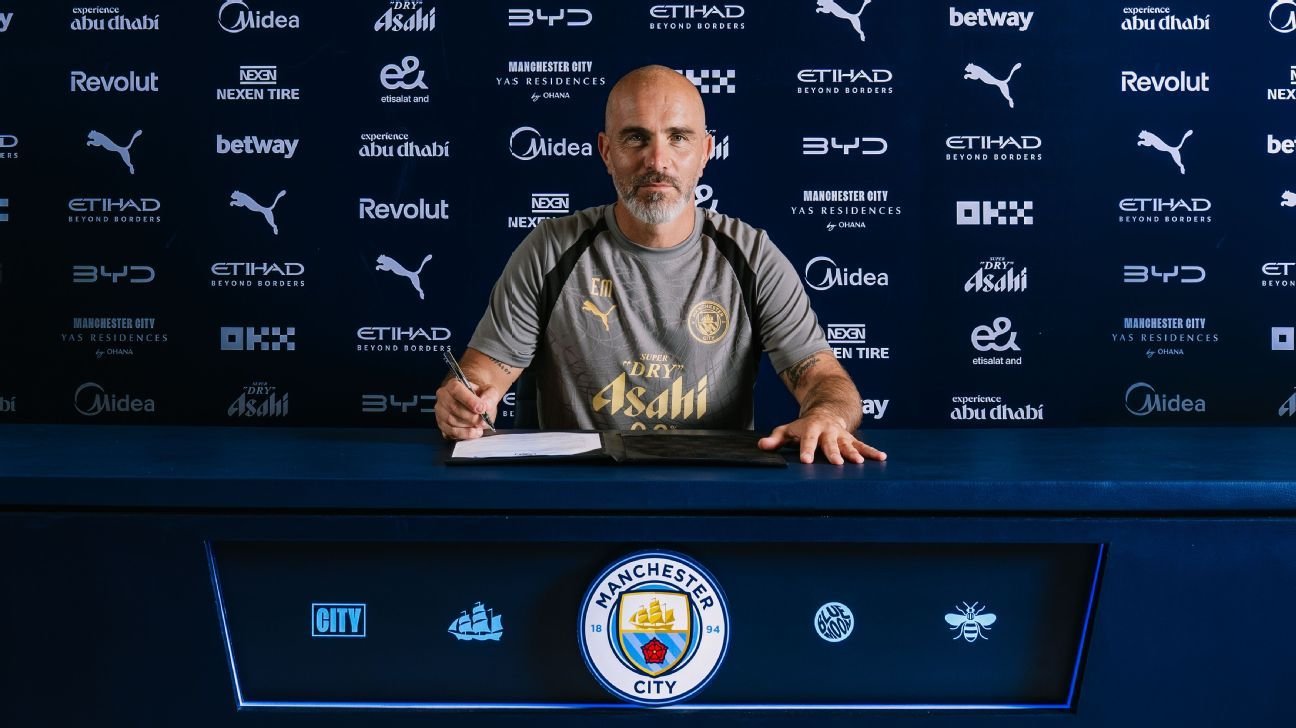
With concerns about Guardiola’s diminishing energy, City compiled files on various managerial candidates. Khaldoon noted in May that the club had “gone through a very thoughtful and structured process” to identify Guardiola’s successor, which they have now settled on: Enzo Maresca.
“Enzo was the standout choice in our evaluations,” remarked CEO Ferran Soriano during the formal announcement of the Italian’s return to the club, highlighting the purpose behind this decision.
While other managers may boast more accolades than Maresca’s UEFA Conference League, FIFA Club World Cup, and Championship titles, the 46-year-old is seen as the appropriate fit at this moment, aimed at facilitating a smooth transition from Guardiola’s tenure.
Maresca is already acquainted with the club’s operations, having initially joined as the coach of the Elite Development Squad in August 2020 and subsequently serving as one of Guardiola’s first-team assistants in June 2022 after a short period at Parma. It was evident on Monday how well-known Maresca is within City, and vice versa.
“He’s been integral to our club, sharing in our successes and fully understanding our culture,” Khaldoon said. “He knows us well, and we consider him family.”
Having collaborated closely with Guardiola, the transition should be seamless when the players report for pre-season. Jamie Vardy, who played for Maresca at Leicester City, noted, “Enzo’s style mirrors Pep’s. It’s almost like a clone.”
While Maresca is not a mere copy of Guardiola, he has earned respect during his 18 months at Chelsea. At one stage, Arsenal manager Mikel Arteta regarded him as one of the most inventive coaches in the Premier League.
In March 2025, Arteta said, “In my view, they [Chelsea] are the best attacking team in the league, clearly leading in open play. The statistics confirm this, as do my observations of their matches.”
“They can break you down and excel in transition; every defender can put you on the back foot. They can execute combinations on both flanks and exploit weaknesses. I have substantial data backing this up, as well as my insights from their matches. I could be mistaken, though.”
This was a remarkable endorsement for Maresca during his debut season managing in the Premier League.
Khaldoon states that while Maresca draws significant inspiration from Pep’s philosophy, he has also developed his unique approach. This implies that while foundational principles might stay intact, the team could adopt different attacking patterns, positioning, and combinations.
Maresca’s qualities extend beyond tactics. David Moyes faced challenges integrating with senior players when he succeeded Sir Alex Ferguson at Manchester United in 2013 due to their established presence, which complicated his already challenging role, resulting in a short tenure of only ten months. City hopes Maresca avoids similar pitfalls.
Having served as an assistant during the Treble-winning campaign, Maresca has already established relationships with key team members like Erling Haaland, Rúben Dias, and Rodri, three pivotal figures in the leadership group. He also coached Nico O’Reilly during his academy tenure.
Maresca will need to win over the players quickly this summer, but his familiarity with the team provides a significant advantage compared to a new manager starting afresh.
City agreed to pay £17 million in compensation to Chelsea for Maresca, a strategic investment, with club sources suggesting they’ve secured a beneficial deal.
Even had he remained with Chelsea, it’s likely they would have pursued him, as he was not chosen solely due to his availability. — Rob Dawson
2:30
Are Chelsea attempting to change the narrative from last season?
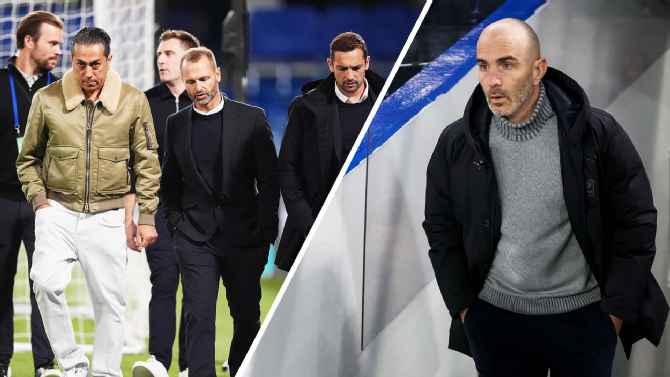
Chelsea Refutes Claims About Maresca’s Exit
It was unusual for Chelsea to issue a statement regarding Maresca, but officials deemed it necessary to clarify their perspective on the matter, emphasizing that Maresca indeed paid compensation for his exit, reflecting their displeasure over how his tenure concluded.
Sources informed ESPN at the time of Maresca’s January departure that tensions were present, primarily revolving around his feelings of constraint in the head coach role, coupled with a lack of influence in transfer and player loan decisions. This raises broader questions about Chelsea’s ownership model and whether it fosters conditions for a head coach to succeed. However, Chelsea was eager to communicate that Maresca played a significant role in his departure.
Given the ongoing legal matters, the situation surrounding Maresca’s exit remained murky, with sources characterizing it as a “resignation,” which is telling.
This reflects what ESPN had reported: Maresca had been in talks with City for some time and made the club aware of his interest in the move, escalating tensions at Stamford Bridge. Concerns arose regarding building a dynamic young squad if the head coach was known to be seeking a way out.
While the full extent of what led to Maresca’s exit may never be clear, Chelsea’s acknowledgment of the £17 million compensation from City, along with the financial benefit of his departure, is significant for a club without European football this season. — James Olley
City Pleased with Maresca’s Commitment
City executives are realistic about the challenge Maresca faces in succeeding Guardiola. They’re aware that success isn’t guaranteed, but they appreciate the effort they put in to mitigate risks. Maresca is familiar with the club, the players, and the Premier League landscape. Importantly, he genuinely desires the role.
“This is a significant challenge that intimidates many,” Khaldoon remarked. “The advantage with Enzo is that he actively embraces this challenge. He loves it.”
The challenge of finding a suitable coach to transition from Guardiola’s legacy tests City’s planning capabilities. Only time will reveal whether Maresca is indeed the right choice. — Dawson
Changes in Chelsea’s Strategy Post-Maresca
Although the hiring of Maresca’s successor, Liam Rosenior, faced significant hurdles, Chelsea recognized the need to adjust their approach. Newly appointed head coach Xabi Alonso has been given the title of “manager” to enhance his influence in the role, which reflects Maresca’s previous desire for more authority.
Chelsea’s previous focus on developing youth talent is shifting. Maresca sought to incorporate more experienced players to mentor younger squad members but met resistance. Their pursuit of Granit Xhaka shows a change in philosophy.
While Alonso is familiar with Xhaka from their shared time at Bayer Leverkusen, Xhaka will be 34 in September. Even though he excelled at Sunderland, this is a move that Chelsea may not have considered in the past. Despite an £8 million bid being turned down, they continue to look for a resolution.
Regardless of whether this deal materializes, Alonso’s input is being valued. This indicates that Chelsea has learned from the Maresca situation, regardless of who was at fault. — Olley