



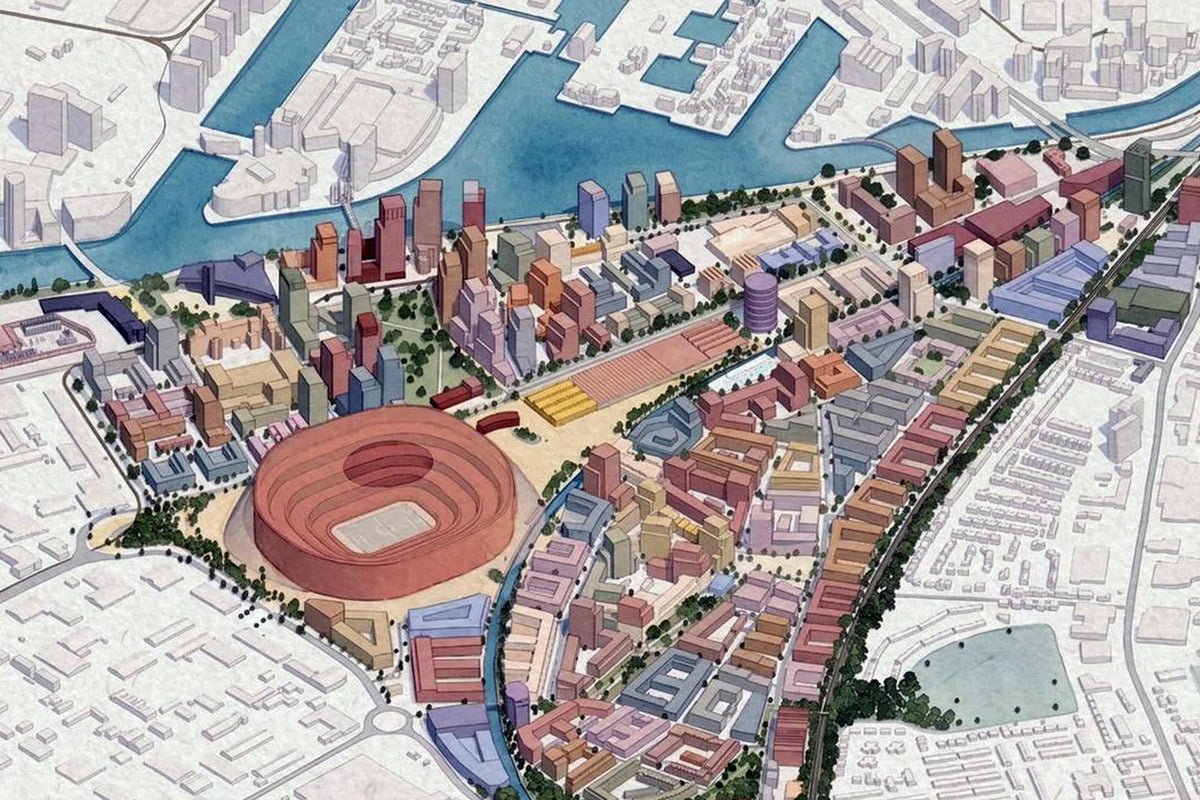
Manchester United has unveiled plans for the location of their new 100,000-seat stadium, which is intended to replace Old Trafford, with aspirations for completion by 2035.
The new facility will be located around 350 meters from the existing Old Trafford stadium at Trafford Wharfside.
Advertisement
It is envisioned as the centerpiece of a newly developed “Stadium District,” designed for sports, entertainment, and year-round activities. Manchester United asserts that this new stadium—set to be the largest in the country—will act as a driver for broader regeneration within the area.
Collette Roche, CEO of the stadium development project, commented: “The release of the Wharfside Masterplan represents a pivotal step in our pursuit of creating a world-class venue for Manchester United in the core of a vibrant and transformative district for Trafford and Greater Manchester.
“Alongside our partners, we have a unique opportunity to create a destination that will provide lasting benefits for fans, local communities, and the wider region for years ahead.

Manchester United’s new stadium will be approximately 350 meters away from Old Trafford (Manchester United)

It will be the flagship landmark of the Trafford Wharfside regeneration project (Manchester United)
“The proposed stadium site is perfectly positioned next to Old Trafford, allowing us to uphold the rich history, traditions, and matchday rituals that our supporters cherish. It will also provide the necessary infrastructure and connectivity for an outstanding fan experience.
Advertisement
“We are dedicated to building a world-class stadium with our supporters, not just for them. Key aspects such as atmosphere, affordability, and accessibility will be central to our vision, and we look forward to maintaining engagement with fans and stakeholders as we progress through the next phases of design and development.”
This development follows United’s successful acquisition of a significant portion of the land required for the stadium— a 25-acre triangle around Trafford Wharfside. The club is confident it will secure the remaining land necessary for the project, which has an estimated cost of £2 billion.
However, plans are not final, as Roche hinted at possible design changes to the initially proposed “circus tent” style of the stadium.

A past concept visualizing Manchester United’s futuristic stadium (PA Media)
Roche emphasized, “Is it set in stone? No. We’re currently refining the design.
Advertisement
“While we’re not discarding ideas, we must ensure that the stadium aligns perfectly in terms of location and functionality.”
She also mentioned a potential target opening date that had previously been speculated to be 2030 but stressed that nothing would be confirmed until the planning process is complete.
“The design will determine the construction timeline for the stadium,” Roche explained, “and we’ll go through the planning stage before establishing a concrete opening date.
“We prefer not to commit to dates that may not be achievable. That’s why we are cautious about timelines.
“Having 2035 as a target is quite interesting, as it represents a realistic milestone.”
Advertisement
Although public funds will contribute to parts of the broader regeneration initiative, United assure that none will be allocated to the stadium itself.
The stadium project is expected to generate around 15,000 new homes, including affordable housing, create over 90,000 jobs nationwide (with 48,000 in the Manchester area), and contribute more than £7 billion annually to the UK economy.