



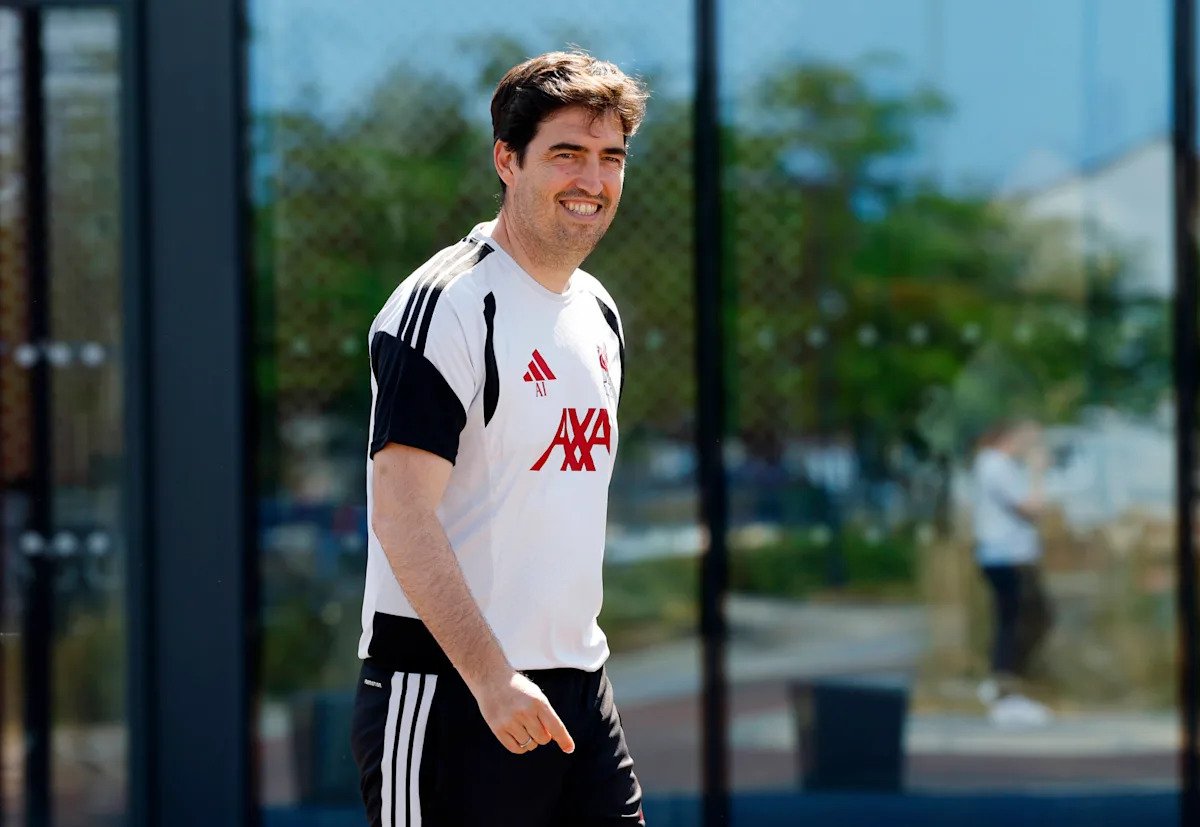
Andoni Iraola Confronts Fixture Dilemmas Ahead of Champions League Demands
Andoni Iraola has taken on a role where the margin for error is razor-thin and the demands are unyielding. At Bournemouth, he established a dynamic and competitive team that achieved European qualification. However, upon joining Liverpool, the stakes are significantly higher—more matches, increased pressure, and intensified scrutiny.
Advertisement
He is well aware of this reality. The newly appointed head coach of Liverpool has already highlighted the congested fixture schedule as one of the most significant adjustments he must navigate. “It’s a substantial challenge and a major change for me. Most weeks, we’ll have a midweek game. It’s an incredible opportunity for the players. I cherished these busy seasons as a player,” he reflected.
While that sentiment is commendable, it’s also rather expected. Taking the helm at Liverpool means there are no quiet moments for training. This club operates at the highest level, juggling Champions League commitments, domestic cup contests, and the relentless expectation of excelling in every tournament.
Immediate Challenge of Liverpool’s Fixture Congestion
The statistics underscore this point clearly. Last season, Liverpool participated in 56 matches across all competitions, whereas Bournemouth played 40. That 16-match disparity is significant, impacting training sessions, recovery time, player rotation, injuries, and overall squad management. It also influences how a coach must strategize from August to May.
Advertisement
Iraola has emphasized that maintaining squad depth is crucial for success. “It’s an opportunity to involve more players; it simply isn’t feasible to manage this demanding schedule relying only on a select few. In this challenging season filled with fixtures, we will rely on our entire squad. Injuries are inevitable, so we must ensure we’re well-prepared in terms of depth,” he stated.
This is not just a casual remark. Last season, Liverpool experienced firsthand how injuries could derail an entire campaign. Having a first-choice XI capable of competing with anyone is only half the battle; if the drop-off to substitutes is too steep, performance levels can falter.
Limited Champions League Experience
This brings us to the unknowns facing Iraola. His previous European experience is limited; he briefly led AEK Larnaca through qualifying and into the Europa League group stage early in his career. While this experience is beneficial, it doesn’t equate to managing a team like Liverpool in the prestigious Champions League.
Advertisement
In the 2026/27 season, Liverpool will have at least eight Champions League matches in the group stages alone, and with expected progression, that number could easily exceed ten. At this level, competing in Europe is not seen as an added bonus; it is perceived as a fundamental obligation.
This scenario introduces a unique kind of pressure. Winning at Liverpool is not simply about making progress; it’s about meeting expectations. Coaches are not applauded for merely managing the schedule; they are evaluated based on their ability to maintain high standards under the demands of that schedule.

Photo: IMAGO
Squad Depth Key to Iraola’s Success
Iraola has also identified the challenging period in the English football calendar. “The months of December and January are particularly tough. We must ensure we enter that stretch in a position to manage it effectively,” he noted.
Advertisement
This is a crucial point. The rigors of December and January do not accommodate thin squads. Liverpool must have sufficient numbers, quality players, and versatility. If they manage this correctly, Iraola has the potential to build something significant. However, failing to do so could lead to the fixture schedule exposing any weaknesses rapidly.
It’s straightforward. The challenges are evident, as are the expectations. Now, Liverpool must equip their new head coach with the resources needed to navigate both.