




-

Sam Tighe
Multiple Authors
The transfer record for British footballers has been broken twice in just three weeks: first, Manchester City secured a £116 million ($155.5m) deal for Nottingham Forest midfielder Elliot Anderson, followed by Chelsea agreeing to pay £117 million ($156.9m) to acquire Aston Villa forward Morgan Rogers.
Both players, English and 23 years old, have been prominent on the England national team since Thomas Tuchel’s appointment in 2025. They had outstanding seasons, with Anderson playing a significant role in keeping Forest in the top tier, while Rogers led Villa to a fourth-place league finish and contributed to their UEFA Europa League final victory by scoring a crucial goal.
By the end of the season, it became evident that both players were bound for elite clubs, and their transfers would come at a significant cost.
Rogers and Anderson now rank as the fourth- and fifth-most expensive players in history, becoming the 12th and 13th players whose transfer fees exceeded £100 million—eight of those deals occurring since 2020, due to inflation affecting transfer fees.
Analyzing the most expensive transfers historically, it raises two pertinent questions: Is it justifiable to spend this much on one player? If so, what can be learned from past transfers to ensure their success?
Why the High Transfers of Rogers and Anderson?
Before we explore comparisons, let’s examine the rationale behind the record fees for these two players.
There is an apparent “English tax” when it comes to signing homegrown players—a critical factor for clubs needing to fulfill UEFA competition squad requirements that necessitate registering a certain number of domestic players. Additionally, there is a “Premier League-proven tax,” as clubs increasingly prefer proven talents from their league, often at a premium, to mitigate uncertainties about adaptation.
Moreover, both players have demonstrated undeniable talent on the pitch.
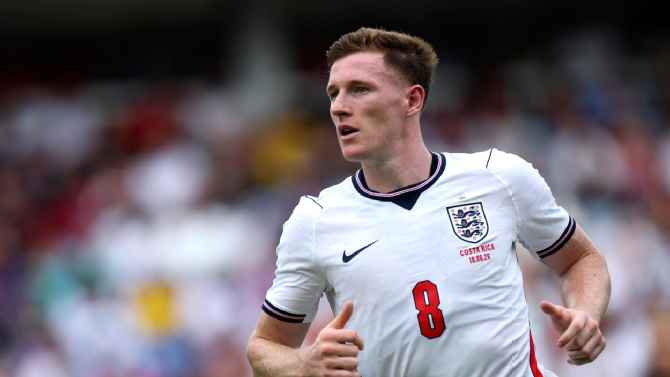
Anderson led the Premier League in duels won (297) last season and recorded the highest number of touches (3,308). This combination makes him a complete midfielder, skilled at both recovering possession and distributing the ball effectively. His ability to deliver set pieces and shoot from distance was notably highlighted when he scored against Manchester City.
In contrast, Rogers contributed 25 goals and assists across all competitions, displayed expertise in long-range shooting, and made powerful runs through midfield. His blend of size, speed, and skill is exceptional, even in a physically demanding league, and he was critical to Villa’s attacking success during a key stretch of the season.
0:49
Laurens questions Elliot Anderson valuation after £120m Man City bid
Importantly, both Anderson and Rogers proved their physical durability, each playing over 4,000 minutes in the demanding Premier League.
Additionally, the urgency from the clubs seeking these players played a significant role in the hefty transfer fees. City needed a replacement for Bernardo Silva and a long-term successor for Rodri; Anderson fits this requirement perfectly. Meanwhile, Chelsea has been keen on Rogers for a while and recognized that this was the perfect opportunity to secure his signing, particularly as Villa needed to raise funds to comply with UEFA regulations.
With Anderson under contract with Forest until 2029 and Rogers extending his deal with Villa until 2031 last November, both clubs held strong negotiating positions, driving the fees even higher.
Joining a Notorious List
History hasn’t been kind to £100 million-plus transfers. A review of the most expensive transactions suggests that clubs should think twice before committing such capital, as the records showcase a troubling narrative.
The world record for a transfer, Neymar‘s €222 million move from Barcelona to Paris Saint-Germain, has remained untouched since 2017, and there’s a clear reason behind this. The Brazilian has showcased immense talent but has struggled to justify the hefty price due to injuries and inconsistent form.
Continuing down the list, the tags of disappointment can be placed on the high-profile transfers of João Félix, Antoine Griezmann, Philippe Coutinho, and Romelu Lukaku as complete flops. Although Kylian Mbappé and Jack Grealish have been somewhat more productive, their contributions remain a topic of debate regarding success and value.
For instance, while Mbappé has yet to lead PSG to desired Champions League glory and transferred to Real Madrid on a free, Grealish’s success has been limited to just one outstanding season with City thus far.
It’s premature to evaluate Florian Wirtz and Alexander Isak, who are just getting started in their respective £100 million transfers to Liverpool.
On a brighter note, Arsenal and Chelsea will likely regard their £100 million investments in midfielders Declan Rice and Moisés Caicedo as successful. Both have solidified their status over three seasons and would command even higher fees were they to transfer again.
Then, there’s Chelsea’s Enzo Fernández, who has maintained his value since arriving from Benfica for €121 million in 2023, making him a case of “borderline worth it.” His time at Chelsea has been filled with ups and downs, mirroring his roller coaster performance during the 2026 World Cup.
What Links Success and Failure in Major Transfers?
One common theme among the large number of failed transfer deals features attackers. Conversely, greater success tends to be associated with players outside of attacking positions.
While this observation alone may lack robust statistical support due to the limited number of cases considered, a further look into the history of significant transfers reinforces this notion.
For instance, Ousmane Dembélé‘s €105 million tenure at Barcelona proved disastrous, as did Eden Hazard’s €100 million move to Real Madrid, and similar tales of failure loom over Antony (€95 million) and Jadon Sancho (€85 million) during their times at Manchester United.
While some players have thrived—such as Harry Kane (€100 million) at Bayern Munich and Gareth Bale (€100 million) at Madrid—most attacking transfers at this value have succumbed to inadequacies.
Consequently, high expenditures on attackers frequently bear unsatisfactory returns, while investments in other positions hold up better under scrutiny. Why might that be?
Challenges Faced by Attackers
While there is no definitive solution, attackers often find themselves judged strictly based on goals and assists. Although numerous metrics evaluate player contributions, failure to meet scoring and assisting expectations renders their performances susceptible to critique.
Players like Félix, Griezmann, Coutinho, Lukaku, Grealish, Dembélé, Hazard, and Sancho may have ultimately disappointed relative to their figures due to their inability to produce sufficient offensive output, even if their overall performance was commendable.
Injuries have affected some players, such as Hazard, but their collective failure to meet production expectations makes their transfers seem wasteful.
In essence, clubs spending over £100 million on attacking talent expect prolific scoring and assisting. If those expectations aren’t met, the transfer is labeled a failure.
However, for those in deeper midfield or defense roles, defining success is much less black and white. Relying solely on goals and assists to evaluate a player like Rice at Arsenal fails to account for his comprehensive contributions. Similar critiques apply to Van Dijk’s pivotal role in Liverpool’s defense, which extends beyond team-wide clean sheet statistics.
Perhaps those in more central positions enjoy more involvement in the game, leading to consistent displays of their value throughout matches. In contrast, attackers may lower their impact during off days, potentially costing their teams critical points.
The Path Ahead for Rogers and Anderson
Recent trends indicate that the £116 million deal for central midfielder Anderson is more likely to yield positive results compared to Rogers’ £117 million forward transfer.
Anderson is expected to effectively integrate into Manchester City’s midfield, executing simple yet impactful actions like ball recovery and smart distribution. His physical advantages compared to many league peers should ensure a consistent performance level, contributing significantly to City’s dominance.
Conversely, while Rogers is likely to deliver standout moments for Chelsea, characterized by stunning long-range efforts and dynamic runs, his unpredictable nature as a forward may lead to significant erratic performances.
Last season, he led the league in dispossessions (80 times) and also notably lost the ball the most frequently in both the middle and attacking thirds (72 times). Such trends will make him a focal point when performances falter, particularly given his record-breaking transfer fee.
This encapsulates the essence of football business: when clubs invest record amounts, the expectations for miraculous outcomes expand. However, each player’s role shapes the kind of miracles anticipated, as those expected of Anderson differ significantly from those anticipated from Rogers.
In committing such vast sums for one player, Chelsea is effectively banking on Rogers to be their version of Lionel Messi (at Barcelona), Bukayo Saka (Arsenal), or Lamine Yamal (Barcelona)—yet all three of these exceptional forwards arrived for free.