



-

Emily Keogh
Multiple Authors
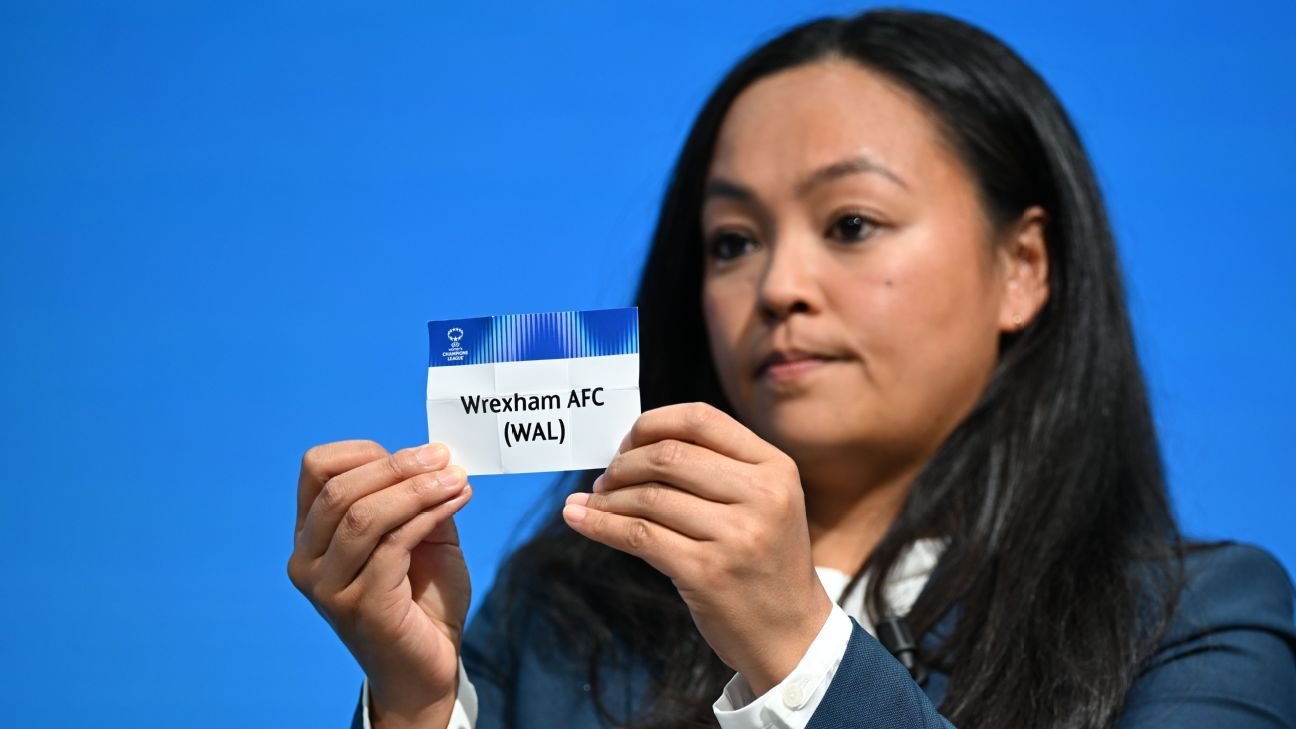
The Wrexham Women’s team has become adept at breaking new ground. In recent years, they have made history on several fronts, but nothing compared to the milestone they are set to achieve next week—their inaugural entry into European football.
Entering as one of the lowest-ranked teams in the UEFA Women’s Champions League (UWCL) qualifying round, the Red Dragons aim to further their legacy. After achieving a remarkable domestic double, winning both the Adran Trophy and the Adran Premier title for the first time ever, they secured a spot in Europe’s top club competition.
The team is set to face Armenian champions FC Pyunik at the Racecourse Ground (STōK Cae Ras), with a capacity of 13,000, on Wednesday. If successful, they could meet Northern Ireland’s Glentoran or Latvia’s Riga FC on July 25 for another chance to advance to the next stage.
Should they make it there, they will face Denmark’s HB Køge on August 5 in a mini-tournament, potentially leading to a final against either Lithuanian champions Gintra or Scotland’s Heart of Midlothian on August 8. Progressing past that point would lead them to a two-legged third qualifying round to vie for a position in the UWCL League Phase against Europe’s elite.
Wrexham’s women are no strangers to adversity. Established in 1993, they returned to the Welsh Premier League only two years ago, enduring several challenging seasons filled with setbacks and disappointments. Now, with Hollywood stars Ryan Reynolds and Rob McElhenney backing them since their 2020 takeover and their first trophies in the cabinet, it feels like a new chapter is beginning.
A New Chapter in Trophies
The groundwork was established when Wrexham achieved a historic promotion to the Adran Premier in the 2023-24 season, becoming the first Welsh women’s club to transition to a semi-professional model. They finished their inaugural top-flight season in third place. Former General Manager Gemma Owen remarked, “Teams that move up often struggle, but we made a strong statement—that we are here to compete.”
Reaching the FAW Women’s Cup final, they faced defeats in successive matches against Cardiff City, their rivals, and finished fourth, behind the eventual champions in the league.
After four seasons, manager Steve Dale stepped down, and former Leicester manager Jenny Sugarman was hired in July 2025, only to find a chaotic situation awaiting her.
With only one player under contract and approximately 20 others either former members or trialists uncertain of their futures, a planned pre-season tour to Florida ended up cancelled. The season’s preparations lagged behind, with no kit or facilities manager available. Sugarman gave herself two weeks to assess the squad and make crucial decisions on building her new team.
“Coming into that environment was exceptionally challenging,” Sugarman told ESPN. “I had an insight into the situation, but until you are in it—arriving at the training ground with no power or lighting… and conducting player medical exams in the rain outside—we really had to adapt.”
Challenges continued as Wrexham made history by becoming the first club, and one of only a few worldwide, to own their women’s stadium outright when they purchased “The Rock,” a 3,000-capacity facility, in August 2025. Plans for significant redevelopment of the site began during the 2025-26 season to build a high-performance facility for the women’s program.
Take a look back at some of the best images of the weekend, as we lifted the Adran Premier for the first time in our history 📸
🔴⚪️ #WxmAFC
— Wrexham AFC Women (@WrexhamAFCWomen) April 7, 2026
“We reflect on the times where we had team meetings amidst construction chaos, and it’s motivating to see how we've persevered to build on what we achieved at the end of last season,” remarked Wrexham technical director Mark Swales.
In February, Wrexham also made headlines by becoming the first Adran Premier team to pay a domestic transfer fee, acquiring 22-year-old defender Maria Francis-Jones from The New Saints. Amid the tumult of the season, they secured their first win against Cardiff in the Adran Trophy final, before clinching their first Adran Premier title by four points in the Championship conference, marking the end of years of frustration.
For Sugarman, overcoming mental barriers proved to be just as crucial as netting silverware.
“As we navigated through the season, it became evident that there weren’t many winners in the team. However, we shifted the focus toward developing a winning belief,” explained Sugarman.
In the span of just a year, Wrexham transitioned from perennial aspirants to champions, paving their way into the UWCL qualifiers.
Facing Europe's Best
Entering the UWCL as one of the competition's lowest-ranked teams cannot be understated; Wrexham aims to achieve what no Welsh club has accomplished in years.
“The Champions League represents the pinnacle of club football,” Sugarman shared. “It’s the ultimate challenge against the best. Our ranking doesn’t detract from that; whether we’re the defending champions or lowest-ranked, we still aspire to compete.”
The historical challenge is significant. No club in the Welsh top flight has progressed beyond the first qualifying round of the Champions League. In fact, the last Welsh team to advance in a qualifier was Cardiff Met back in 2019, while it has been five years since any Adran Premier club even scored in the competition—Swansea City's Chloe Chivers was the last to do so in a 4-1 defeat to CSKA Moscow during extra time in 2021.
Nevertheless, Sugarman encourages her players to seize the moment rather than shy away from it. Inspired by the U.S. Navy SEALs’ motto, she aims to bring the excitement and confidence built from this experience to the forefront.
"The energy, belief, and adrenaline from this is something we must embrace,” she stated.
However, their preparation for Europe poses additional hurdles, such as managing training’s physical demands while minimizing injury risks and sourcing up-to-date information on unfamiliar opponents. Women's football in Wales lacks accessible video analysis, complicating preparations against sides like Armenian champions FC Pyunik, which poses a challenge due to limited recent footage.
Wrexham staff reviewed matches from over a year ago to glean insights into Pyunik's current squad and coaching setup, who had a flawless domestic season with 18 wins. This raises uncertainty about how accurately past footage represents the team they will face on Wednesday.
“We are here to embrace this opportunity,” Sugarman emphasized. “We are determined to win matches and progress. We are confident in the squad's abilities but recognize that it all comes down to performance on the day.”
Sugarman recalled the reactions during a meeting where she expressed a desire to “win in the Champions League.”
“Many people were perplexed and thought I meant winning the entire tournament. I clarified that I meant winning matches against the best teams,” she explained. “Winning in Europe can kick-start our journey and it’s crucial that we pursue this goal while recognizing the added challenges of being the lowest-ranked team.”
Creating a Lasting Legacy
While securing trophies has always been a main target for Wrexham, a deeper motivation lies in leaving a lasting legacy for the club. Set to enhance their identity, the team established core values early in the season, with legacy as a pivotal theme.
For Wrexham, success is more than hoisting trophies—it’s about fortifying the club for future generations. Former captain Keren Allen emphasized this ethos in 2025, valuing the importance of “leaving the shirt in a better place.” This vision continues to resonate despite rebuilding efforts and management changes.
“Being historically aware connects us to our community," Sugarman notes. "It's imperative that all who represent us understand their role in the club’s narrative.”
Although Ryan Reynolds and Rob McElhenney's ownership has elevated Wrexham's global presence over the last five years, the club’s rich history dates back to 1864. Balancing traditional values with modern growth is a vital challenge for the women's squad, as Sugarman recognizes.
“We are in a unique phase of growth involving players who have been on this journey while balancing additional jobs,” she stated. “Our goal is to merge history with progress and build a future for our team that the community can be proud of.”
Presently, Wrexham are not aiming to dethrone heavyweights like Barcelona or Chelsea overnight. Remaining semi-professional without a clear timeline to transition to a fully professional model, the emphasis is on sustainable progress rather than rapid expansion.
Nonetheless, the aspiration to become "the best" remains the guiding principle. For Sugarman, the focus begins with setting the standard within Wales before extending ambitions to a broader horizon.
“Our goal is to consistently be the premier team in Wales, setting benchmarks, and enhancing the standard of Welsh women’s football for future generations,” she concluded.
Swales reflects that growing future talent should be regarded as a more relevant measure of success.
Champions League football is coming to the Racecourse!
Wrexham AFC Women are excited to host UEFA Women's Champions League mini-tournament at the Racecourse Ground.
Details regarding tickets and kick-off times will be made available shortly.
🔴⚪️ #WxmAFC
— Wrexham AFC Women (@WrexhamAFCWomen) June 23, 2026
“We aspire to be a nucleus for the growth of football in Wales, aiming for steady progress rather than rapid shifts,” he said. “Building a competitive infrastructure is essential for ensuring a brighter future as we plan not just for next season but for years to come.”
With limited pathways available for young girls to engage in football in Wales and lacking competitive academy infrastructures comparable to those in England, Wrexham is committed to ensuring the next generation can flourish. Hosting UWCL qualifying matches at home will play a pivotal role in inspiring future Red Dragons.
This Wednesday's match against Pyunik will be streamed live through Wrexham's channels, allowing fans both local and international to engage with the event, whether attending in person or watching from afar.
“It was vital for the club to host these matches given the historical significance—30 years since the last European game was played at Racecourse Ground—against Romanian side Petrolul Ploieşti in the European Cup Winners' Cup in 1995,” Swales reflects. “The opportunity for our women's team to reclaim that legacy is monumental as society progresses towards creating opportunities for all.”
For a team that has consistently made waves, this next chapter feels like the perfect fit.