



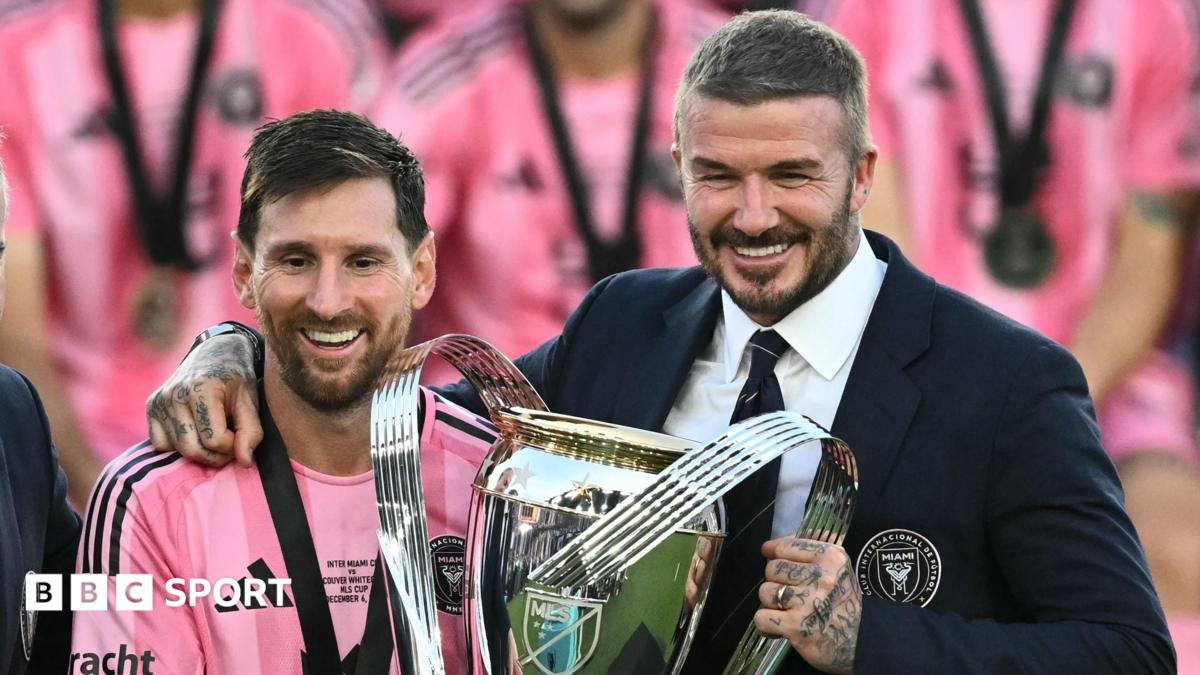
In many respects, MLS now stands alongside the world’s top leagues.
At the 2026 World Cup, 45 MLS players took part, including two who played in Argentina’s final: Lionel Messi and Rodrigo de Paul.
The league once had a “retirement home” image—a lucrative stop for icons like Beckham and Messi after their European peaks.
That view is outdated, Courtemanche says: the average age of new international signings is now 23.8, even if many still hope to move to Europe later.
In 2027, MLS will shift to a summer-to-spring schedule to better align with Europe and ease player movement.
League leaders are also investing heavily in youth development.
Every MLS club runs an academy. At an LA Galaxy watch party for the U.S. win over Bosnia-Herzegovina, dozens of kids ignored the broadcast to play their own games on three fields, sprinting to the big screen only when cheers signaled a goal.
Such unstructured pickup play is rare in an overscheduled youth culture—and the quality was high, with several participants tied to MLS academies.
Among them was eight-year-old Landon—named for U.S. legend Landon Donovan—who gleefully switched from goalkeeper to striker. His mother, coach Jen Wing, says her children attend MLS camps and play on New Jersey travel teams.
Landon dreams of going pro in MLS.
His dream club? “LAFC,” he says.
Critics argue MLS won’t rival Europe until it addresses youth soccer’s pay-to-play model.
At the top tier, MLS academies are free, much like in Europe.
But reaching that level often requires families to spend thousands on private training and travel teams—a common theme in U.S. sports.
League officials say the development system is continually improving and that clubs offer scholarships for standout prospects.
Commissioner Don Garber adds that MLS is committed to producing better, faster, stronger young players who can contribute more to the men’s national team and fuel optimism for the future.
When it comes to drawing audiences, Messi is the league’s biggest magnet.
Celebrity ownership is widespread, too: more than two dozen entertainers and athletes hold stakes in MLS clubs, including Will Ferrell and Magic Johnson (LAFC), Reese Witherspoon (Nashville SC), and Matthew McConaughey (Austin FC).
And the business is booming.
Drew Carey joined Seattle Sounders ownership when the club entered MLS in 2009 for a $30 million expansion fee; today the Sounders are valued at over $900 million. David Beckham’s 2007 LA Galaxy deal included an option to buy an expansion team for $25 million. He now owns Inter Miami CF, which experts value at over $1 billion.