



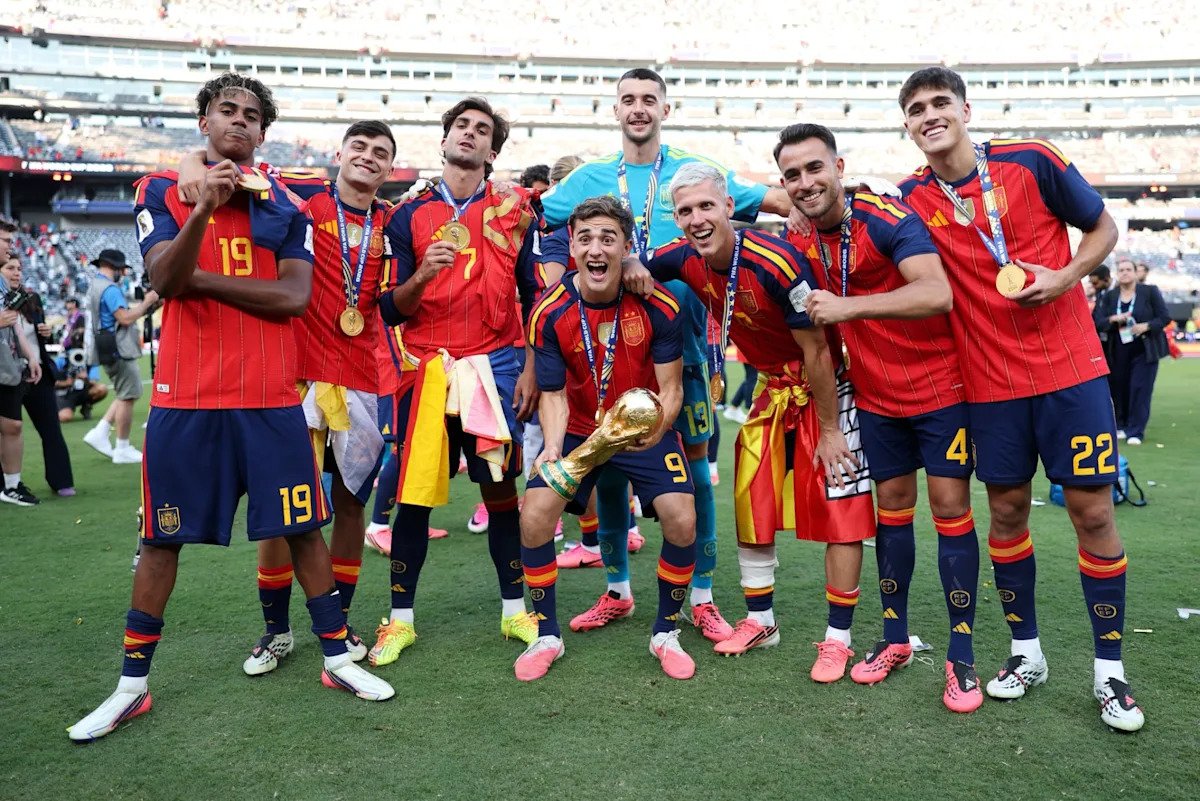
Sixteen players. Eight nations. A month in which Barcelona was prominently featured across North America.
The 2026 World Cup kicked off with 16 players connected to Barça across eight different national teams, and concluded with eight of them celebrating as champions with Spain.
Advertisement
Ten Barcelona players reached the semi-finals—setting a new club record for a single World Cup—while Ferran Torres scored the decisive goal in the final, and Pau Cubarsi walked away with the Young Player of the Tournament honor.
Marcus Rashford and Joao Cancelo were both on loan at Barcelona when the tournament began, thus contributing to the club’s representation.
Their loans have since ended, with Rashford returning to Manchester United and Cancelo heading back to Al-Hilal.
This ranking is not merely a record of who advanced the furthest nor who scored the most goals or created the most assists.
Advertisement
While medals are important, so are performances, minutes played, responsibilities assumed, and key contributions made.
From those whose World Cups barely started to those who etched their names into history, here is a ranked overview of Barcelona’s 16 representatives from least to most impressive.

Araujo did not see any playing time for Uruguay. (Photo by Lars Baron/Getty Images)
For Araujo, this World Cup experience didn’t even begin; he traveled with Uruguay while recovering from injury but never set foot on the pitch.
He missed all three group matches, including a critical loss to Spain that knocked Uruguay out before the knockout stages.
Advertisement
There’s no performance to critique; circumstances placed him at the bottom of the rankings.
Joan Garcia left the tournament as a champion, but with little opportunity to showcase his individual talent.
As Unai Simon solidified his role as Spain’s goalkeeper and ultimately won the Golden Glove, García remained an unused substitute throughout Spain’s journey to claim the title.
He’ll cherish the celebrations forever, even if this ranking doesn’t reflect his talent.
Eric Garcia spent the majority of Spain’s campaign observing from the bench as others propelled the team forward.
However, unlike Joan, he did see some action as he came onto the pitch in extra time during the World Cup final against Argentina, gaining a memorable experience as Spain secured their championship.
Though his contribution was minimal, he leaves with a lasting memory.
13. Hamza Abdelkarim

A future star in the making. (Photo by Kevin C. Cox/Getty Images)
For Hamza Abdelkarim, the World Cup served more as a learning experience than a platform for stardom.
The young Barcelona player made his debut for the national team during a match against Egypt against Belgium, and appeared again in the group stages, contributing to Egypt’s penalty shootout victory against Australia to advance to the last 16.
Advertisement
His minutes were limited, but the experience was pivotal. Hamza gained insight into the intensity of high-level competition and returned to Barça eager to secure his spot in the first team.
Gavi is known for his high energy and tenacity, making his somewhat understated role in Spain’s victory feel particularly odd.
He started in the underwhelming opening draw against Cape Verde and came off the bench against Austria, but his contributions dwindled as Luis de la Fuente solidified his strategy for the knockout rounds.
He remained unused in the semi-final and final, resulting in a quiet tournament.
Advertisement
Raphinha’s World Cup journey was truncated just as it began.
The Brazilian played the full match in the opening draw with Morocco and started against Haiti before being forced off due to injury after 40 minutes.
He missed subsequent matches against Brazil and, despite recovering, did not feature when Norway eliminated the Selecao.
He was expected to be one of Brazil’s key attacking assets, but ultimately found himself watching from the sidelines as his World Cup dream faded away.
10. Marcus Rashford
At least Rashford provided Barcelona fans with a memorable moment at the World Cup before returning to Manchester United.
Advertisement
Coming off the bench against Croatia, he made a decisive contribution by scoring the first goal for a Barça representative in this tournament.
He then started and completed England’s final group match against Panama, although his impact diminished in the knockout stages.
9. Joao Cancelo

Cancelo played his part for Portugal. (Photo by Molly Darlington/Getty Images)
As a Barcelona loanee, Cancelo’s performances were typically consistent.
He featured in the opening match against DR Congo, alternating between right-back and left-back, contributing both defensively and offensively.
Advertisement
He remained influential as Portugal advanced to the knockout stages, although their campaign ended abruptly in the last 16 against Spain. He provided steady performances without any standout moments.
By his high standards, it was not a World Cup that fully showcased Pedri’s talents.
The midfielder was a regular starter for Spain, including during the crucial last-16 matchup against Portugal, but his role diminished as the competition progressed.
He appeared from the bench in both the semi-final against France and the final against Argentina.
While he played well in the final, Pedri leaves the tournament satisfied with a medal but feeling he could have done more individually.
Advertisement

De Jong played through injury for the Netherlands. (Photo by David Ramos/Getty Images)
Frenkie de Jong shone as a midfield maestro throughout the tournament.
He was a constant presence in the Netherlands midfield during the group stage and played 110 minutes in their Round-of-32 exit against Morocco, a match ultimately resolved through penalties.
Remarkably, this impressive performance came while battling a serious knee injury, which may have long-term effects on Barça.
Advertisement
6. Jules Kounde
Kounde delivered steady performances throughout the tournament. As a key figure in France’s progression to the semi-finals, he played consistently well, starting their opening victory over Senegal and remaining pivotal in wins against Sweden, Paraguay, and Morocco.
Spain ended France’s hopes in the semi-finals, and Kounde played a role off the bench during their third-place match, which they lost to England.
His World Cup journey was defined by consistency rather than standout moments.
As Spain advanced, Dani Olmo’s impact grew significantly.
His sharp intelligence on the field made him a crucial starter during the knockout phase, especially when he contributed significantly in the semi-final against France, assisting Spain’s second goal and maintaining his spot for the final.
Advertisement
Although he may not have made the highlight reel, Olmo’s consistent contributions justified his role as the Spanish No. 10 throughout the tournament.

Barcelona’s new signing made a significant impact at the World Cup. (Photo by Justin Setterfield/Getty Images)
Barcelona’s summer acquisition had a standout tournament, influencing matches on several occasions.
He entered the game against DR Congo when England was trailing, and assisted both goals in their comeback victory. He also played a crucial role in the quarter-final win over Norway and netted a superb opening goal against Argentina in the semi-finals.
Advertisement
Though England fell short after conceding two late goals, Gordon’s contributions were integral to their journey to the semi-finals.
For a moment, his goal appeared to be sending England to the World Cup final, only for Argentina to thwart that dream.
Lamine Yamal’s World Cup performance was noteworthy, especially considering it might not be his peak tournament.
Returning from injury, he scored on his first World Cup start against Saudi Arabia and was voted Player of the Match in the 3-0 win against Austria.
In the semi-final against France, Lamine won the penalty that set Spain on the path to victory, concluding the tournament as a world champion at just 19 years of age.
Advertisement
2. Ferran Torres
Ferran Torres might not have dominated the World Cup, but he certainly had “the moment” of the tournament.
Coming off the bench against Portugal in the last 16, he assisted Mikel Merino’s late winner. Then in the final against Argentina, after a goalless 90 minutes, Ferran scored in the 106th minute, securing the second star for La Roja.
While other players may have had an overall stronger tournament, Ferran’s decisive moment eclipsed them all.
1. Pau Cubarsi

The FIFA World Cup’s Best Young Player. (Photo by Buda Mendes/Getty Images)
Even Ferran’s standout moment couldn’t overshadow the impressive body of work put forth by Pau Cubarsi throughout the tournament.
Advertisement
At just 19, the Barcelona center-back established himself as a pillar of the championship team’s defense, thriving under pressure.
His commendable performances drew accolades throughout Spain’s journey, from an outstanding display against Uruguay to an exceptional showing in the semi-final against France.
Starting in the final, he played a crucial role in keeping Argentina at bay for 120 minutes.
His contributions were duly recognized as he earned the title of FIFA World Cup’s Young Player of the Tournament.
Barcelona sent one of the brightest young central defenders to the tournament and now welcomes back one of the best in the world for Hansi Flick.
If that’s not akin to winning the lottery, what is?