



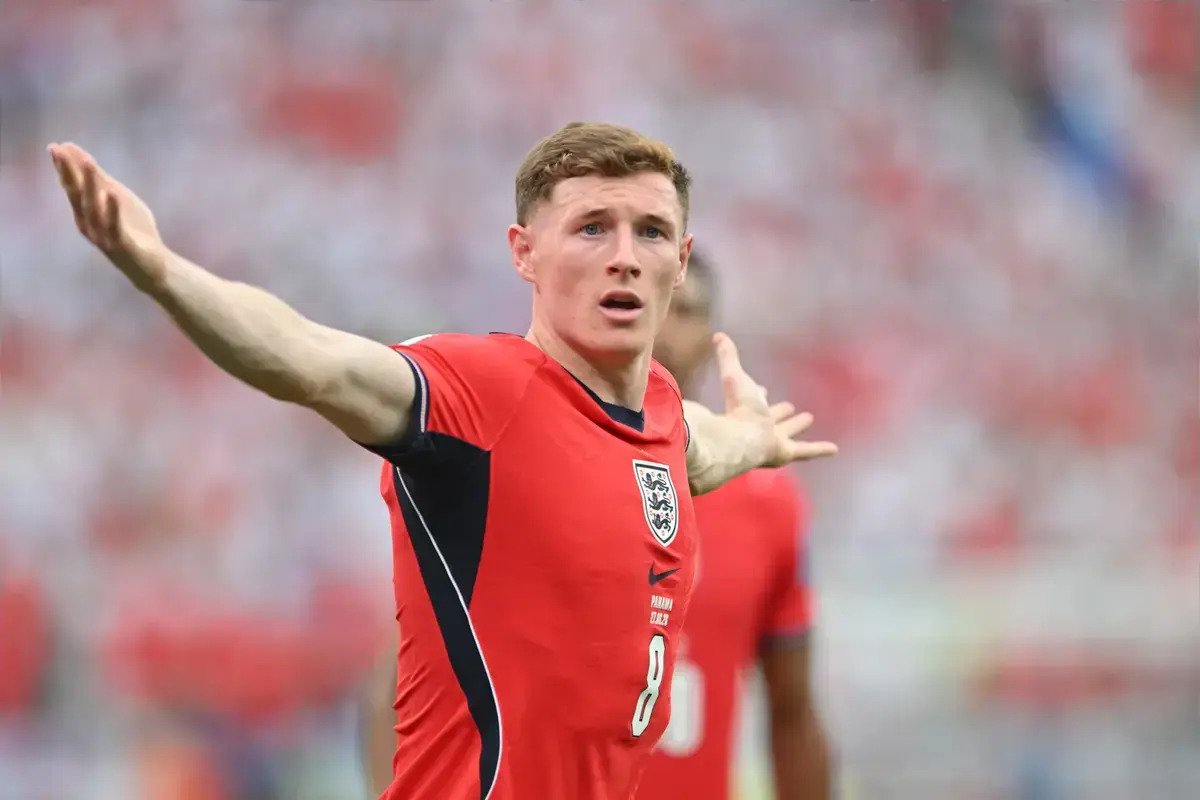
The transfer window opened a month ago, coinciding with the World Cup, and only a handful of clubs have made notable signings. However, that hasn’t stopped extensive chatter around significant deals made early on, particularly one standout transfer.
Manchester City officially acquired Elliot Anderson on July 2 for a record-breaking fee of £116 million (or as high as £150 million, depending on which rival fan you ask), making him the second most expensive British player ever—just behind Morgan Rogers, whose transfer to Chelsea just weeks later cost £117 million.
Advertisement
You might be surprised to learn that this transfer sparked considerable debate across the football community.
“How can City justify this? They’re undermining the market! Elliot Anderson is not worth that kind of money! Did you see his performance in the World Cup? He didn’t score once! And what about the 115 charges?!”
While the last points bother some, I find them irrelevant. Those who watched him play during the World Cup recognize he consistently performed well, showcasing the sort of midfield attributes City has sorely needed, especially now that Bernardo Silva has departed. He seems to have merely continued the solid performances he provided last season.
Regarding the 115 charges, it’s clear from City’s transfer activities post-charges that they feel no threat whatsoever.
Advertisement
The players joining City certainly don’t seem concerned. Some rival fans argue that City is hoarding talent before potentially being punished by a drop to the National League North or something similarly absurd. However, the reality is likely that neither City nor its recruits are going to adjust their strategies based on an outcome that remains uncertain.
I’m particularly interested in the notion of “market distortion.” Many are concerned about Anderson’s hefty price tag, worrying it might set a precedent for exorbitant transfers moving forward.
In light of Morgan Rogers’ British record transfer fee, is Chelsea also distorting the market? Yes, but not because of Anderson.
Advertisement
While some cling to a record transfer list adjusted for inflation, I find that less relevant. Sure, Rio Ferdinand commanded £32 million back in 2004, an unheard-of sum for most clubs at the time. However, I doubt that equates to £200 million today.
I prefer to evaluate transfers in contemporary terms, considering market trends.
The midfield transfer market has been skewed for several years. In January 2023, shortly after Chelsea signed Enzo Fernandez for about £10 million, they bought him from Benfica for nearly £110 million—setting a Premier League record. A decent World Cup and six months in the Primeira Liga significantly inflated his worth by around £100 million.
Advertisement
City didn’t do that; Chelsea did.
Fast-forward to July 2023, Arsenal signed Declan Rice for a record fee that surpassed Jack Grealish‘s £105 million, securing a 23-year-old English homegrown midfielder from a team that finished in the league’s bottom quarter the season prior. Sound familiar?
City didn’t do that; Arsenal did.
Moving on to yet another significant midfield transfer, in August 2023, Chelsea again spent over £100 million to bring in Moises Caicedo from Brighton, breaking the Premier League transfer record once more. Caicedo, who had only one season of top-flight experience, was sold for nearly 30 times the fee Brighton paid for him—£4 million.
Advertisement
City didn’t do that; Chelsea did.
Fast forward to last summer, June 2025, and Florian Wirtz joined Liverpool for a fee that could reach £125 million with add-ons. Initially reported at £107 million, it would set the record for a midfielder in the Premier League if all conditions are met. City was in contention for Wirtz but ultimately declined to pursue the deal, whether due to the player’s preference or unwillingness to meet the asking price (particularly since Liverpool had no qualms about spending last summer).
City didn’t do that; Liverpool did.
And that’s just within the Premier League. Elsewhere, Jude Bellingham moved to Real Madrid for a potential £110 million, appearing to be on the verge of stardom in a manner that few other signings do. Despite this, it’s undeniable that such deals influence market values.
Advertisement
The obvious counter argument is Jack Grealish’s transfer. It’s true that being the first club to breach the £100 million mark led to ripple effects, potentially causing the most significant market alteration in history. Nevertheless, that £100 million fee, set in 2021, stood uncontested until Chelsea and Arsenal surpassed it three times within a single year. Liverpool has also crossed the threshold twice since, with Wirtz and Alexander Isak, and Chelsea achieved it a third time with Rogers. Even Tottenham, having nearly faced relegation twice in as many years, just signed Sandro Tonali for £100 million when all is said and done.
Advertisement
Reports indicate that Forest aimed to use the Declan Rice transfer fee as a benchmark in negotiations with City. Early on, Forest insisted on a figure akin to that of Rice, recognizing its relevance for an English midfielder (given his age, homegrown status, and talent compared to Anderson). Why aren’t we hearing accusations of market distortion from Arsenal’s Rice deal?
Personally, I don’t get too worked up about transfer fees anymore. It’s not my money, and we’ve entered an era where top-tier midfielders in the Premier League typically ask for over £100 million. If that bothers you, I understand, but it’s the present reality. The financial figures involved in football are staggering, and it’s inevitable that triple-digit millions will become standard. I find comparisons of player valuations compelling, but if City is keen on spending a certain amount, that’s their prerogative.
Advertisement
We can expect more signings like Morgan Rogers that exceed the £100 million threshold moving forward. Such transactions are destined to become routine each summer—Manchester City is merely adapting to the evolving market landscape.
What intrigues me most is the potential acquisition of Ayyoub Bouaddi.
I’m setting aside the debate on euros versus pounds here. I find the trend of English journalists reporting on English club transfer fees in euros rather odd—especially as we’re already in an era where transfer fees in pounds are staggering enough without needing a different currency to inflate their size.
Advertisement
That said, approximately £90 million for an 18-year-old player is quite extraordinary. This fee has understandably unsettled many. If you’re someone who believes an 18-year-old should never command that kind of money, then what I’m about to say likely won’t alter your opinion. But I encourage you to read on.
I won’t provide a detailed analysis of Bouaddi’s capabilities, as I haven’t closely followed his performances. I did catch glimpses of him during the World Cup for Morocco, where he played a different role than the one at Lille, making it a poor reflection of his capabilities.
What’s truly interesting is that this move could feasibly “distort” the market. Signings like Anderson, Fernandez, Caicedo, and Bellingham have highlighted a trend: if clubs aim to wait until players transition to securing roles in stepping stone clubs to become established, they’ll likely face fees of £100 million+ down the line. This is simply how the modern game operates.
Advertisement
Thus, the incentive is to identify the next big talent before they hit the spotlight. Or at least as early as possible, to avoid the skyrocketing prices that come later. While it’s a riskier approach, it may offer significant savings if it pays off.
Joao Neves exemplifies this—PSG scooped him up at 19 for approximately £60 million. Had he waited a year—or moved to a club like Dortmund to establish himself in a more competitive league—he could command a fee twice that. If you wanted to pry him from PSG now, brace yourself for a record-breaking midfielder fee.
Elements of this trend have already emerged with the arrival of Hugo Viana. Abdukodir Khusanov, who wasn’t widely recognized during his time at Lens, ended up costing City around £35 million. During Txiki Begiristain’s tenure, we might have waited for a player like him to shine at a club like Brighton or Bournemouth before spending double that once he proved himself. The signing of a player like Vitor Reis, who I believe (and hope) will eventually justify the £32 million fee, wouldn’t have occurred under Begiristain’s watch. This feels like a very Viana-led strategy, and it resonates with me.
Abdukodir Khusanov’s agent shares insights about Newcastle talks prior to his 2025 transfer to Man City
One of my biggest frustrations with previous strategies at Manchester City involves Rodri. We signed Rodri for £62 million, activating his release clause after Atleti had acquired him from Villarreal for just £20 million one year prior. Why did we wait?
There were certainly some merits to such a strategy—knowing a release clause of around £60 million meant we wouldn’t face absurd costs for a player making a necessary step up, and a year learning from Diego Simeone could benefit Rodri greatly. However, to consider, the club essentially paid £40 million extra for a year of Simeone’s mentorship. If City has a clear vision, they should front the money early and secure such players, thus freeing up funds for more crucial high-priced acquisitions needed for the squad.
Advertisement
Ayyoub Bouaddi is undoubtedly someone City sees as the solution. Historically, the club has hesitated to pay high fees for midfielders, steering clear of deals for players like Wirtz and not pursuing Declan Rice sufficiently, making this potential signing a significant shift in transfer strategy.
Considering his impressive resume, Bouaddi is exceptionally well-established at 18 years old. He’s almost logged 100 appearances for Lille, including games in the Conference League, Europa League, and Champions League, along with being a steady presence for his national team, participating in World Cup competitions. Not much more can be asked from a teenager to validate such hype.
If I were to speculate wildly (and you know I will), Bouaddi might have been earmarked for next summer, anticipating Rodri’s eventual departure, or they may view him as the ideal candidate to take Rodri’s place down the line. At this age, City may have considered a move next summer less probable, but his breakout season with Lille has propelled him into the limelight, attracting interest from multiple clubs and necessitating swift action. With various Premier League clubs vying for him, Lille can demand a premium price—especially when these hefty midfield contract prices have been established.
Advertisement
City likely worries that Bouaddi might join a club where he could become unattainable, such as Arsenal or Manchester United, or end up at a club where the subsequent transfer fee would skyrocket beyond the current offer.
Advertisement
However, a fee of this magnitude for an 18-year-old is unprecedented. It would significantly impact the market for similarly rated players in the future regarding the fees their clubs may command. This move could indeed shift market dynamics, regardless of who finalizes the deal.
City’s midfield requires urgent attention, with Kevin De Bruyne and Bernardo Silva both having departed in the last 12 months, and Rodri might also exit within a year. The acquisitions of Cherki and Anderson have started to address those gaps, but the absence of a replacement for Rodri looms large, and it’s vital for City to make the right choices here.
If the club genuinely believes Bouaddi is the answer, they should act decisively to secure him; the risk of losing him to a rival club is too significant to overlook. For instance, if he were to join Arsenal—with a potential loan back to Lille—he could return to London just as City is dealing with the departure of Rodri, and that would only amplify the frustration of losing such a key player.
Circling back to market context—investing £90 million in a world where the Premier League record stands at £125 million is equal to what £60 million represented when Pogba’s
Advertisement
Should Bouaddi’s transfer materialize, we’re likely to observe even more £100 million+ transfers in the future, especially concerning young prospects who have yet to reach celebrity status. If that occurs, it would be hard to argue that City hasn’t played a significant role in that shift.