



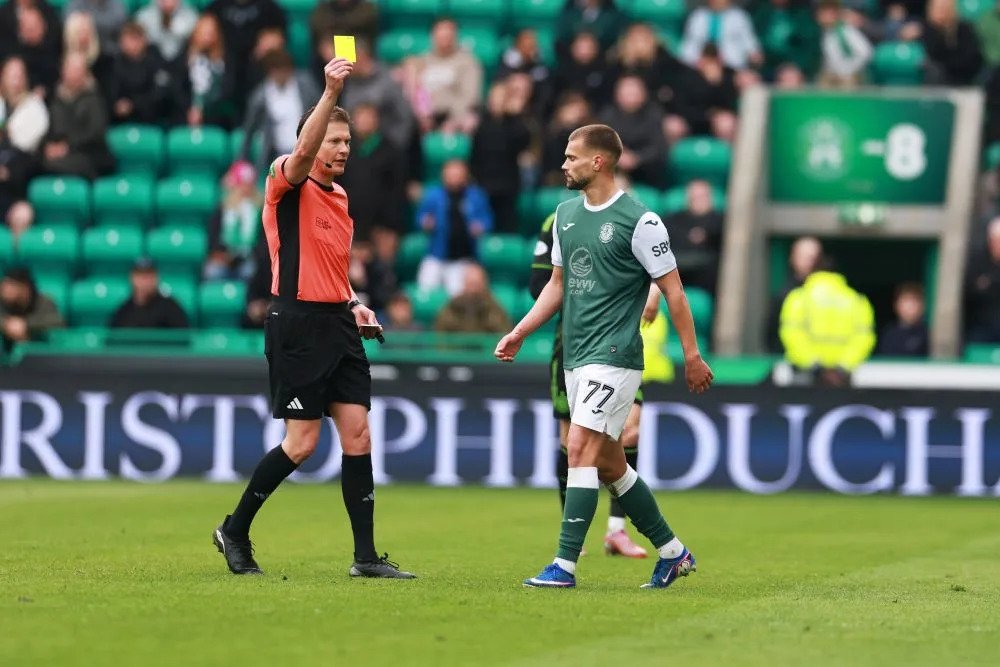
Willie Collum, the Head of Referee Operations for the Scottish FA, has announced several important changes to the laws of the game that will take effect at the start of the 2026/27 Scottish Premiership season.
These updates aim to enhance fairness and curb time-wasting, affecting various situations fans can expect to encounter throughout the season, including second yellow cards, substitutions, throw-ins, and the handling of injured players.
Advertisement
Among the most significant changes is the protocol for players sent off after receiving a second yellow card. Under the new guidelines, if VAR identifies that the second yellow was issued in error, the card will be revoked, and the player will not be sent off. Previously, it was not possible to review a second yellow card, but this adjustment allows officials to rectify what Collum described as a clear mistake.
Referees will also be focusing on minimizing time-wasting. When a player is substituted, they are expected to leave the pitch within ten seconds. Should a player intentionally exceed this time, taking 15 seconds or more, the incoming substitute will have to wait an entire minute before entering the game. This measure is intended to deter players from deliberately delaying the game, particularly in the closing moments of matches.
Throw-ins will be subject to closer scrutiny as well. Referees will adhere to a five-second guideline for restarts, although Collum noted that they will apply common sense in enforcement. Players won’t be penalized for taking slightly longer, such as six or seven seconds, if there is no clear intent to waste time. However, if officials determine that a player is intentionally delaying play, possession may be awarded to the opposing team.
A further noteworthy change affects players who require treatment on the field after a foul. Typically, these players will need to exit the pitch for one minute before resuming play. However, if the player responsible for the foul receives a yellow or red card, the injured player may remain on the field once treatment is complete.
Advertisement
These modifications are part of a broader initiative by football’s governing bodies to enhance match flow, reduce gamesmanship, and empower referees to amend obvious mistakes. With the new Scottish Premiership season approaching, clubs, players, and fans will soon get accustomed to these updated interpretations as they are rolled out across Scottish football.