



European football authorities have reiterated their guidelines for the use of Video Assistant Referees (VAR), clarifying that the technology should only be utilized for “blatantly incorrect” decisions or obvious missed incidents.
This directive follows a significant meeting last week involving refereeing leaders from all 55 national associations and representatives from the International Football Association Board (IFAB), which governs the laws of the game.
The agreement aims to simplify officiating processes and minimize the duration of prolonged reviews.
A statement from UEFA emphasized: “VAR should only step in for ‘clear and obvious’ errors, meaning when a referee’s call is evidently incorrect or when a clear incident has been overlooked. VAR is intended to assist referees, who remain central to decision-making, rather than to rewrite the outcomes of matches. Lengthy, detailed reviews often indicate that the on-field decision was not clearly and obviously mistaken, and these should therefore be limited.”
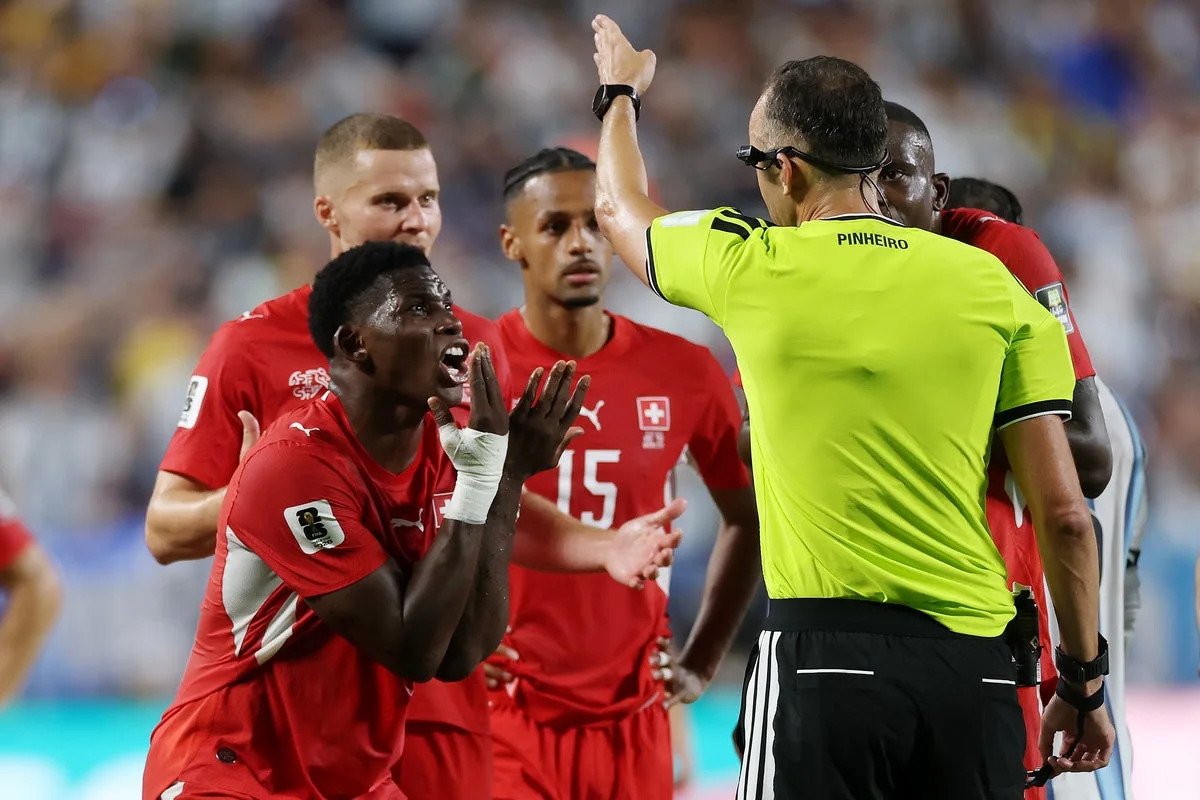
VAR was a major point of contention at the World Cup (Getty)
In addition to VAR, the meeting reached “unanimous” agreement on measures to expedite game restarts, including imposing time limits on substitutions and instituting five-second countdowns for goal kicks and throw-ins.
Further clarification was given regarding the “mistaken identity” protocol, indicating that it does not apply to simulation incidents, as seen during the World Cup, until a thorough review is conducted.
An IFAB circular reminded officials that VAR can only review bookings to determine the correct player involved in an offense rather than reassess the offense itself.
This clarification arises from contentious incidents such as that involving Switzerland‘s Breel Embolo at the World Cup, where he received a red card for a second yellow after a review overturned a booking for Leandro Paredes, with the official concluding Embolo had dived.
Roberto Rosetti, UEFA’s director of refereeing and chair of last week’s meeting, emphasized the significance of this consensus.
He stated: “The unanimous agreement among all 55 national associations and UEFA regarding guidelines for a more consistent application of the Laws of the Game is a notable step forward. It will enhance the clarity of officiating decisions for players, clubs, fans, and all involved in the sport. To maintain football’s popularity, it is vital to eliminate any uncertainty within the game and ensure laws are applied transparently.”
UEFA is also unlikely to implement other optional measures observed at the World Cup in its competitions, such as red cards for players covering their mouths while addressing an opponent or VAR checks for corner kicks.