



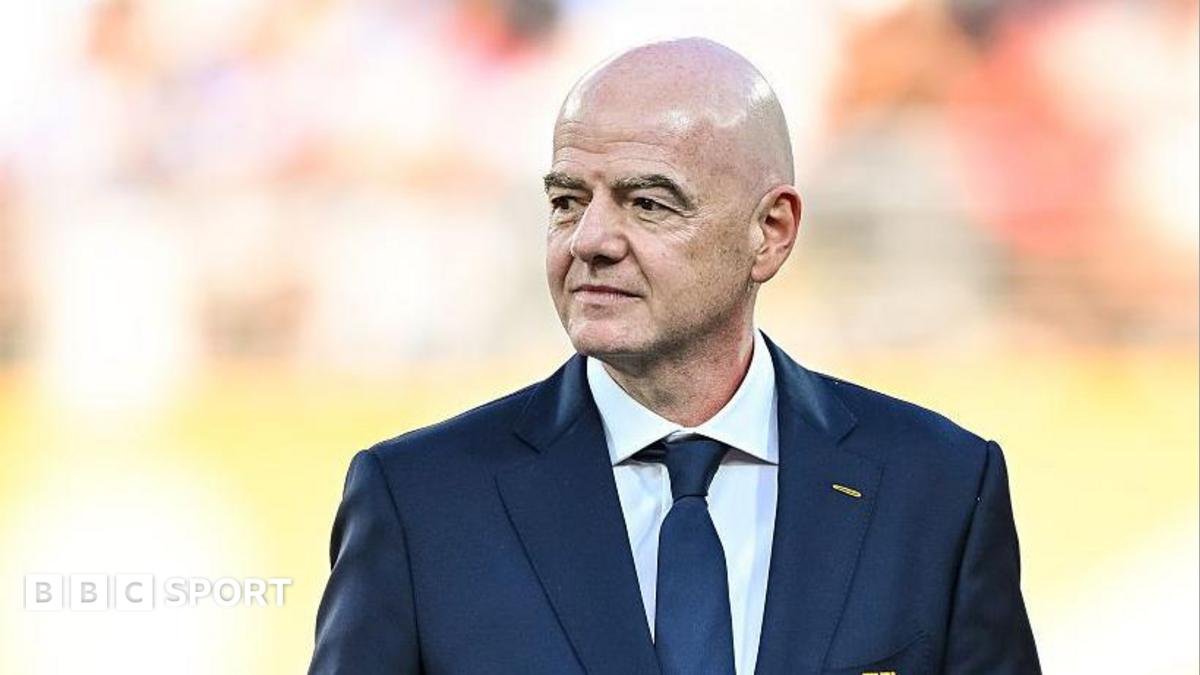
Uefa finds itself in a bind as it seeks to remove Gianni Infantino. The plan had been to steadily increase pressure this week in the hope he would resign, but the Swiss president shows no sign of stepping aside. Europe looks isolated, struggling to muster the backing needed to unseat him.
On Thursday, Gambia FA president Lamin Kaba Bajo praised Infantino’s “courage” over the U-turn and said he was “willing to give him my support more than ever.” So far, only Jordan—one of the few nations that hadn’t supported Infantino before last week—has publicly said it won’t vote for his re-election in March. Concacaf issued a statement after the proposal was dropped but, unlike Uefa, stopped short of declaring a loss of confidence in the Fifa president. Conmebol said it would not support “any action or procedure that disregards” Fifa’s established mechanisms ahead of the presidential election.
The Mexican Football Federation posted on X backing Infantino and said it would not recognize or approve any process convened outside Fifa’s institutional framework. Argentina’s FA published a letter supporting Infantino and the Fifa board, crediting them with “institutional solidity” and a “stable and transparent” business model. Caf said its executive committee had “unanimously reconfirmed” support for Infantino and thanked him for his backing of African football.
Ideally, Uefa would force an emergency Fifa Council meeting to create what it sees as a genuine opportunity to hold Infantino to account. But securing the required 19 of 36 council members has proved extremely difficult.
Uefa has also kept a no-confidence vote on the table, which it can trigger via an extraordinary congress at any time. That motion would need a majority of Fifa’s 211 members—106 votes—to pass, effectively turning it into a one-candidate presidential contest. If Uefa doubts it can reach 106, there is little point in proceeding.
Another path is to find a consensus challenger for next March’s election, with Concacaf president Victor Montagliani seen as the leading contender. Any option that takes time, however, allows Infantino to repair relationships—and with Fifa expected to announce new funding for member associations by year’s end, he could use that as added leverage for re-election.
The remaining “nuclear” option is a Uefa-led boycott. That approach carries risks and cannot be used often without appearing to override the rest of the world. It is one thing to employ it to sink the FFE proposal; it is quite another to use it to effectively depose the president.
Uefa’s resolve will be tested soon: the Fifa U-20 Women’s World Cup begins in Poland on 5 September, with six European teams participating, including England.