



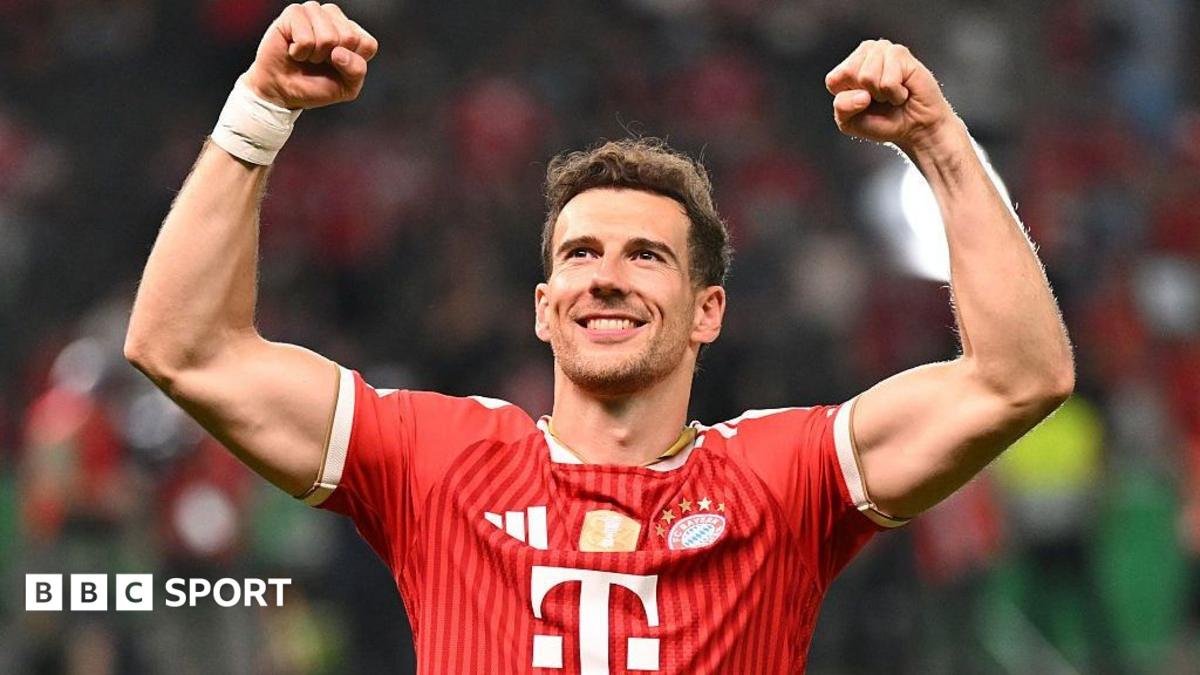
When Goretzka joined Bayern from Schalke in 2018, he was celebrated as a modern, all-purpose midfielder, capable of operating in virtually any central role.
Peter Neururer, his coach at hometown side Bochum, hailed him as a “once-in-a-century talent” at 18, and through the 2010s his potential looked limitless.
Though he typically played as a number six—often alongside close friend Joshua Kimmich for both Bayern and Germany—Goretzka also filled in as an emergency centre-back and as a number 10 when required.
Operating behind the striker brought his goalscoring qualities to the fore.
His well-timed surges and imposing frame made him a dominant aerial presence on crosses.
That toolkit often helped him win selection even as competition for central midfield places intensified.
For example, he again looked pivotal for Germany in March and June 2025 during the Nations League finals, starting in Nagelmann’s line-up.
However, such standout stretches have grown increasingly infrequent in recent years.
Injuries have dogged Goretzka since youth, leaving it unclear how high his ceiling might have been in his twenties.
He seldom endured major layoffs, but recurring knocks repeatedly set him back—often at the worst possible moments.
He seemed at his peak in 2020-21, fresh off Bayern’s pandemic-era Champions League triumph.
Yet instead of driving Germany’s midfield at Euro 2021, he missed the opening group match while dealing with the after-effects of a hamstring injury.
His only start came against England at Wembley in the round of 16.
When fit, Goretzka was a Bayern starter until Kompany’s arrival in 2024, and even then, after spending a few months on the bench, he fought his way back into the XI.
Ultimately, the emergence of Aleksandar Pavlovic, a Munich-born academy graduate, determined Goretzka’s fate.