



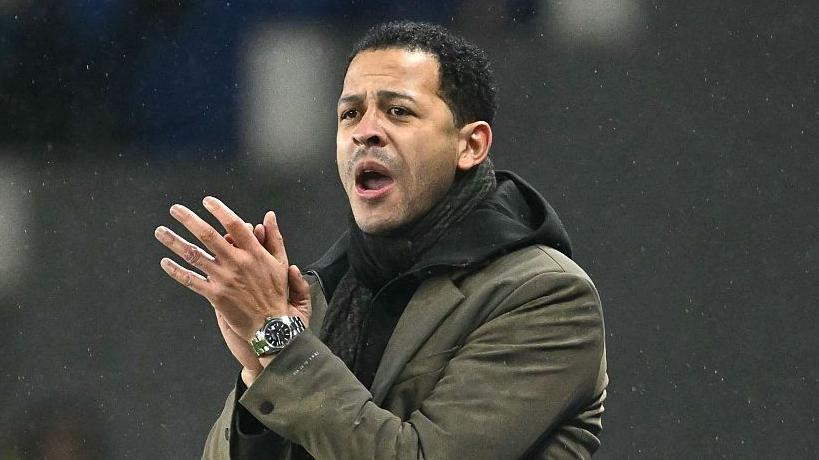
“Liam Rosenior is an exceptional coach with a deep understanding of the game, which is what truly counts. I extend my best wishes to him and his team.”
“As Chelsea’s first Black player, I must admit that this moment is incredibly meaningful to me.”
Advertisement
These poignant words come from Paul Canoville, who made history in April 1982 when he debuted as a substitute for Chelsea against Crystal Palace at Selhurst Park.
On Tuesday, Chelsea named Strasbourg manager Rosenior, 41, as their new head coach, following the exit of Enzo Maresca.
Strasbourg is part of the BlueCo multi-club ownership group, owned by Todd Boehly and Clearlake Capital, which also oversees Chelsea.
Since the Premier League’s inception 34 years ago, only 12 Black managers, excluding those in temporary caretaker positions, have held managerial roles.
Advertisement
“This is indeed a significant moment for the club, for London, and for every young dreamer.”
“Right now, let’s show our support for Liam, provide him with what he needs, and allow him to do his job.”
Analyzing the Landscape
Dutch football legend Ruud Gullit made history as Chelsea’s manager in 1996, becoming the first Black head coach in the top flight.
In 2008, Paul Ince followed suit as the first Black English manager in the Premier League with his appointment at Blackburn Rovers.
Advertisement
Currently, West Ham’s Nuno Espirito Santo is the only other head coach of color in the Premier League.
This lack of diversity in managerial roles is echoed by the underrepresentation in boardrooms as well.
The 2023 report from the Black Footballers Partnership reveals that while 43% of Premier League players identify as Black, studies by Kick It Out indicate that only 3.2% of board and senior management positions across 17 out of 20 Premier League clubs are filled by individuals from ethnically diverse backgrounds.
At the senior coaching level, this figure drops to 2% based on data from 11 clubs, and rises slightly to 5% for all coaching positions, including senior roles.
Advertisement
“There’s immense talent in Black and underrepresented communities… they seek opportunities to demonstrate their capabilities. We must persist in dismantling these barriers.”
Rosenior’s promotion makes him the fourth permanent English manager in the Premier League, joining Sean Dyche, Eddie Howe, and Scott Parker— a stark contrast to the national representation in other major European leagues.
In Italy, 16 out of 20 top-flight managers are Italian; in Spain, 11 out of 20 are Spanish; 12 of the 18 in Germany are German; and 10 of the 18 in France are French.
Advertisement
“I believe all young English coaches from an academy background will be cheering for Liam, regardless of their club allegiance,” stated current Chelsea interim boss Calum McFarlane.
“It’s inspiring for young English academy coaches to witness someone like him step into this role, and we wish him great success.”

Liam Rosenior, Chelsea’s second Black coach behind Ruud Gullit [Getty Images]
Acknowledging Merit
Leroy Rosenior, Liam’s father, had a playing career with teams such as Fulham, West Ham, and Queens Park Rangers, before becoming the manager at Brentford for a brief period in 2006.
In recognition of his efforts to combat discrimination in football and society, he was awarded an MBE in the New Year Honours of 2019.
Advertisement
Following his retirement from playing, Rosenior Jr. pursued a managerial career and began writing columns for The Guardian where he addressed the lack of representation among Black coaches. He emphasized that race does not determine ability and that opportunities should be based on merit.
He often remarked that underrepresentation leads to misunderstandings of athletes from diverse cultural backgrounds.
In a podcast with The Athletic FC, Rosenior discussed how his standout striker, Emmanuel Emegha, had been described as “difficult” and “emotional,” but he took the time to understand Emegha, who has Nigerian heritage. Emegha is set to join Rosenior at Chelsea in July.
In other contributions to The Guardian, Rosenior expressed his “shame” at hearing a coach use a homophobic slur during his playing days and publicly supported the Premier League’s Rainbow Laces initiative. He also penned an open letter to Donald Trump during his presidency, accusing him of “blatant” racism.
Advertisement
Rosenior has established a commendable reputation as a manager, first at Hull City and then at Strasbourg. Wayne Rooney recently praised him, stating he was “one of the best coaches I’ve ever had” from their time at Derby County.
On Tuesday, Rosenior bid farewell to Strasbourg before finalizing a six-and-a-half-year contract with Chelsea.
The Blues previously had the first Black manager in Gullit and the first Black captain in Paul Elliott.
Elliott has since held various senior roles, including on the FA’s diversity and inclusion board, and currently serves as vice-chairman at Charlton Athletic, set to face Chelsea in the FA Cup third round on Sunday.
Advertisement
“In my view, Liam embodies the positive attributes of the 21st century,” Elliott remarked.
“He has been an outstanding player, remarkably articulate and highly intelligent, demonstrating a deep understanding of the game in all his roles—be it as a manager or technical director.
“I always anticipated his success in football management, given his passion for the field. He communicates in a manner that feels enlightening.”
“This sends a powerful, affirmative message to current and aspiring generations—showing that individuals of color, like Liam, can ascend to the pinnacle of football management.
“But let us not overlook that he is here for his talent and capabilities.”