



“Miracles and heartbreak, that’s the Champions League,” proclaimed the headline in Gazzetta dello Sport. “Yet we stand among Europe’s elite.” Just barely. If the term “elite” can be interpreted loosely, Italy has cause to appreciate the exhilarating play-off drama in Bergamo. They will certainly hope for more, especially with the Azzurri facing Northern Ireland next month in a crucial World Cup qualifying match.
For a distinguished footballing nation, Italy’s Champions League venture was nearly cut short in February. Fortunately, Atalanta pulled off a remarkable comeback, losing the first leg 2-0 to Borussia Dortmund but dominating in the return match with a 4-1 victory, thanks to a last-minute penalty by Lazar Samardzic.
Advertisement
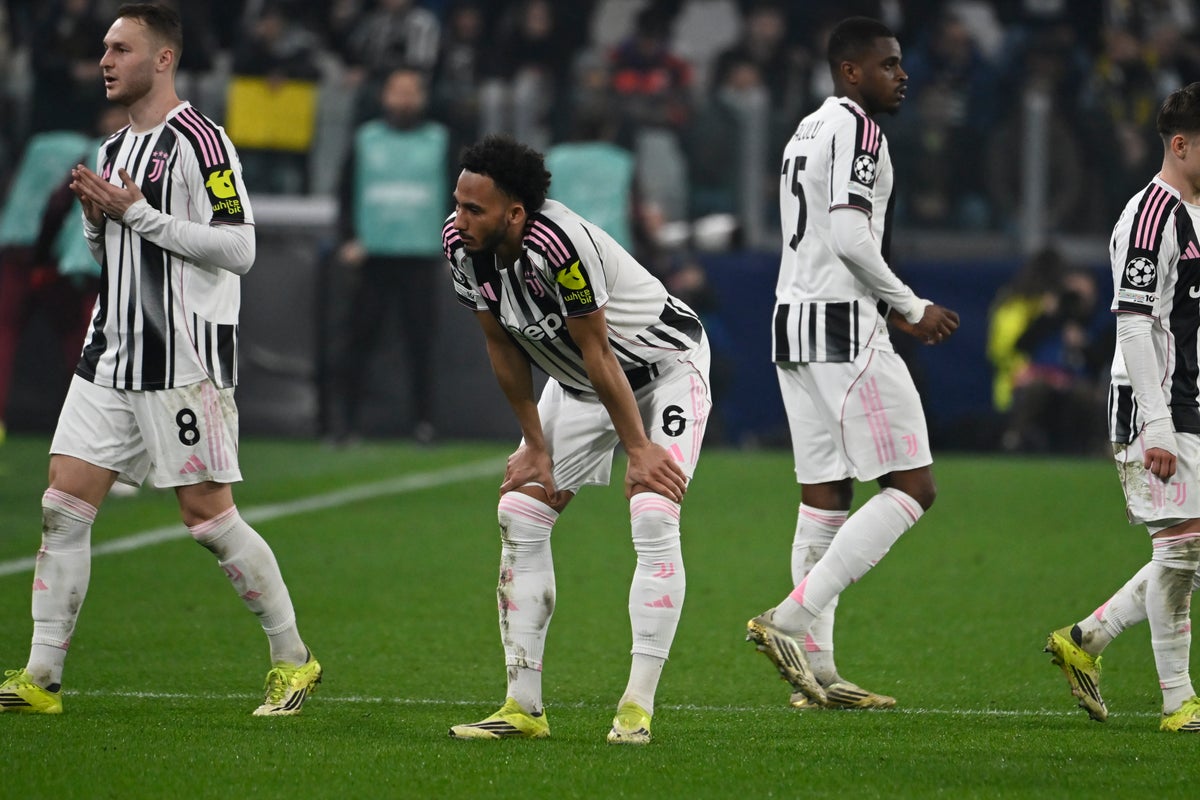
Juventus, however, faced a heartbreaking exit: after being outclassed 5-2 in Istanbul, they were reduced to 10 men in the return leg but managed a 3-0 win against Galatasaray in regular time, only to concede crucial goals in the dying minutes of extra time. A once-promising campaign ended in both miracle and misfortune, only hours apart.
Just a day prior, the embarrassment struck. “Inter, the Champions League ends in disgrace,” lamented Gazzetta following Bodo/Glimt’s unexpected win at the San Siro; ironic considering Bodo’s population could fit comfortably within the stadium’s empty seats. Despite dominating Serie A with a 10-point lead, Inter Milan fell short against a team that placed second in the latest Norwegian Eliteserien. Previous European exits last season were at the hands of formidable foes like Paris Saint-Germain; now, over two matches, they fell to Bodo/Glimt.
The dramatic turn of events in Bergamo ensured that, for yet another year since 1987-88, Serie A would see at least one representative in the last 16 of the European Cup. However, this comes on the heels of Italy’s shift in fortunes after Diego Maradona’s Napoli exited early in their campaign against Real Madrid, prompting the current Champions League format.
Over the past two seasons, five Italian teams have been eliminated in the knockout play-off rounds. The concerning trend is their conquerors; Atalanta managed to see off Dortmund, a finalist in 2024, yet none of the five teams that triumphed over them hail from Europe’s top five leagues. Previously, AC Milan bowed out to Feyenoord, Juventus to PSV Eindhoven, Atalanta to Brugge, and now Bodo/Glimt along with Galatasaray have added their names to this list.

Juventus heartbreakingly crashed out to Galatasaray after extra time (REUTERS)

Inter Milan were turned over by an inspired Bodo/Glimt (AP)
In terms of relative resources, this string of failures highlights a significant underachievement. It’s evident that Serie A lacks the allure it once possessed, overshadowed by the financial prowess of the Premier League. Yet, when teams from the Dutch, Belgian, and Norwegian leagues are outperforming Italy’s elite, the perspective changes.
Advertisement
Galatasaray, however, represents a different scenario. The tax-free wages in Turkey enable them to attract top-tier talent, including Victor Osimhen, the Serie A standout who was pivotal in their recent success. Juventus, meanwhile, find themselves unable to finance such pursuits. Last summer, the biggest signing in Serie A was AC Milan acquiring Christopher Nkunku for just €37 million.
Juventus now grapples with the fallout from previous transfer market blunders, particularly the heavy resource drain caused by Cristiano Ronaldo’s tenure in pursuit of European glory, compounded by a series of missteps in 2024-25. Their costly decision to sell Dean Huijsen in favor of Douglas Luiz, who is currently on his second loan spell, has backfired. As Huijsen thrives at Bournemouth, earning a lucrative transfer to Real Madrid, Juventus opted in January for Lloyd Kelly, who was available on a free from Bournemouth months prior, only to secure his services for €17.5 million afterward.
Over two matches against Galatasaray, Kelly struggled significantly: conceding a goal in the first leg and receiving a red card in the second. While it may seem unfair to compare him to former Juventus legends like Gaetano Scirea and Claudio Gentile, the current group pales in comparison to their predecessors.

Lloyd Kelly was sent off against Galatasaray (Getty Images)
Kelly wasn’t alone in his missteps. Juan Cabal was also sent off in Istanbul, while coach Luciano Spalletti’s ill-fated choice to substitute the booked Andrea Cambiaso made matters worse. The tie slipped away in the second half at Rams Park, as Galatasaray scored four decisive goals.
Advertisement
Meanwhile, for Inter, a four-minute stretch in the Arctic Circle, during which Bodo/Glimt scored twice, proved to be the turning point. While sometimes Inter’s experience is an asset, starting with players aged 36, 37, and 38 years in Norway showcased their vulnerability. The way Kjetil Knutsen’s team quickly exploited counter-attacking opportunities at the San Siro raised questions about Cristian Chivu’s management style; as he’s on track to match Simone Inzaghi’s single Scudetto achievement, he may be less adept at managing two-legged tournaments.
Inzaghi has masked some of Serie A’s decline. Italy only had one representative in the last 16 last season, and none in the last eight the year before. However, Inzaghi’s Inter managed to eliminate Bayern Munich and Barcelona last spring, reaching the final for the second time in three seasons—no other Italian club has enjoyed similar success since Juventus in 2017. With the gap since Inter’s last UEFA Champions League victory in 2010 continuing to grow, the prospect of Italy’s longest drought since 1969 looms.
Currently, Italian clubs sit second in the UEFA coefficient standings over the past five years, largely thanks to Inter, a commendable season in 2022-23, and contributions from Atalanta, Roma, and Fiorentina in Europa and Conference Leagues. However, the current struggles make it increasingly likely that Serie A will not secure a fifth Champions League spot for the 2026-27 season, posing a challenge for Juventus, who are currently fifth.

Atalanta ensured that at least one Serie A team reached the last 16 (AFP via Getty Images)
In the wake of the scrutiny surrounding Inter and Juventus, it is crucial to note that Italy’s most significant failures in continental competitions were absent from midweek action. Napoli, the reigning champions, astonishingly finished 30th in the Champions League group stage, trailing behind Pafos, Bodo/Glimt, Qarabag, and two Belgian teams.
Advertisement
Their record included a 6-2 loss to PSV, a 1-1 draw against ten-man FC Copenhagen, and a time when they gave Eintracht Frankfurt their only clean sheet and away point. While injuries played a role for Napoli, they faced opponents in the lower tiers. They squandered a favorable opportunity. Antonio Conte’s European record continues to dwindle; he excels primarily in Serie A.
Consequently, Atalanta, a club that began the season under the management of Southhampton’s struggling Ivan Juric, will be the ones carrying Italy’s flag into the last 16. While they may not advance further, facing Arsenal or Bayern next, it underscores a narrative of cruelty and disgrace for the traditional powerhouses of Italian football.