



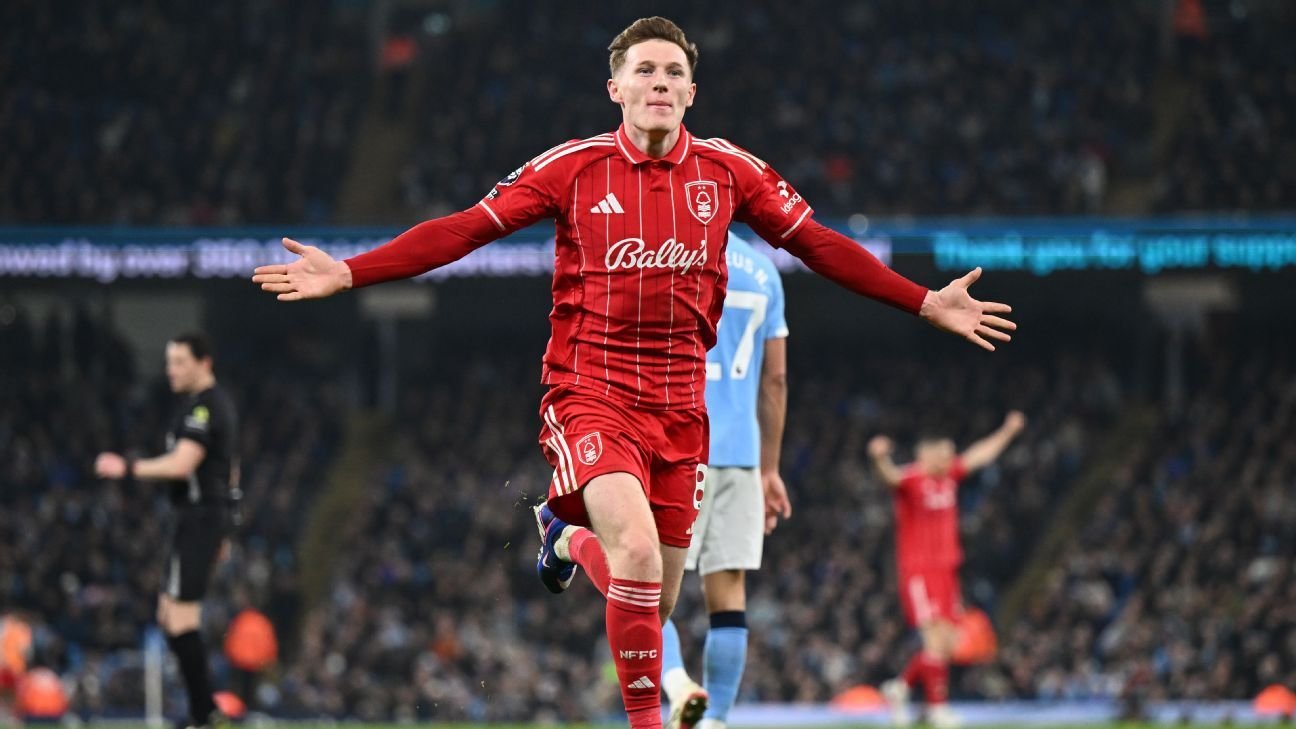
Manchester City has finalized a transfer agreement to acquire Nottingham Forest and England midfielder Elliot Anderson for a record club fee of £116 million. So, what sets him apart?
Anderson’s trajectory has been rapid. He progressed through the youth system at Newcastle United, where he spent 11 years before making his senior debut in 2021. He transferred to Forest for approximately £35 million in 2024, reportedly to assist Newcastle in avoiding a potential points deduction due to a breach of the Premier League’s Profit and Sustainability regulations.
His impactful performances played a crucial role in helping Forest finish seventh in the league, improving from their previous 17th position. Throughout a challenging 2025-26 season, which involved both relegation struggles and European competition, the 23-year-old distinguished himself as one of Europe’s top central midfielders.
In the Premier League, he led all outfield players with 3,300 touches, 297 duels won, 80 fouls won, and 306 possessions won, finishing among the top five for total passes and tackles.
Rob Dawson and Tor-Kristian Karlsen delve into the reasons behind City’s substantial investment in him.
Why is City pursuing him at this time?
City’s interest in Anderson aligns with their recent trends in the transfer market.
The acquisition of center back Marc Guéhi for £20 million from Crystal Palace and winger Antoine Semenyo for £62.5 million from Bournemouth illustrates this approach, as they were able to integrate seamlessly into the squad due to their prior Premier League experience. This minimizes the concerns that often arise with players transitioning from other leagues.
For City’s recruitment team, this factor reduces the risks associated with high-value acquisitions, which is a significant reason for their willingness to pay so much for Anderson, despite his limited two-year tenure at Nottingham Forest.
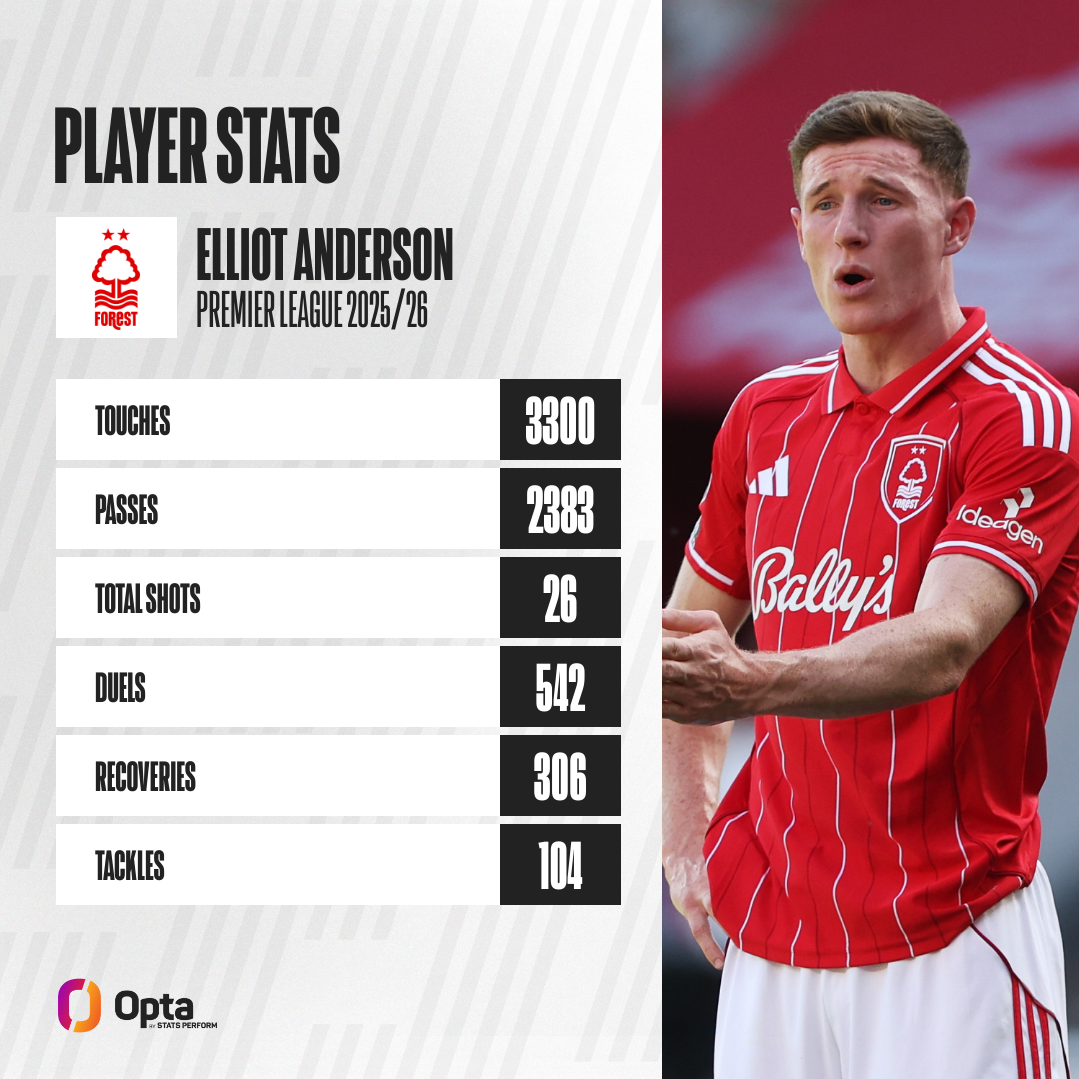
Anderson has already demonstrated his capability in the Premier League. Previous midfield signings, such as Tijjani Reijnders and Nico González, struggled to make a significant impact under former manager Pep Guardiola and faced inconsistent playing time.
At 23, Anderson has his best years ahead of him. His statistics reflect his talent; he gained experience in European competitions last season and impressed in high-pressure matches, including a goal in a 2-2 draw against City at the Etihad Stadium in March.
While every major signing carries an element of risk, City has worked to mitigate uncertainties and is hopeful that Anderson will contribute to their midfield over the next decade.
Enhancing the midfield has been essential this summer, especially with Bernardo Silva departing on a free transfer and uncertainty surrounding the futures of both Reijnders and González.
Additionally, there are concerns regarding the future of 2024 Ballon d’Or winner Rodri, who has yet to sign a contract extension and is in the final year of his current deal—fan speculation abounds about his potential move to Real Madrid, despite City’s skepticism about the authenticity of those rumors.
Consequently, securing Anderson is both an immediate and future-centric move to address critical needs in the squad, which justifies the hefty price tag. — Dawson.
0:49
Laurens questions Elliot Anderson valuation after £120m Man City bid
How will he fit into City’s tactical setup?
Anderson showcased his potential early in his career, making notable contributions at the youth international level—initially with Scotland up to U21 before switching to England’s U21 side in 2024. Yet, his rapid ascent since joining Nottingham Forest stands out.
The rationale behind his transfer to Manchester City is clear. Anderson embodies all the essential attributes of a central midfielder, executing them with remarkable intensity and consistency. Indeed, few elite midfielders can fulfill as many requirements as he does.
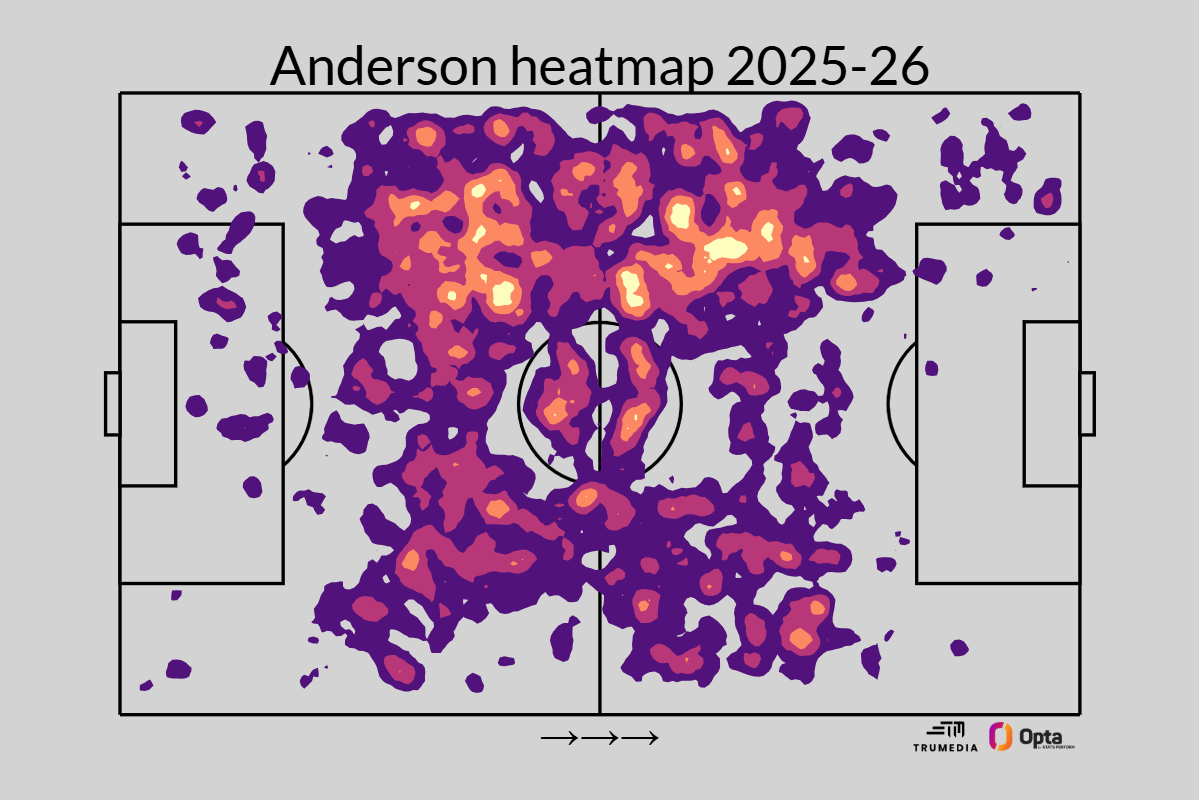
With the ball, he demonstrates excellent spatial awareness combined with a solid first touch and a forward-thinking passing approach. Defensively, he is an unrelenting presser with impressive stamina, allowing him to cover vast areas of the pitch and engage in tackles effectively (he recorded the second-highest distance covered in the league last season).
The statistics underline what is evident to the naked eye: Anderson actively seeks possession, cleverly transitions to open options, and intelligently distributes the ball, propelling his team forward with positive passes. He managed to maintain this level of performance even in a struggling Forest squad, suggesting significant potential for impact at a top club like City.
While his overall contributions in midfield are noteworthy, his attacking metrics warrant greater recognition; scoring four goals and assisting four in the Premier League is a solid foundation that he should easily build upon in a more possession-oriented system at City—especially considering his vision and capability to penetrate defenses.
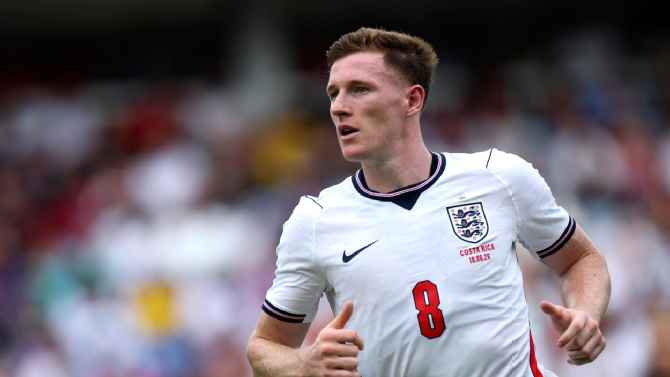
His versatility offers new City coach Enzo Maresca intriguing tactical options. He can operate deeper as a No. 6, advance as a box-to-box No. 8, or function as a connector in between, as he does for the England team. Alternatively, he can be positioned higher in a midfield trio as a No. 10, utilizing his final-third passing, collaborative play, shooting ability, and pressing work effectively.
Even at the young age of 23, Gordon possesses a highly developed skill set, making him a vital element of City’s play, regardless of his deployment. — Karlsen