



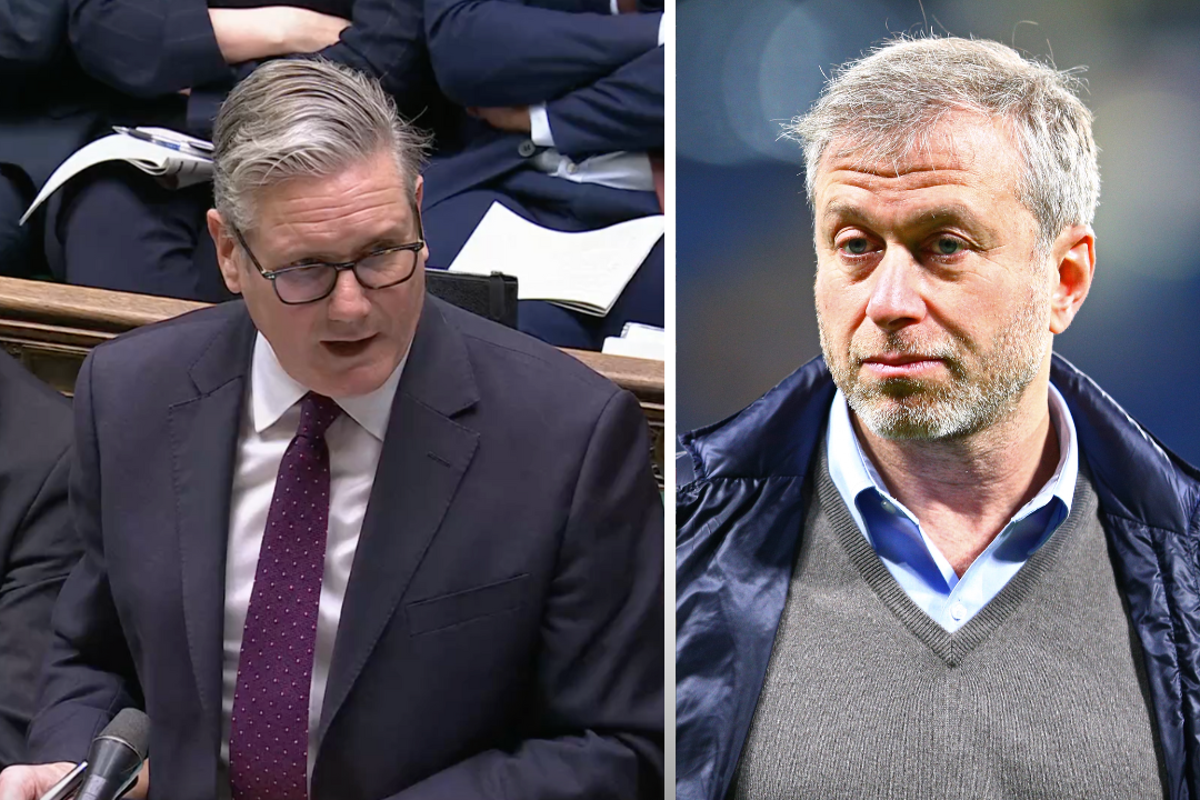
Lawyers for Roman Abramovich have asserted that the £2.5 billion from the sale of Chelsea Football Club is solely his, warning that he will vigorously oppose any attempts to seize those funds.
In an escalating dispute between the oligarch and the government, Abramovich’s legal team contends that delays in releasing the funds intended for victims of the Ukraine war are the government’s responsibility. They claim in a recent letter that Abramovich’s aim has always been to donate to the affected individuals and that he will proceed with these donations once the legal entanglements are resolved.
This letter has provoked a strong reaction from Foreign Secretary Yvette Cooper, who stated to The Independent: “It is time Roman Abramovich does the right thing, but if he won’t, we will act.”
These statements come as a 17 March deadline approaches for Abramovich to respond to demands following a threat of legal action from the Prime Minister in December, which aimed to compel the former Chelsea owner to hand over the proceeds from the sale of the club—completed in March 2022—to aid in compensating victims of the war.
In December, Keir Starmer had a clear message in the Commons: “My message to Abramovich is clear: the clock is ticking.” This stance was echoed by senior ministers, including Chancellor Rachel Reeves, who remarked that it is unacceptable for over £2.5 billion owed to the Ukrainian population to remain frozen in a UK bank account.
On 17 December 2025, a demand for the funds was sent to Abramovich by the Office for Financial Sanctions Implementation. However, his legal representatives, Kobre and Kim, have since indicated that it is the UK government’s actions that are causing the delay.
The letter argues: “Mr. Abramovich has sought to advance the donation in accordance with the framework agreed upon at the time of the transaction, which was documented in a formal Deed of Undertaking approved by the UK government.” They further emphasize that Abramovich has repeatedly attempted to resolve the legal issues preventing the donation and that the government has not engaged effectively, instead opting for public statements and threats of litigation without legal justification.
They assert: “It is crucial to highlight that the funds—while currently frozen—nonetheless belong to Fordstam Limited, wholly owned by Mr. Abramovich. His intention to donate these proceeds was initiated before sanctions were imposed, and he remains committed to ensuring the funds benefit charitable causes.”
Cooper countered, insisting: “This money was promised to Ukraine over three years ago. It is time Roman Abramovich does the right thing. If he won’t, we will act. That’s why the license has been issued. It’s time this money was used to help rebuild the lives of those devastated by Putin’s illegal war.”
The government views this as part of broader efforts to reclaim assets from Russian billionaires associated with Putin to compensate Ukraine for the war’s repercussions.
Abramovich’s representatives have previously pointed to an ongoing investigation in Jersey regarding the origins of his wealth as a reason for the frozen assets, suggesting this legal battle prevents him from fulfilling his pledge. In April 2022, Jersey’s Royal Court imposed a formal freezing order on $7 billion in assets tied to Abramovich, with the Jersey Attorney General labeling him a suspect in a criminal probe. The Jersey government has indicated that accusations arise from Abramovich’s own admissions during a High Court case with the late oligarch Boris Berezovsky, which concluded in 2012, where he confessed to engaging in corrupt practices in Russia during the 1990s and early 2000s. Nonetheless, Abramovich has argued that he underwent significant scrutiny when Jersey granted him residency in 2016.
Under Putin, Abramovich, now 59, was the governor of the Chukotka region in Russia’s Far East, where he amassed his wealth.