



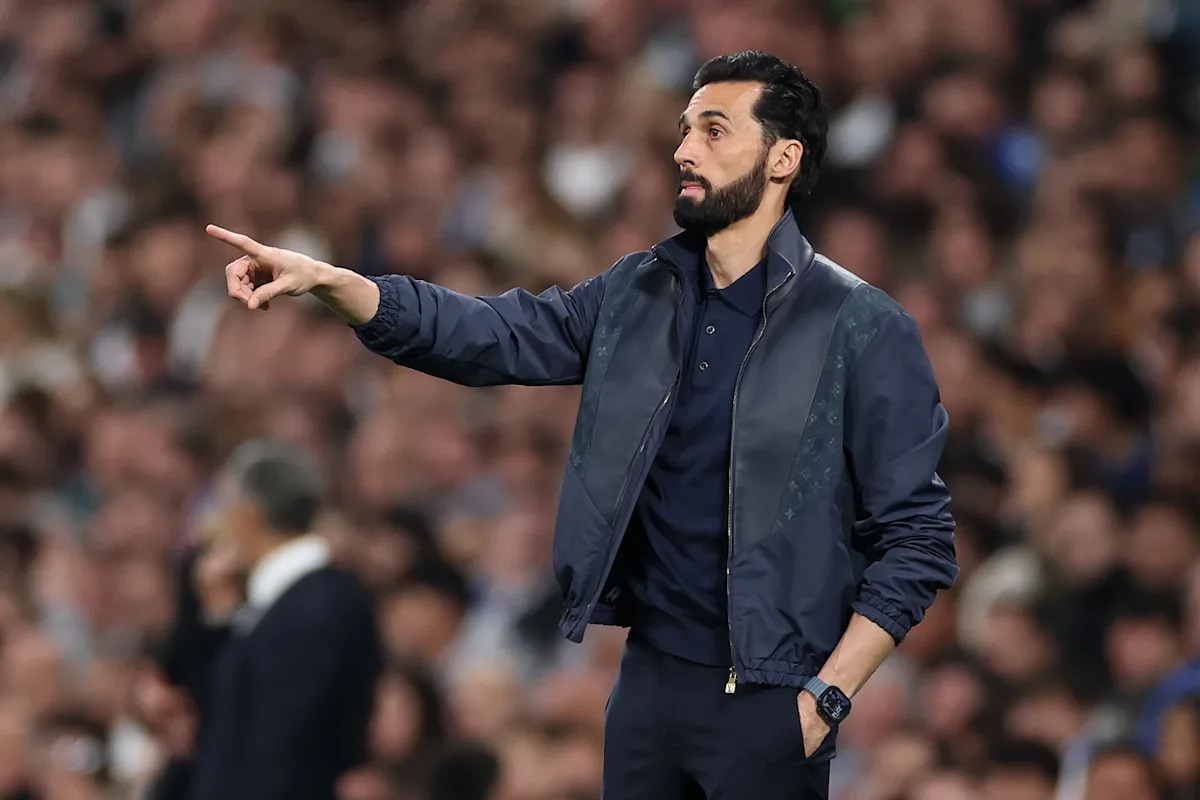
“If I try to be Mourinho, I’ll fail spectacularly.” Little did Alvaro Arbeloa know that such a prescient remark would come to define his inaugural press conference at Real Madrid, especially considering the unraveling of the Portuguese manager’s persona. Nonetheless, Arbeloa deserves praise for the unexpected positivity it has generated.
Initially, Arbeloa was seen as the candidate to restore Real Madrid’s grit, embodying a manager willing to adopt a ruthless approach. With statements like “I strive to be Mourinhista in everything I do” circulating online and a history of embracing a tough style during his playing career, Arbeloa has traversed the political landscape of the club with remarkable poise, infused with surprising humility.
Advertisement
Over the past few months, his demeanor has softened significantly. Those close to Arbeloa highlight his unwavering self-confidence, yet he presents himself as a grounded coach. Set up for a significant encounter against Pep Guardiola, having bested him twice in a week, Arbeloa commendably downplayed his own achievement: “I wouldn’t dare think I could beat someone like Pep at anything. We won because of the players’ hard work,” he humbly remarked. He even echoed Guardiola’s strategy of ensuring an extra player in midfield for the match.
Arbeloa threw himself into mending the players’ spirits upon his arrival, especially addressing the divide in the dressing room that Xabi Alonso had left behind, particularly involving Vinicius Junior and Fede Valverde. In contrast to Mourinho’s more authoritative style, Arbeloa’s approach is reminiscent of Carlo Ancelotti’s, fostering better connections.
The now-iconic ‘grey sofa’ in his office provides a space for players to voice their issues, concerns, and observations, emphasizing his role as a confidant rather than an authoritarian figure—a coach invested in their success. This aligns with President Florentino Perez’s vision of the coach’s role, which has proven effective.
Even when quizzed about his desired playing style, Arbeloa has remained vague, emphasizing that “Winning is the most important thing here, regardless of formations.” He spoke of essential traits like character, commitment, and mentality, later admitting that “the goal is always to be solid.”
Of course, the context of winning ultimately shapes all discussions. Just a month ago, Real Madrid was reeling from back-to-back La Liga losses against Osasuna and Getafe, both performances lacking any semblance of solidity. Following a day later, reports suggested that many players still perceived him as a youth coach.
Advertisement
Few anticipated Thiago Pitarch would be the answer, but Arbeloa deserves commendation for his introduction. The 18-year-old has brought a fresh perspective, adapting seamlessly to every role and task Arbeloa sets for him. It appears Arbeloa has a knack for youth coaching, and Pitarch’s energetic presence in midfield has inspired some of Real Madrid’s best performances of the season, even amid high-pressure situations.
Having gradually built trust with Vinicius and Valverde, they’ve returned to form, contributing significantly to recent successes, with 11 goal contributions across the last five matches. Arbeloa has established a cohesive tactical approach, bridging connections within the dressing room. After a challenging winter, there are signs of optimism at the Bernabeu. However, Arbeloa now faces two crucial months that will determine his future with the club, alongside one pressing question.
Since Arbeloa’s tenure began, Jude Bellingham, Kylian Mbappe, and Vinicius have played together for over ten minutes only four times (three wins and one loss). While some may view this as a good problem, past experiences under Ancelotti and Alonso indicate that orchestrating their playing time effectively has been challenging. It’s unfortunate that Bellingham’s first start coincided with Alonso’s first defeat of the season—a destabilizing 5-2 derby loss.
Bringing Pitarch into the fold was a masterstroke, but the complexities of integrating players will only increase. In his six starts, Pitarch has already outperformed both a not fully fit Eduardo Camavinga and an underperforming Franco Mastantuono—considered the least troublesome absences. Utilizing four traditional midfielders, with Brahim Diaz as a potential fifth, has provided Los Blancos with balance without sacrificing attacking flair.
Advertisement
Without Toni Kroos, Ancelotti found it challenging to address Real Madrid’s shortcomings. Alonso tried to reshape the team’s identity, often resulting in predictable outcomes. In contrast, Arbeloa now faces the dual challenge of integrating Bellingham, Mbappe, and Vinicius while maintaining team solidity.
The silver lining for Arbeloa is that he is in a better position to navigate this challenge. The enthusiastic support of Pitarch, Manuel Angel, and Cesar Palacios has motivated the remaining stars to elevate their performances. Bellingham, Vinicius, and Valverde are eager to regain the support of the fans after facing criticism in January, understanding that ultimately, Arbeloa will be lower on the totem pole of accountability.
A month after the disappointing loss to Getafe, it seems less implausible to wonder if Arbeloa can mold this group of talents into a winning side, rather than questioning whether Real Madrid can thrive with all three on the field together. Arbeloa has positioned himself within this pivotal question; now he must find the right solution.