



Arsenal’s first home defeat of the season was steeped in poetic justice. The difference between securing another victory through their usual set-piece prowess and facing defeat was two stunningly executed goals. The antithesis of anti-football shone through: joga bonito.
Mikel Arteta’s team effectively became the architects of their own demise against a Manchester United side on the rebound. They had dominated the opening thirty minutes and taken the lead—thanks to an own goal—before crumbling during a seven-minute stretch, presented with two prime chances by Bryan Mbeumo. He capitalized on the second opportunity directly.
“We handed them the goal,” lamented Arteta, after a first half that ended with his side being booed. “Mistakes happen in football, but this was uncharacteristic of us. We provided them with a goal and a glimmer of hope, altering the game’s momentum; we struggled from that point until half-time.”
Arteta’s assessment was accurate; this was a break from the disciplined Arsenal team that has been so resolute this season, boasting the league’s strongest defense. Their response was even more unusual for a team vying for the Premier League title. Arsenal looked flat, and that lack of intensity persisted even after they fell behind.
Patrick Dorgu’s magnificent volley five minutes after the restart stunned everyone in the Emirates. Instead of sparking a comeback from Arsenal, it further deflated them.

Patrick Dorgu scored a brilliant volley to give Man United the lead (Manchester United/Getty)
Rather than compelling United’s notoriously fragile defense to respond with urgency and desire, Arteta opted to bring on Viktor Gyokeres and Mikel Merino—two target players not renowned for their speed. Gyokeres can be fast once he finds his rhythm, but his struggles to adapt since his £55 million summer transfer have been notable.
Arteta’s strategy seemed to lean heavily on the set-piece approach. This season, Arsenal has excelled at dead ball situations, with nearly 30 percent of their goals coming from corners, free kicks, or penalties, playing a significant role in ten of their wins.

Goals from dead balls have proved decisive in 10 Arsenal wins this season (Arsenal FC/Getty)
Arteta’s reliance on set pieces has rendered his style somewhat tedious, yet results remain paramount, and these traditional strategies, once synonymous with lower-tier teams, had propelled Arsenal to the top of the league with an impressive lead.
The following 20 minutes elicited more groans than cheers from the Arsenal supporters, yet all could have been forgiven should Arteta’s tactics yielded results.
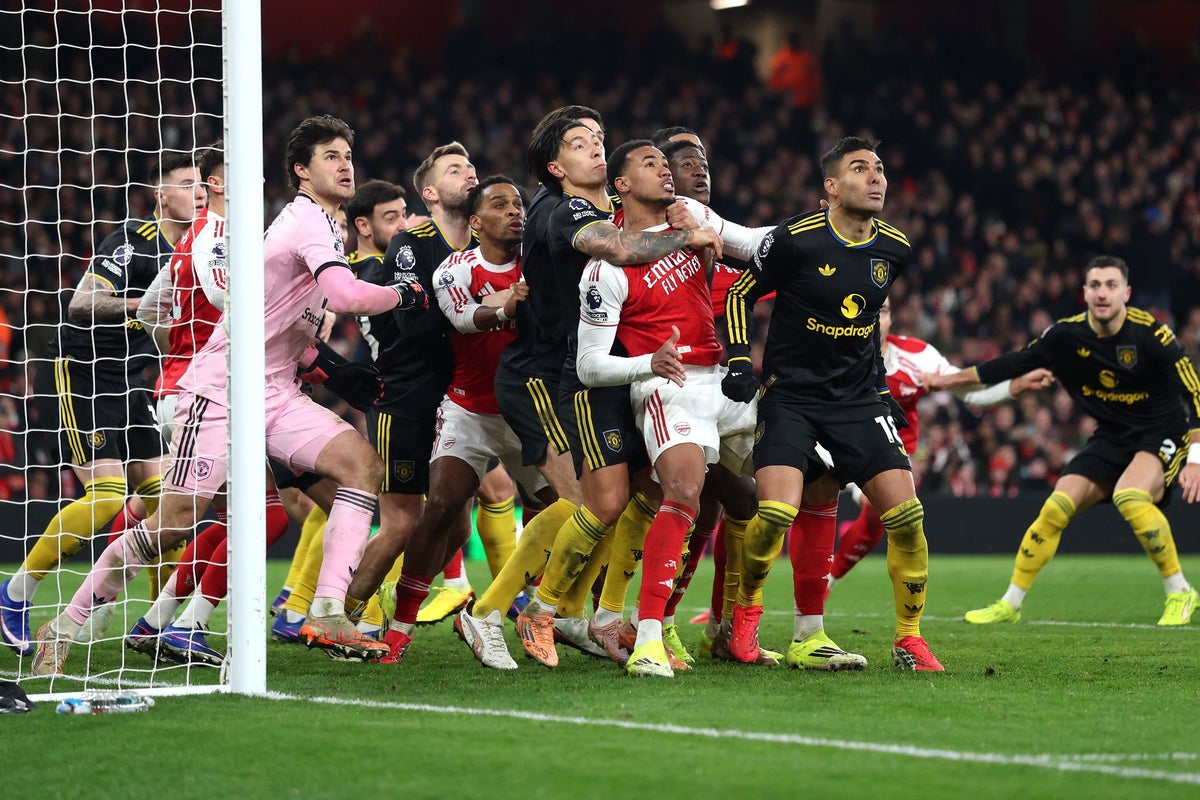
It appeared that fortune had favored them when, on their eighth corner, Bukayo Saka delivered the ball toward Senne Lammens and the gathering throng of Arsenal players. The Belgian goalkeeper made ineffective attempts at clearing the delivery, leading to a goalmouth scramble before Merino nudged it over the line, despite Benjamin Sesko’s best attempts.

A melee in the goalmouth led to another set-piece goal for Arsenal (AP)
Though the goal was anything but pretty, Arsenal appeared to have salvaged at least a point through their set-piece expertise, and Arteta hoped it would fuel them to take all three. “I thought we managed to shift the momentum and score our second goal; you could sense everything changing, and I believed the game was there for us to win,” he said.
However, the opposite unfolded just three minutes later, as Matheus Cunha unleashed a spark of brilliance, pushing Arsenal to the brink of defeat, with their anti-football methods ultimately coming up short.
The emigration of fans from the Emirates commenced. For a team that has positioned itself as a title favorite, the reaction from Arsenal supporters illustrated that without tangible results, Arteta’s football philosophy provides little cause for optimism.

Arteta-ball is hard to get behind without results (Getty)
Was the early exit of the fans a justified reaction, or merely a sign of entitlement? Regardless of perspective, it reflected the frustration felt by supporters of a team that bears the Arsenal name. The absence of a silver lining made the defeat all the more painful.
This scenario may concern Arteta, who aims to conclude a series of three consecutive second-place finishes by securing Arsenal’s first Premier League title in over twenty years. Favorable conditions suggest that this should be their year—with defending champions Liverpool lagging, Manchester City undergoing a transition, and Aston Villa likely to fade from contention as the season progresses. Yet, despite currently holding the league’s top position, a setback like this has been anticipated and could prove damaging to both the club’s title aspirations and fan morale.

Arsenal are now on a three-game winless streak in the league (Getty)
The defeat against United leaves Arsenal in the midst of a three-game winless streak in the Premier League. After having navigated tricky fixtures against Brighton, Everton, and Wolves in December without dropping points, it now seems their grip on pivotal matches is waning.
Just 23 days ago, they boasted an eight-point lead at the summit; now, that margin has halved. If Arsenal’s title chase continues to slip, Arteta’s approach will face increased scrutiny. There exists a delicate balance between admiration and disdain for Arteta; the coming weeks will be critical for how he is remembered in North London.