



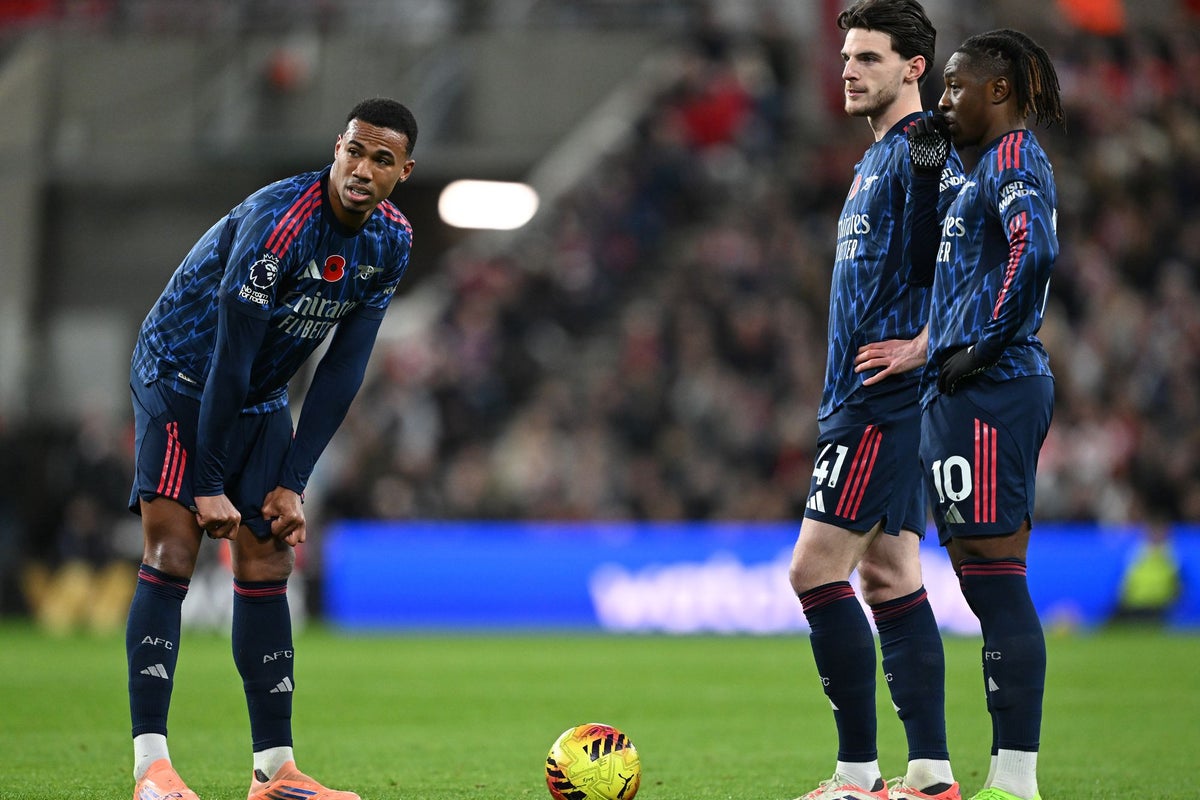
As Arsenal gears up for their match on Wednesday, set-piece coach Nicolas Jover has been honing in on strategies to obstruct Brentford’s most effective aerial players, particularly Sepp van den Berg, from entering crucial areas. Jover’s focus is less about the routine of set-piece deliveries and more about orchestrating movements in the box—it’s the subtle details that can make all the difference.
Brentford is well aware of these tactics, having pioneered the integration of science into traditional football approaches. This goes beyond just Tony Pulis’s methods. While Brentford operates with humility, they have expressed frustration at seeing their innovative strategies praised elsewhere, particularly given that some have questioned manager Keith Andrews’s appointment.
However, the most potent response to this challenge is represented by former set-piece coach Andrews emerging as a key figure this season, which has been marked by similar developmental stories.
Before assuming control as manager, Brentford’s Keith Andrews was a set-piece specialist (Getty)
Brentford is looking to refine their approach just before this matchup, which symbolizes the evolution of set-piece tactics, bridging the gap between the club that developed the concepts and the club that has effectively implemented them.
One competitor noted that Arsenal’s true innovation lies in perfecting two nearly indefensible set-piece routines, which have proven decisive.
Mikel Arteta has directly drawn inspiration from Brentford’s methodology, as his analytical approach aligns with the emerging consensus around the importance of set-pieces. He is recognized among his peers as a coach who obsessively analyzes probabilities and margins.
This mindset mirrors the approach taken by Midtjylland around 2014, when Brentford’s owner Matthew Benham also had significant shares in the Danish club. There, data-driven strategies uncovered the inefficiencies of set-pieces amid a league increasingly focused on positional gameplay led by Pep Guardiola. The term used in both clubs to describe their efforts was “a winning edge.”
Brentford has been at the forefront of effective set-piece execution (AFP via Getty)
They initiated training for specialized set-piece coaches, rethinking the entire area in a novel light. Jover, along with many renowned current coaches, emerged from this educational focus.
It was Ben Knapper, former loans manager at Arsenal and now at Norwich City, who identified Jover as a unique talent, effectively alerting Arteta to his capabilities, leading to Jover’s initial recruitment at Manchester City.
Though Jover’s influence was less visible at City, where Guardiola’s sides thrived on open play, his staff recognized that timely headers, such as those from Vincent Kompany, could sway title races against Liverpool—it’s all about those fine margins.
The significance of Jover’s contributions was so greatly acknowledged that Manchester City fought to retain him after Arteta’s overture when he became Arsenal’s manager in 2021.
Jover’s prominence has grown to the extent that Arsenal fans now chant his name—a fact that has garnered playful mockery from rival clubs.
This season has also highlighted the ethical debate surrounding set-pieces, questioning their impact on the beauty of the game.
Indeed, a heavy focus on set-pieces can be less thrilling to watch unless your team is scoring. Traditionally deemed as “small-team football,” set-pieces were once a lifeline for teams lacking the resources to focus on attacking play due to financial constraints, leading to a sort of snobbery surrounding the style.
The Brentford-inspired “margins” approach challenges this mindset—after all, why not leverage any tactics that can assure success?
As previously noted by The Independent, Arteta has adapted his strategies based on an understanding that many teams were increasingly defending against his positional play, resulting in more corners and set-pieces. If opponents are struggling to manage territory with possession play, why not maximize the advantage by excelling in set-pieces?
This movement shows no sign of diminishing, with Opta reporting that the weekend’s matches tied the record for set-piece goals in a single round at 14—an occurrence three times this season, twice in the last three weeks, and double the numbers at the season’s outset.
Set piece goals per gameweek
Similar to many trends in football, including Guardiola’s philosophy, there tends to be skepticism that the effectiveness of such strategies diminishes as they become more widespread.
However, many industry insiders believe that set-pieces will continue to present a significant edge for some time, mainly due to the scarcity of resources and the game still adapting to Brentford’s innovations.
Currently, there are still few top-tier set-piece coaches, which explains why a select few have become fan favorites—names like Austin MacPhee and Bernardo Cuevas.
MacPhee has humorously noted that when he joined Aston Villa, he became the Premier League’s third set-piece coach, following Arsenal and Brentford. This has led to an arms race, reflected by the variety in delivery techniques.
Arsenal has earned a reputation as a formidable force in set-pieces (Arsenal FC via Getty)
As long as this dynamic persists, clubs employing such specialists will have a competitive advantage. The next step for these teams involves perfecting set-piece routines, or mastering the “chaos” that Andrews mentions stemming from Brentford’s throw-ins.
In this context, set-piece coaches truly showcase their skills, maneuvering players for ideal runs, minimizing opposing players’ chances of attacking the ball, and strategizing how to “overwhelm goalkeepers.”
However, much of this boils down to foundational football principles. As one training expert humorously noted, none of this would matter without world-class deliveries and players willing to challenge for the ball.
Brentford’s staff praise Kevin Schade and Michael Kayode for their exceptional throw-ins, while Arsenal considers Declan Rice as potentially possessing the best dead-ball delivery globally, closely followed by Bukayo Saka. They are complemented by strong physical players like Gabriel, Jurrien Timber, and Mikel Merino, all approaching the ball with purpose.
Declan Rice has refined his abilities to become an expert in dead-ball scenarios (Getty)
There is also a growing belief that modern players may not be as adept in set-piece situations due to training focused on playing the ball with feet, rather than utilizing their heads or physicality.
This stark contrast from the 1980s or even the 2000s—when defenders often endured serious injury—has led some to feel that today’s players are overprotected. “The modern player is too manicured; they’re not hardened enough,” some analysts reflect.
After facing Arsenal, some in the dressing room remarked how Bayern Munich appeared disorganized every time they conceded a corner last week, a testimony to Arsenal’s formidable record in set-pieces instilling a psychological edge.
Brentford, of course, is one of the few clubs well-equipped to withstand such pressure and counter effectively.
Arteta might argue that Arsenal’s approach would focus on beating them through open play, which ultimately emphasizes the versatility and duality of effective football strategies. It’s not simply about one method or another; it’s about leveraging every possible edge.